Machines Vs. Humans: The Impact of A.I. on Society
It's been over 200 years since the industrial revolution, and we could be in the midst of a cybernetics revolution as machines and humans become more and more interwoven. Mazin Gilbert, VP of AT&T Labs, was with us to discuss whether the Cybernetics Revolution will be more disruptive than the Industrial Revolution.
Just like the Industrial Revolution, which marked the beginning of automation and retooling of machinery and the workforce, the Cybernetics Revolution is changing the way society works. Only now, the automation is software-centric and even more data-driven, allowing AI to self-repair and continuously self-optimize to become more intelligent. Gilbert explained the ways data and automation are changing the way we work and how there's a re-teaching of skills in the workforce underway.
There's an ongoing debate between Zuckerberg and Musk on the impact of A.I. on society. Just like any technology, Gilbert said there are always both benefits and things we have to watch out for. Without search, he said we would not know what to do as a community.
Wall Street is shaky Thursday as investors consider both the upsides and downsides of the latest signals that the U.S. economy remains in much better shape than feared.
Threatened by possible shortages of lithium for electric car batteries, automakers are racing to lock in supplies of the once-obscure “white gold” in a politically and environmentally fraught competition from China to Nevada to Chile.
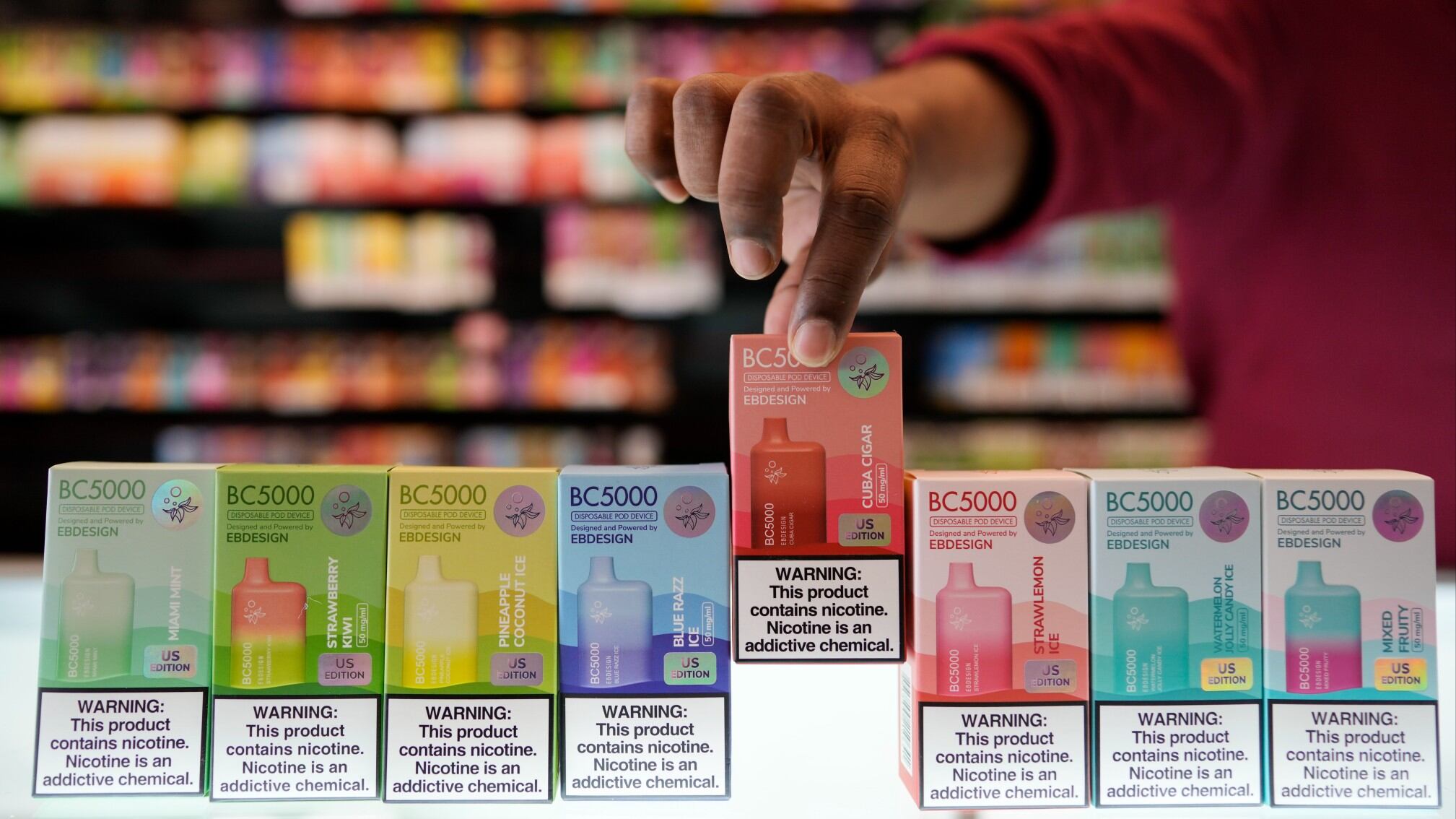
The number of different electronic cigarette devices sold in the U.S. has nearly tripled to over 9,000 since 2020, driven almost entirely by a wave of unauthorized disposable vapes from China, according to tightly controlled sales data obtained by The Associated Press.