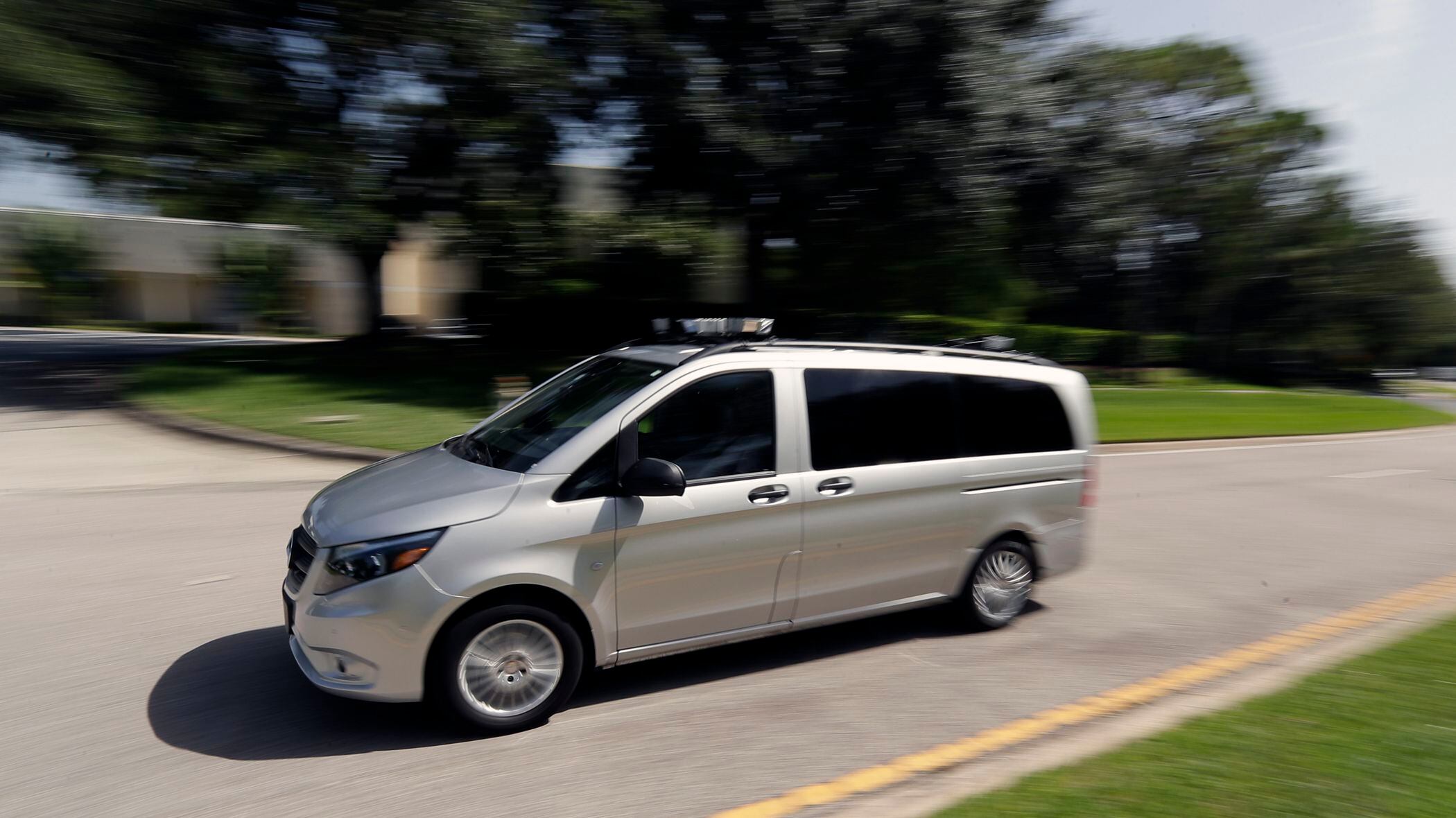
A Luminar Technologies car equipped with LiDAR (light detection and radar) sensors on the roof demonstrates technology now being used in driverless vehicles that many automotive companies are using as part of global research during a demonstration for the Automated Vehicles Symposium, Monday, July 15, 2019, in Orlando, Fla. (AP Photo/John Raoux)
Luminar Technologies ($LAZR) has completed its merger with a special purpose acquisition company (SPAC), bringing the company public on the Nasdaq on Thursday.
The deal makes the 25-year-old founder and CEO Austin Russell one of the world's youngest billionaires and among the first in the emerging self-driving market.
The company specializes in what's called LIDAR or light detection and ranging technology, which is critical for self-driving cars to understand their surroundings.
"We built a custom sensor that can see and understand the world accurately and reliably around it in 3D by sending out laser pulses measuring the exact distance of different things down to centimeter-levels of precision," Russell told Cheddar. "This is critical for allowing an autonomous car to see and understand its environment and to be able to safely navigate it accordingly."
The company, which spent much of its eight-year history developing the technology, has more recently moved into commercialization. It now has more than 50 commercial partners, including seven of the top-10 automakers, according to Russell.
He added that Luminar has its sights on three main verticals: consumer vehicles, trucking, and robo-taxis.
Current deals include one with Volvo, which plans to release consumer vehicles using the technology for autonomous highway driving in 2022. Another is with Daimler Trucks, which will employ LIDAR tech for autonomous long-range trucking.
As for when self-driving cars will become more mainstream, Russell offered this perspective: "I think for self-driving cars you'll start to see it on the consumer vehicle and the trucking side, really at true large scale, by the end of the decade," he said, though the young entrepreneur conceded that this ultimately may be a "conservative timeline."
The SPAC, Gores Metropoulos, saw shares jump nearly 30 percent Thursday following the merger.
Teenagers will officially be allowed to open a Venmo account with their parent's permission, the company said Monday, expanding the popular social payments app to an age demographic that is likely to embrace it almost immediately.
Stepping up a feud with Washington over technology and security, China's government on Sunday told users of computer equipment deemed sensitive to stop buying products from the biggest U.S. memory chipmaker, Micron Technology Inc.
Stocks are moving tentatively Monday, as Wall Street waits to see whether a pivotal meeting in the afternoon will help the U.S. government avoid a potentially disastrous default on its debt.
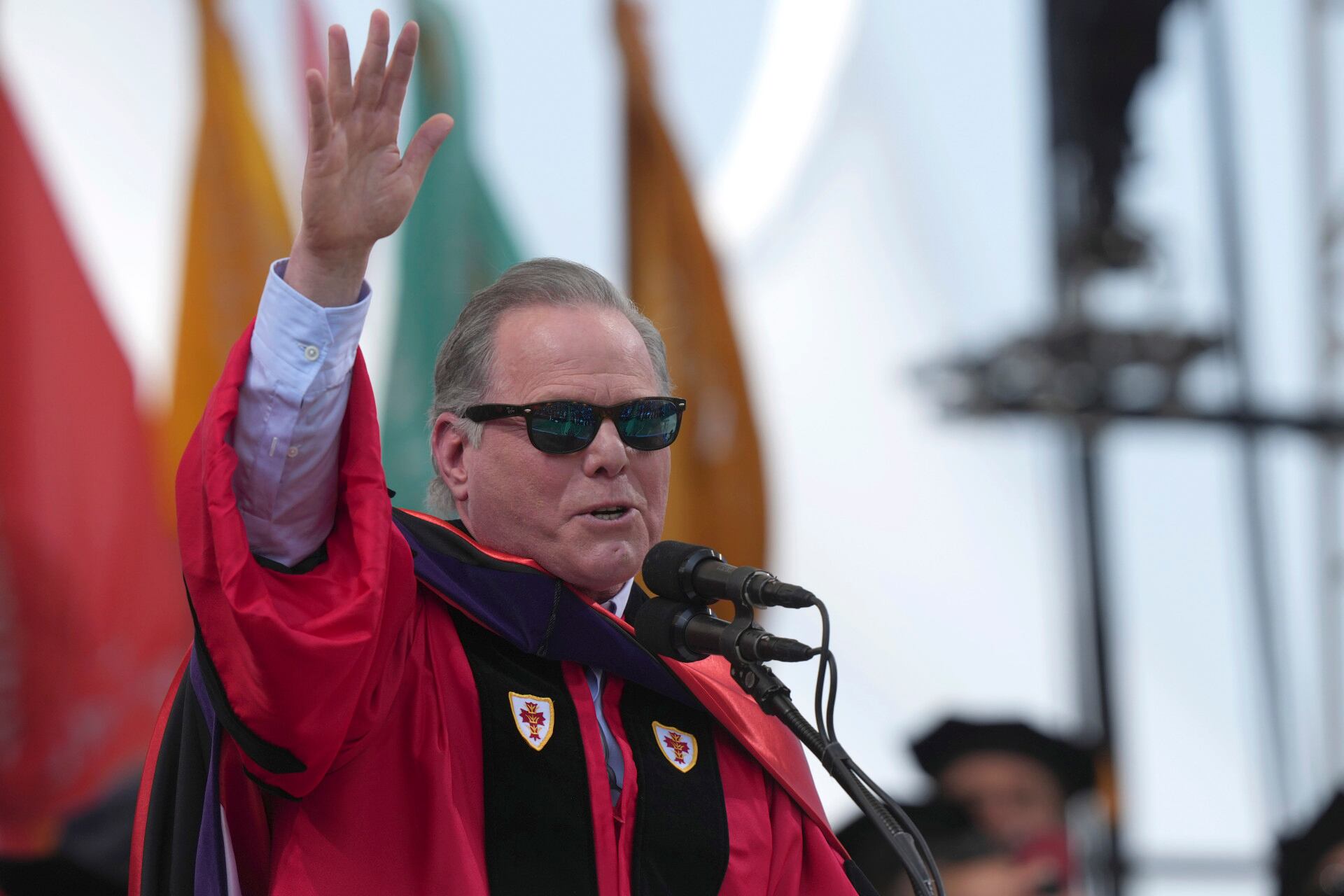
Scores of Boston University students turned their backs on the head of one of Hollywood's biggest studios, and some shouted “pay your writers,” as he gave the school's commencement address Sunday in a stadium where protesters supporting the Hollywood writers' strike picketed outside.
Gov. Ron DeSantis is asking that a federal judge be disqualified from the First Amendment lawsuit filed by Disney against the Florida governor and his appointees, claiming the jurist's prior statements in other cases have raised questions about his impartiality on the state's efforts to take over Disney World's governing body.
Ford CEO Jim Farley says the company will stop competing in over-served market segments and instead will place big bets on connected vehicles and digital services. The days of Ford being all things to all people are over, Farley said at the company's capital markets day event Monday.
The European Union slapped Meta with a record $1.3 billion privacy fine Monday and ordered it to stop transferring users personal information across the Atlantic by October, the latest salvo in a decadelong case sparked by U.S. cybersnooping fears.