Bus drivers shuttle America’s children to schools where cafeteria workers feed them and teacher aides assist students who need the most help.
And their pay is notoriously low. School support staffers earn, on average, about $25,000 a year in Los Angeles, barely enough to get by in one of the most expensive cities in America.
The pay is a driving factor behind a three-day strike that has shut down the entire Los Angeles school system and put a spotlight on the paltry pay of support staff that serves as the backbone of schools nationwide.
Even outside pricey California, the school gigs often don’t pay enough to live on.
Arthur Anderson, a school worker in Virginia, says it’s a shame it took a walkout to draw attention to the longstanding problem, but he hopes it helps.
“People are so frustrated. We all are,” said Anderson, a teacher’s assistant in the Chesapeake Public School System where he has worked for 30 years and makes $32,000. He works three other part-time jobs to make ends meet. “I struggle to pay my rent. I struggle to pay my bills,” he said. “I love what I do. I just don’t love what I get paid.”
Anderson works 36 hours as a special education aide in his school’s science department. But he is also asked to fill in as a bus driver and a custodian. When a science teacher is absent, he fills in as a substitute, which pays an extra $10 per class. “I did that today. I got an extra $20.”
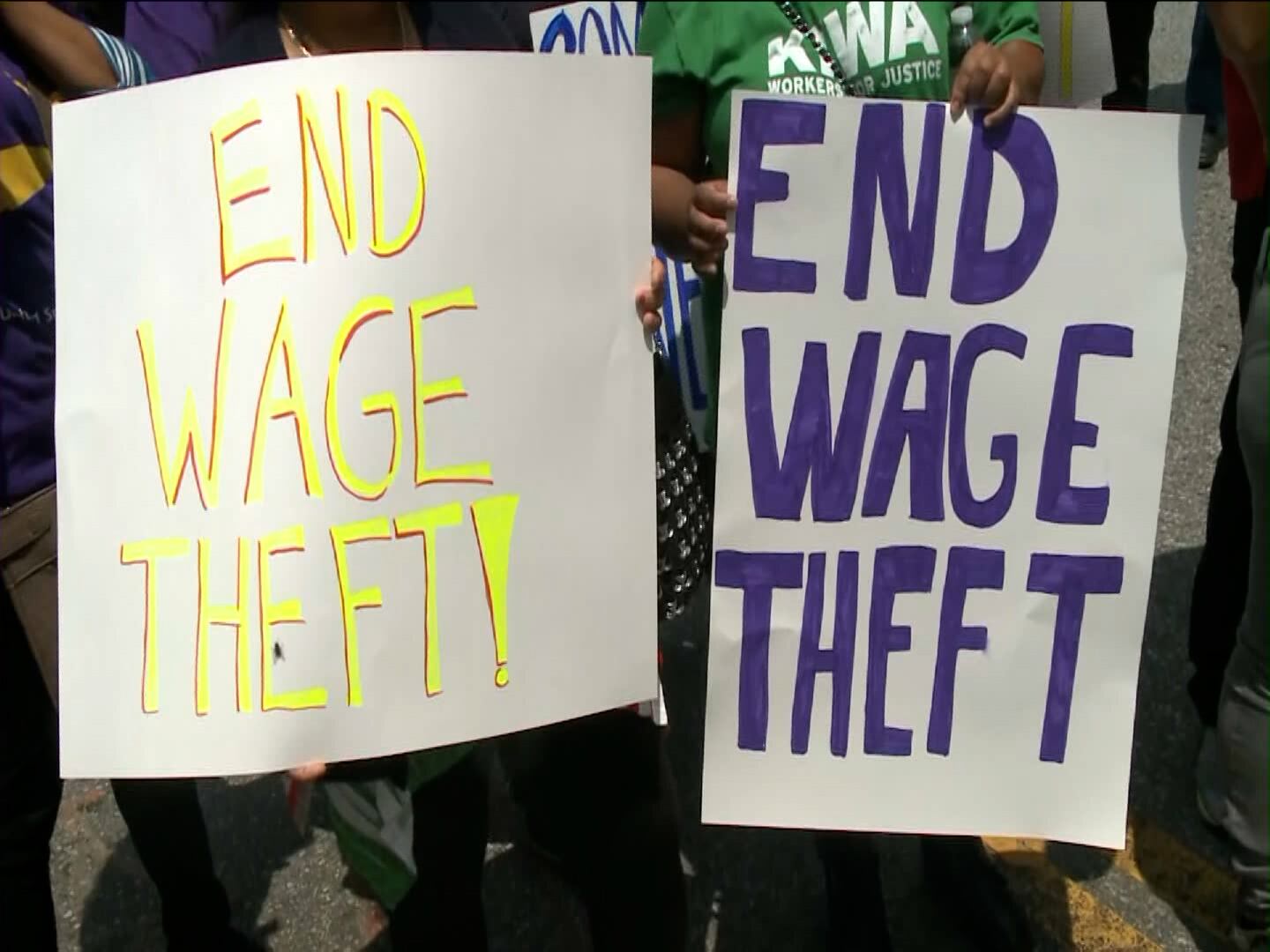
The strike against the Los Angeles Unified School District that started Monday has been led by the teachers’ assistants, custodians and other support staff who are among the district’s lowest-paid workers. They’re demanding better wages and increased staffing. Teachers joined the picket lines, in a show of solidarity that forced the district to close schools in the nation’s second-largest district that serves a half million students.
School support staff around the country tell stories of spending entire careers in public education, filling jobs that keep schools functioning. Yet, many are not making a living wage and like the striking workers in Los Angeles cannot afford to live in the communities where they work.
“The issue in Los Angeles is not confined to Los Angeles. It’s an issue across the country and it has been decades in the making,” said Princess Moss, vice president of the National Education Association, which represents about half a million educational support staff.
The NEA, the nation’s largest teachers' union, last year released data that showed full-time school support staff earned an average salary of $32,800. Delaware had the highest salary for full-time K-12 support staff ($44,738), while Idaho had the lowest ($25,830), but salaries vary widely by state. They can also vary by metro area and even within school districts, depending on how long a person has been in a job.
Amid staff shortages exacerbated by the COVID-19 pandemic, schools have struggled to hire during a strong labor market, adding to the burden on the staff that remain.
A RAND survey of school leaders last year found that around three-fourths of school leaders say they are trying to hire more substitutes, 58% are trying to hire more bus drivers and 43% are trying to hire more tutors. In recent years, staff also have found themselves on the front lines of enforcing pandemic protocols or helping students struggling with their mental health or behavior.
More than half of the nation’s public schools started this school year feeling understaffed, with many struggling to fill key support staff jobs, especially in transportation and custodial work, according to an Education Department survey. Asked about the biggest challenges, roughly four in 10 said candidates felt the salary and benefits weren’t good enough.
Local 99 of the Service Employees International Union represents about 30,000 LAUSD teachers’ aides, special education assistants, bus drivers, custodians, cafeteria workers and other support staff. The union says many live in poverty because of low pay or limited work hours while struggling with inflation and the high cost of housing. Support staff, including many who work part-time, earn about $25,000 a year, according to the union, which is asking for a 30% raise.
The school district has offered a cumulative 23% raise, starting with 2% retroactive as of the 2020-21 school year and ending with 5% in 2024-25. The package would also include more full-time positions and an expansion of healthcare benefits. Superintendent Alberto Carvalho has accused the union of refusing to negotiate and said that he was prepared to meet at any time.
Leaders of United Teachers of Los Angeles, which represents 35,000 educators, counselors and other staff, have pledged solidarity with the strikers.
Experts say it is unusual for different unions in the same school district to band together but the unified labor action in Los Angeles could mark an inflection point.
“The idea of the teachers union and service personnel union saying we can do better if we stick together, could be a contagion in other communities looking and saying, ‘Hey, they did it in Los Angeles — maybe we can do it,’” said Lee Adler, a lecturer and expert on education union issues at Cornell University’s School of Industrial and Labor Relations.
The fight for higher wages has been brewing in other school systems.
In one example, food service workers in Hastings, Minnesota, have been on strike for six weeks over higher wages and other issues. The union representing the 35 workers says the starting wage is less than $15 an hour in the suburban school district, which serves about 4,300 students.
“There’s a growing movement to fight for a living wage,” said Rebecca Kolins Givan, an associate professor at Rutgers University’s School of Management and Labor Relations. “Schools can’t function without workers in these roles. And it’s a fiction to suggest that people don’t need to live on the wages they earn.”
With 26 years' experience as a bus driver, Carl Kirchgessner earns $20.35 an hour driving for a school system outside Rochester, N.Y. His Rush-Henrietta Central School District is still struggling with driver shortages coming out of the pandemic, when many had to double up on routes. He said he can afford to make ends meet only because his wife also works.
“If it was just me alone,” he said, “no way.”