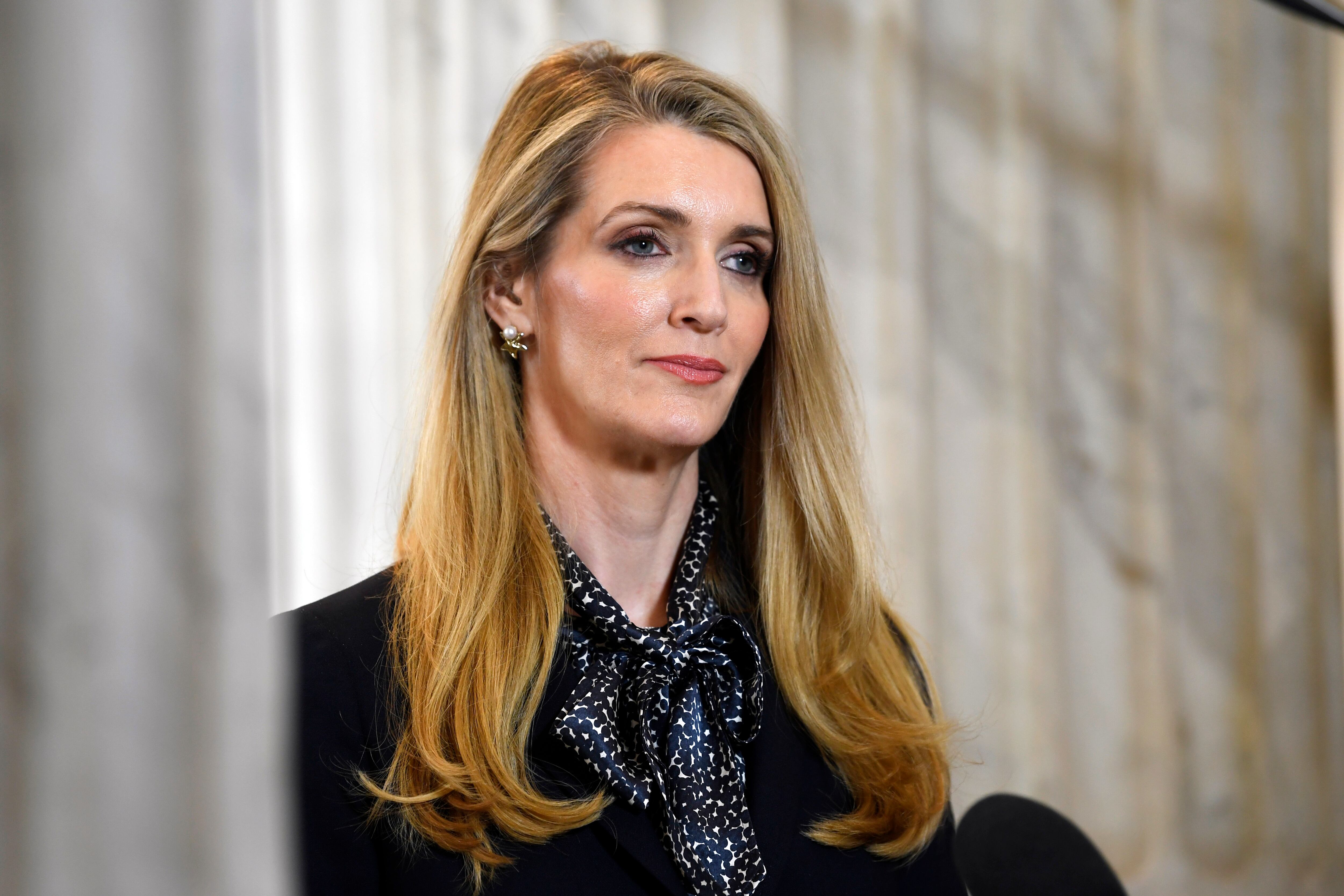
In this March 20, 2020, file photo, Sen. Kelly Loeffler, R-Georgia, waits to speak in a television interview on Capitol Hill in Washington. Loeffler was appointed to the U.S. Senate last year on the hope that she would help the GOP hold on to moderates uncomfortable with the party’s right turn under President Donald Trump. (AP Photo/Susan Walsh, File)
In Georgia, Republican Sen. Kelly Loeffler and Democrat Raphael Warnock have advanced to a Jan. 5 runoff in the special election for Loeffler’s Senate seat.
They’re the top two finishers in a crowded field that also included Republican Rep. Doug Collins. But no candidate was able to get the 50% threshold needed in order to win outright.
Loeffler, a wealthy businesswoman, was appointed last year to replace retiring Sen. Johnny Isakson. Warnock is pastor of the Atlanta church where the Rev. Martin Luther King Jr. preached. Warnock is trying to become Georgia’s first Black U.S. senator.
House Democrats are dealing with one of the thinnest majorities in years. Right now it's sitting at just three seats, and a handful of appointments to cabinet positions didn't help the situation. Next week, however, Democrats in Ohio's 11th Congressional District in Cleveland will decide who will ultimately replace former Rep. Marcia Fudge after the general election in November.
John Barnes, one of the many democratic candidates in the Ohio 11 primary, joins Cheddar Politics to discuss.
As Stablecoins become more popular, U.S. regulators are planning to come up with a set of parameters these companies must abide by. Even Treasury Secretary Janet Yellen and Fed Chairman Jerome Powell say regulations are necessary before Stablecoins are widely adopted. But what's the best way to regulate them and how? Cheddar's Alex Vuocolo explains.