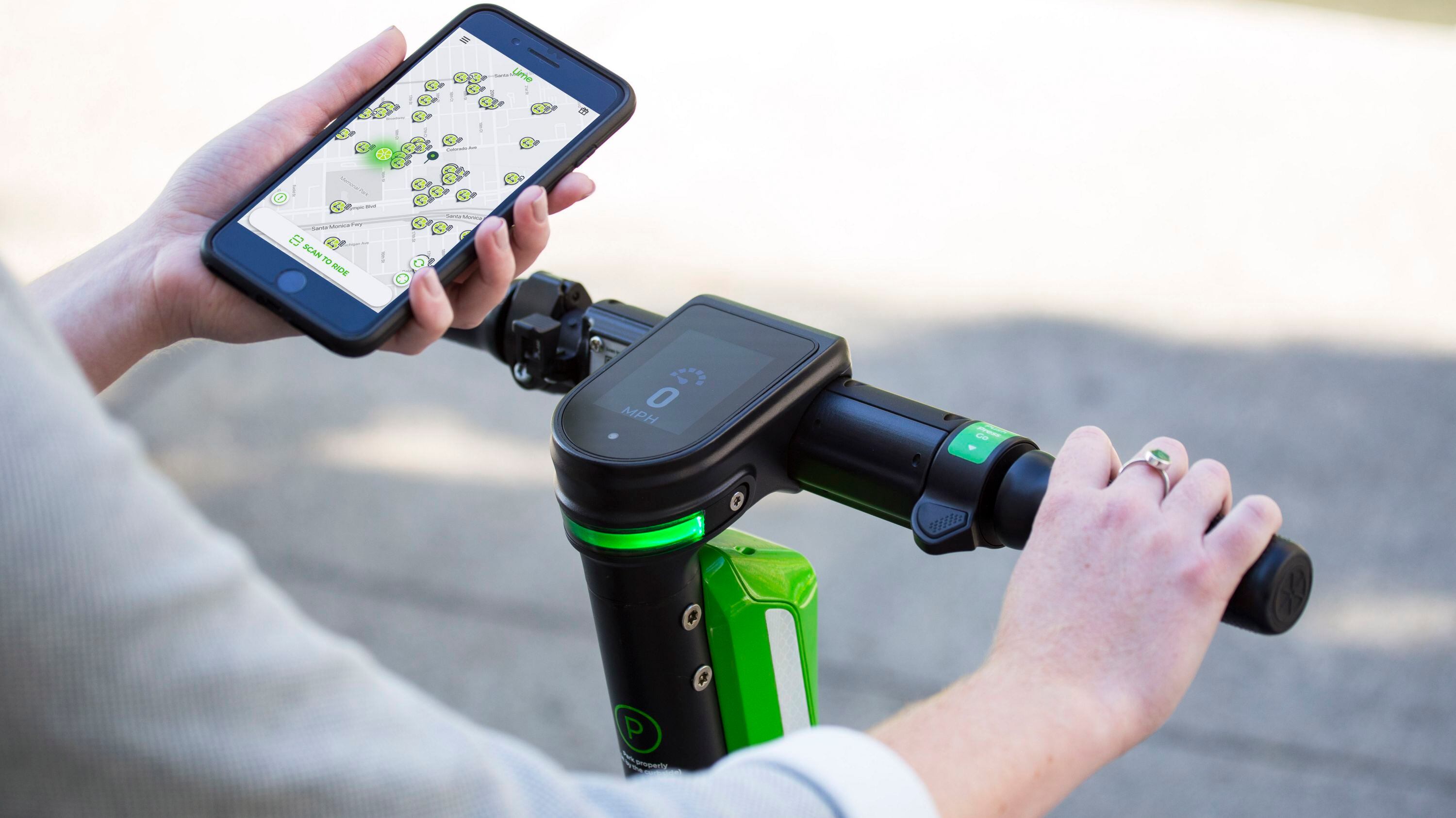
Scooter and bike-sharing startup Lime plans to start shaming scooter riders who zoom on to city sidewalks.
The micromobility company on Tuesday debuted what it's calling "first-of-its-kind" "sidewalk-detection" technology to track when riders depart city streets for sidewalks – and tsk-tsk those who spend too much time scooting where they should be strolling.
The pilot program, rolled out in San José, aims to deter what has become a major source of side-eye – and safety concerns – for Lime and similar micromobility offerings from Lyft, Uber, and others.
"Lime has been working on sidewalk riding detection since hearing concerns from some city and community partners, and we believe we may have finally cracked the code on this issue and developed a technology that is effective, safe and scalable," EV Ellington, Lime's Northern California General Manager, said in a statement.
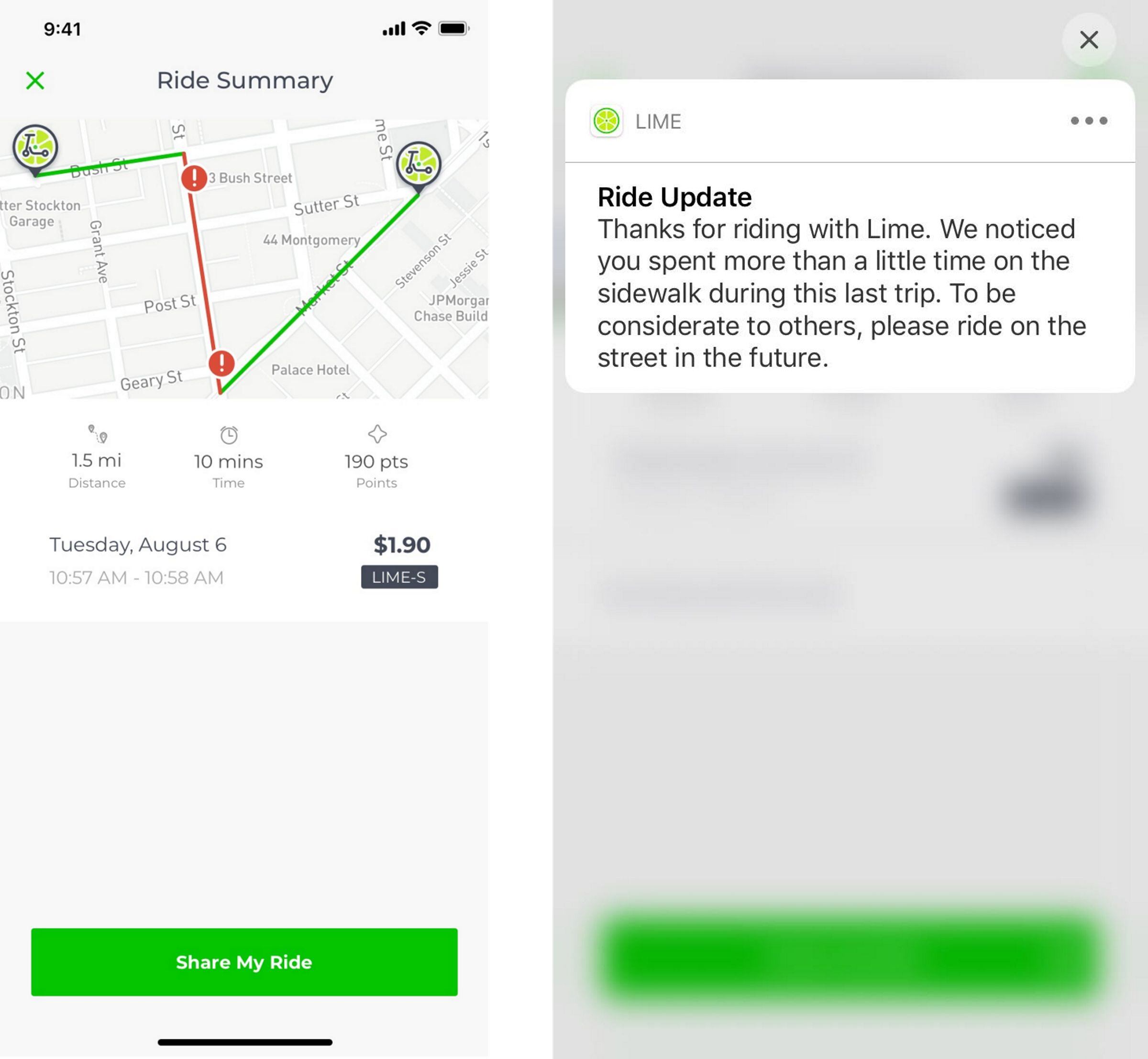
The technology relies on accelerometer and speed data collected from the scooters, allowing software to detect vibrations from the underlying road or sidewalk surface, and to then infer – with 95 percent accuracy, Lime says – whether the rider was coasting along asphalt or veering onto sidewalk concrete.
Riders who appear to have spent more than half their trip on the sidewalk will receive a push notification, taking them to task for riding where they should have walked.
"We noticed you spent more than a little time on the sidewalk during this last trip," a sample message says. "To be considerate to others, please ride on the street in the future."
The move will likely add to ongoing debates over city transportation infrastructure, and to what extent streets are being allocated – or not – for bicycle lanes. A Lime-commissioned survey released last fall, for example, reportedly found that the main reason the company's riders in Salt Lake City end up cruising on the sidewalk is because of safety concerns about riding in the street.
Sidewalk-riding soared by 310 percent along thoroughfares without a bike lane, the company found. By contrast, on roads where bike lanes were available, Lime riders used them more than 82 percent of the time.
Other studies, such as a 2018 analysis by the Portland, Oregon, Bureau of Transportation, have largely corroborated the findings.
"Most people do not prefer to ride on the sidewalk," Jonathan Hopkins, Lime's director of strategic development in the northwestern United States region, told The Salt Lake Tribune. "But in cases where the sidewalk feels to them as the only safe place, they have a tendency towards that."
San José officials welcomed the rollout of the sidewalk-detection pilot program, which they hope will start scooting Lime riders off city sidewalks.
"It's great to see Lime answering our call to action, adopting sidewalk detection technology for riders," Mayor Sam Liccardo said in a statement. "This innovative approach enhances San José's micromobility and pushes the entire industry to make it safer for scooters and pedestrians to equitably share our streets."
The Lime program is the latest technology to harness vibration-detection to infer road-safety conditions. A new GPS app developed at MIT, Carbin, seeks to use drivers' smart-phones to detect road conditions and recommend not simply the fastest route from here to there, but the smoothest and most environmentally friendly.