Saudi Arabia's Lifting Women Driver Ban Is an Economic Play
*By Jacqueline Corba*
For the first time in nearly three decades, women are allowed to get behind the wheel of a car in Saudi Arabia.
And while the change that went into effect Sunday may be a step forward for women's rights in the kingdom, it is also an economic move.
"The driving ban being lifted has been one in a set of limited economic and social reforms aimed specifically at making women good workers and good consumers," Human Rights Watch Acting Saudi Researcher Hiba Zayadin told Cheddar Monday. "With the drop in oil prices Saudi's strategy now is to shift the economy away from an over-dependence on oil."
And to do that, it means getting women to work.
Saudi Arabia's workforce is currently only [22 percent female](https://www.ft.com/content/c55d6cf4-8cd3-11e7-9084-d0c17942ba93), though women account for about 45 percent of the total population. PwC estimates that the number of female drivers will [reach 3 million within two years](https://www.pwc.com/m1/en/publications/women-driving-the-transformation-of-the-ksa-automotive-market.html), and if those women are better able to look for employment, that's going to have an impact. In fact, allowing women to drive will add $90 billion to Saudi Arabia's economy by 2030, according to [Bloomberg Economics](https://www.bloomberg.com/news/articles/2018-06-24/saudi-women-driving-is-seen-better-for-economy-than-aramco-ipo).
But getting everybody on board may not be so easy. The move, spearheaded by Saudi Arabia Crown Prince Mohammed bin Salman, [has some afraid of backlash](https://www.wsj.com/search/term.html?KEYWORDS=saudi%20arabia&page=2) from men reluctant to adopt more western norms. And many who champion equality reportedly remain detained for taking such a stance.
"The women's rights activists currently behind bars should be out there celebrating as well," said Zayadin. "What you are seeing on the news is women smiling with drivers licenses, but at the same time people are afraid to show solidarity for the women behind bars."
For the full segment, [click here.](https://cheddar.com/videos/saudi-arabia-lifts-womens-driving-ban)
The House narrowly passed President Biden's $1.7 trillion Build Back Better bill, the largest expansion of the social safety net in decades. The final vote was 220 to 213, with only one Democrat joining all Republicans in opposing the bill. It now heads to the Senate, where it faces an uncertain fate. Jennifer Haberkorn, congressional reporter for the Los Angeles Times, joins Cheddar News' Closing Bell, where she breaks down the current version of the bill, where it goes next, and what it could mean for the country if it eventually reaches the president's desk.
Two murder trials in focus in America — Wisconsin V. Kyle Rittenhouse and Georgia V. Travis Mcmichael, Gregory Mcmichael, and William Bryan, the Men who killed Ahmaud Arbery. Civil rights and criminal defense lawyer Anthony Tall and the Founder and CEO of Kim Crowder consulting Kim Crowder, joined Cheddar to discuss more.
Rep. Ruben Gallego (D - Arizona) joined Cheddar to discuss the passing of President Biden's Infrastructure Bill and his new book, 'They Called us 'Lucky,' about his time serving in the Iraq War.
Markets were pointing mostly lower to end the week as investors reacted to the threat of a Covid resurgence in Europe. Jeff Schulze, Investment Strategist at ClearBridge Investments joined Cheddar's Opening Bell to discuss Friday's pre-market activity.
A federal judge tossed out a lawsuit against financial services platform Robinhood following the meme stock saga that swept the investment world. The judge said it found no wrongdoing on Robinhood's part after the platform halted trading on popular meme stocks Gamestop and AMC.
Jill and Carlo are back to cover the latest in the Rittenhouse trial, new information on the origins of Covid, return-to-office and more.
JOIN US FOR THE YOUTUBE WATCH PARTY @ 9aET: http://www.youtube.com/cheddarnow
The U.S. Justice Department has filed a lawsuit against Uber after it was discovered that disabled people were being disproportionately affected by extra “wait time” fees. Attorney Jonathan Bell joined Cheddar to discuss.
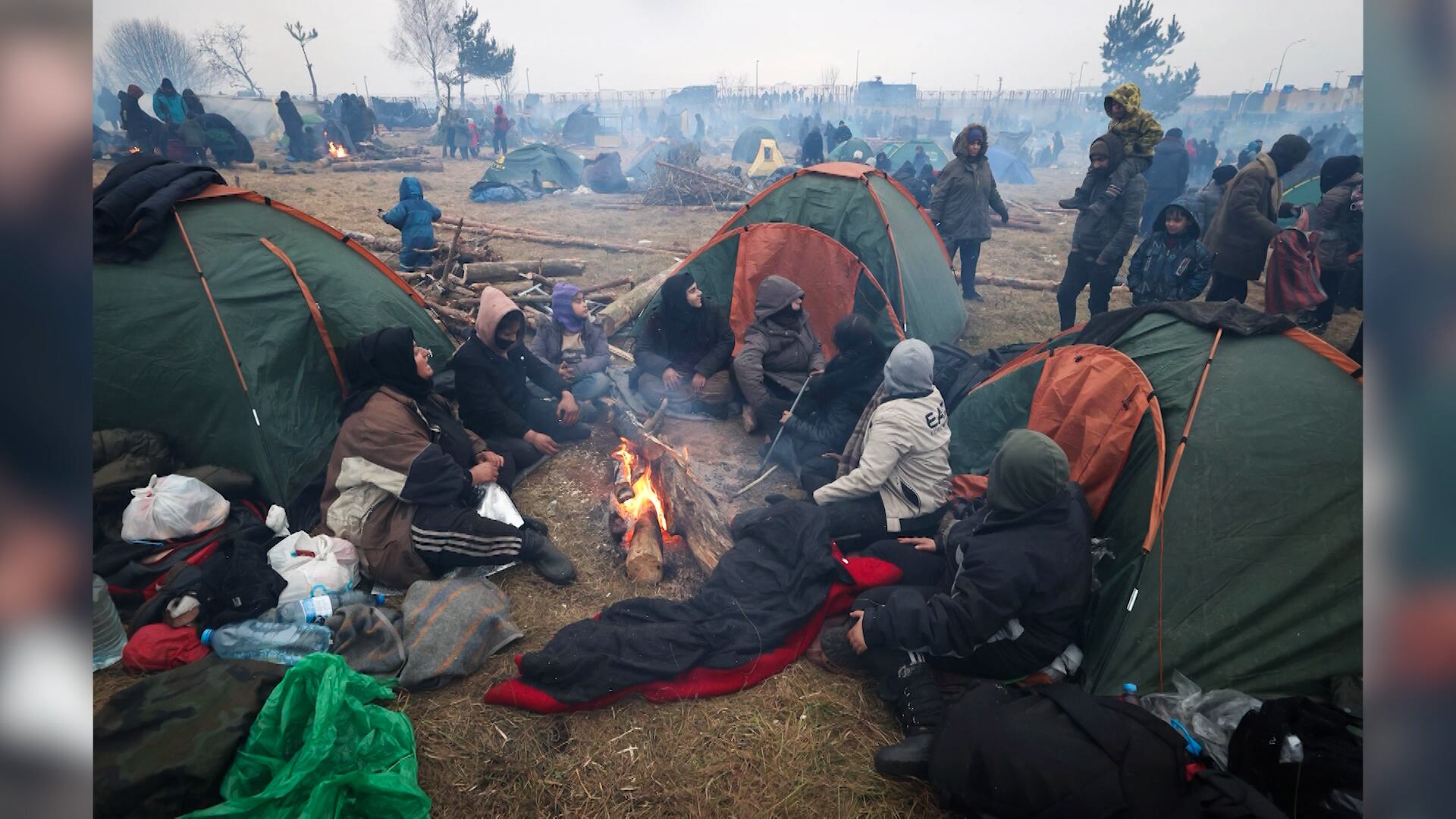
Belarus President Alexander Lukashenko has been accused by the EU of manufacturing a migration crisis along his border with Poland. But, even as tensions appear to be stabilizing at the moment, Ali Noorani, the president and CEO of National Immigration Forum and the host of the "Only in America" podcast spoke to Cheddar about the ongoing danger to the migrants who hail from countries like Iraq and Afghanistan. "What is going to happen to folks who are in Belarus who came from these countries? Is Lukashenko going to provide them asylum and protection in Belarus, or are they going to continue to be political pawns in a geopolitical battle," he said. "Real people's lives are being put at great risk."
A group of crypto investors has come together to raise millions of dollars in the hopes of owning a rare piece of the U.S. Constitution. According to the crypto group, "Constitution DAO" It is time to put the constitution in the hands of the people. CEO and Founder of Metaversal Yossi Hasson, joined Cheddar to discuss more.
Polarization is among the defining traits of American politics in the 21st century. Sometimes it seems like the only thing we can all agree on is the fact that we don't really agree on anything. But those divisions don't just stop at whether you vote red or blue.
A new survey from the Pew Research Center finds that rather than just two political buckets, we have nine. The "2021 political typology" as it's called distinguishes between different ideological subsets in the Democratic and Republican party. It encompasses everyone from the loudest revolutionary lefties, to the loudest insurrection apologists on the right.
Andrew Daniller, research associate at the Pew Research Center, joins None of the Above to discuss.