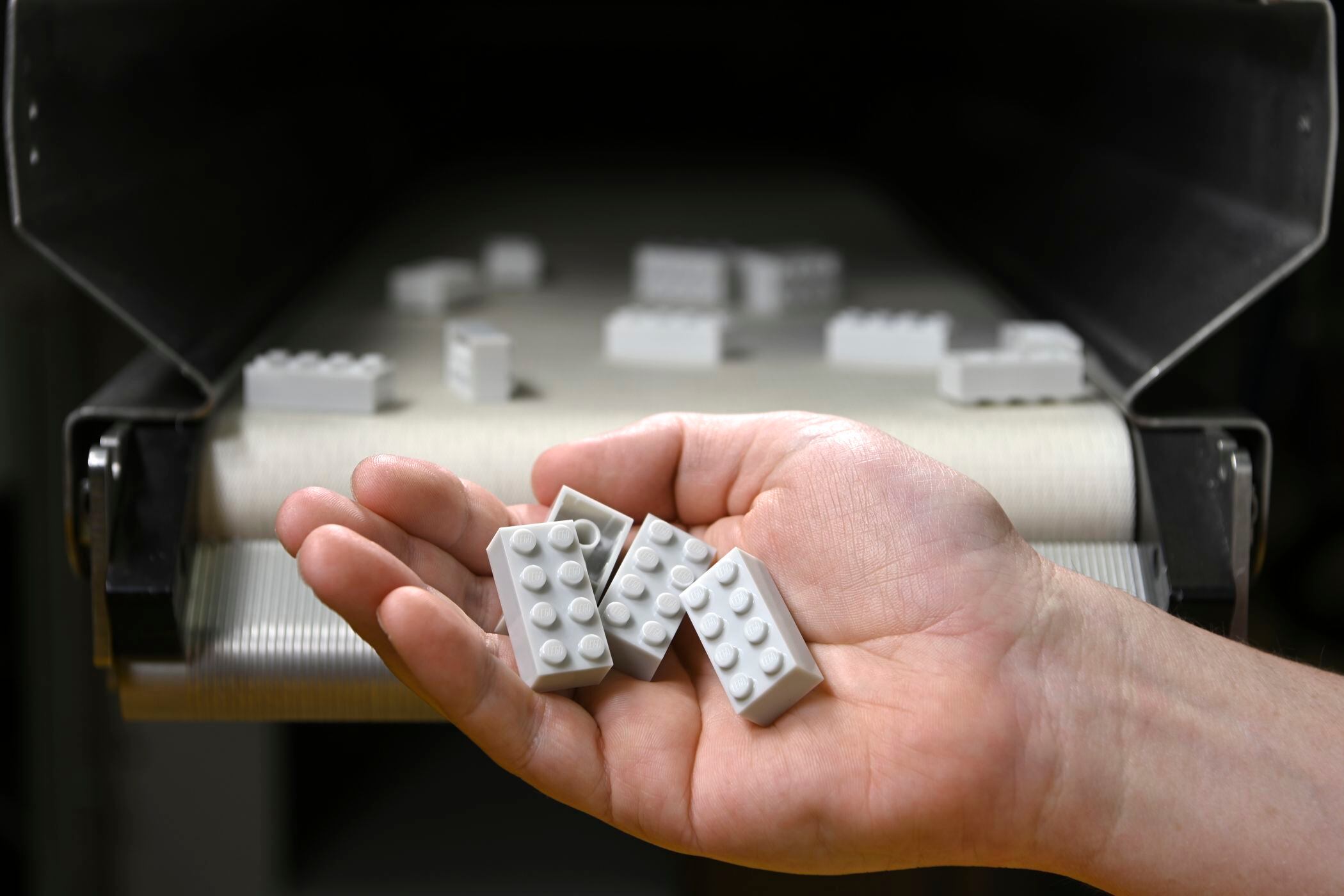
Danish toymaker Lego has presented its first building bricks made out of recycled drinks bottles — an experimental project that if successful could eventually go into production.
In a statement Wednesday, the group said the prototype uses plastic from discarded bottles from the United States. On average, a one-liter bottle provides enough raw material for ten Lego bricks with two rows of four studs, said the company which is based in Billund, western Denmark.
“We know kids care about the environment and want us to make our products more sustainable,” said Tim Brooks, the Lego group’s vice president of environmental responsibility. “Even though it will be a while before they will be able to play with bricks made from recycled plastic, we want to let kids know we’re working on it.”
The company said its discarded bottle suppliers use processes approved by the US Food & Drug Administration and the European Food Safety Authority.
The bottles are made of PET plastic, or polyethylene terephthalate, which doesn't degrade in quality when recycled.
The prototype followed more than three years of research during which hundreds of variations of PET materials and other plastic formulations were tested, Lego said. It can fit with Lego elements made over the past 60 years.
Lego said its team will continue to carry out tests over at least a year and then assess whether to move to the pilot production phase.
Lego was founded in 1932 by Ole Kirk Kristiansen. The name derived from the two Danish words LEg GOdt, which mean “Play Well.”
Nvidia smashes earnings with record-breaking revenue and soaring Blackwell demand as shares slip this morning, Barron’s senior writer Adam Levine unpacks it all
Jeff Wagoner, CEO of Outrigger Hospitality Group, discusses the company’s coral preservation initiatives and sustainable practices at their hotels and resorts.
Dena Jalbert, Head of M&A at Align Advisory, discusses the state of mergers and acquisitions in 2025 and beyond, highlighting key trends and opportunities.
Kim Perell, author and entrepreneur, shares actionable tips and tricks to help current and aspiring entrepreneurs kick off 2026 with confidence and momentum.
Computer chipmaker Nvidia is poised to release a quarterly earnings report that is expected to either deepen a recent downturn in the stock market or prompt an ebullient sigh of relief among investors increasingly worried the world’s most valuable company is perched upon an artificial intelligence bubble about to burst.
Emera CEO Scott Balfour discusses soaring energy demand, AI-driven grid challenges, clean-power investments, and how the company is building a resilient future.
JB Mackenzie discusses Robinhood’s new entertainment prediction markets, letting users engage with pop culture, award shows, and more through low-stakes bets.
Rhett Power shares his startup journey, lessons from his early years and insights from his book on overcoming negative self-talk to lead with confidence.
Despite inflation, Americans aren’t giving up the gym. Crunch Fitness CEO Jim Rowley discusses strong growth, value-driven expansion and what the future holds.
Home prices far outpacing incomes, low inventory, and higher living costs are reshaping the market. WSJ’s Veronica Dagher breaks down the challenges ahead.