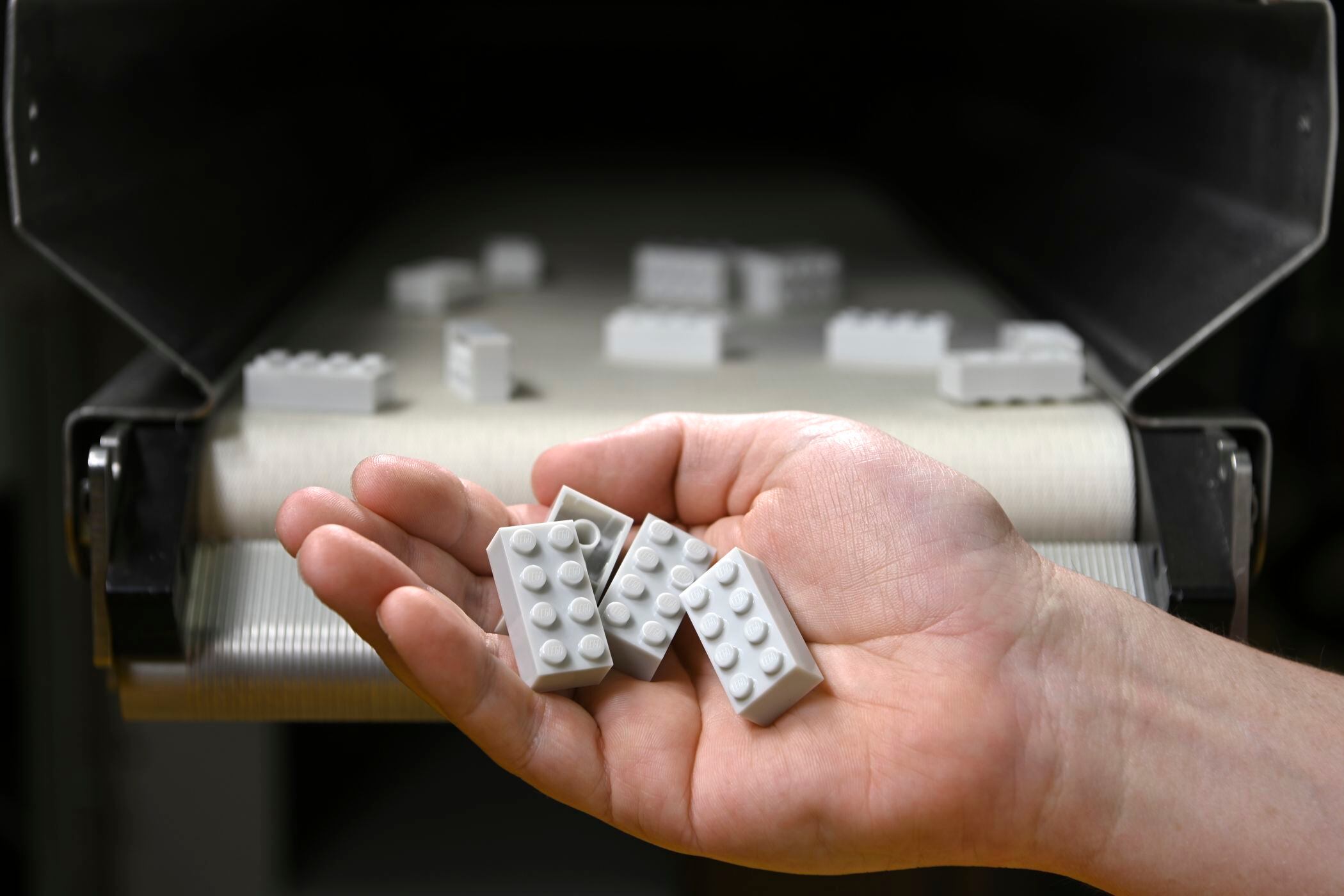
Danish toymaker Lego has presented its first building bricks made out of recycled drinks bottles — an experimental project that if successful could eventually go into production.
In a statement Wednesday, the group said the prototype uses plastic from discarded bottles from the United States. On average, a one-liter bottle provides enough raw material for ten Lego bricks with two rows of four studs, said the company which is based in Billund, western Denmark.
“We know kids care about the environment and want us to make our products more sustainable,” said Tim Brooks, the Lego group’s vice president of environmental responsibility. “Even though it will be a while before they will be able to play with bricks made from recycled plastic, we want to let kids know we’re working on it.”
The company said its discarded bottle suppliers use processes approved by the US Food & Drug Administration and the European Food Safety Authority.
The bottles are made of PET plastic, or polyethylene terephthalate, which doesn't degrade in quality when recycled.
The prototype followed more than three years of research during which hundreds of variations of PET materials and other plastic formulations were tested, Lego said. It can fit with Lego elements made over the past 60 years.
Lego said its team will continue to carry out tests over at least a year and then assess whether to move to the pilot production phase.
Lego was founded in 1932 by Ole Kirk Kristiansen. The name derived from the two Danish words LEg GOdt, which mean “Play Well.”