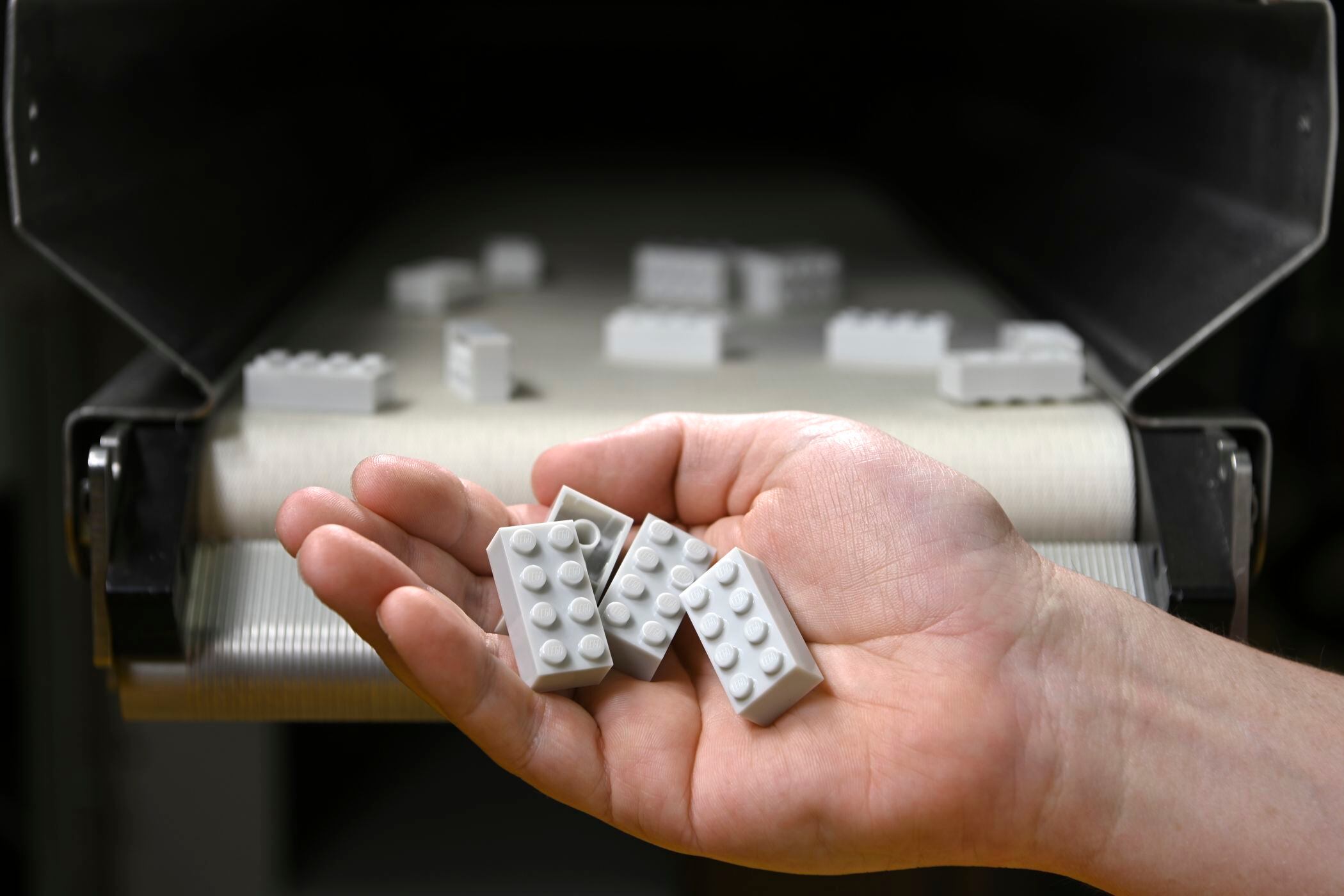
Danish toymaker Lego has presented its first building bricks made out of recycled drinks bottles — an experimental project that if successful could eventually go into production.
In a statement Wednesday, the group said the prototype uses plastic from discarded bottles from the United States. On average, a one-liter bottle provides enough raw material for ten Lego bricks with two rows of four studs, said the company which is based in Billund, western Denmark.
“We know kids care about the environment and want us to make our products more sustainable,” said Tim Brooks, the Lego group’s vice president of environmental responsibility. “Even though it will be a while before they will be able to play with bricks made from recycled plastic, we want to let kids know we’re working on it.”
The company said its discarded bottle suppliers use processes approved by the US Food & Drug Administration and the European Food Safety Authority.
The bottles are made of PET plastic, or polyethylene terephthalate, which doesn't degrade in quality when recycled.
The prototype followed more than three years of research during which hundreds of variations of PET materials and other plastic formulations were tested, Lego said. It can fit with Lego elements made over the past 60 years.
Lego said its team will continue to carry out tests over at least a year and then assess whether to move to the pilot production phase.
Lego was founded in 1932 by Ole Kirk Kristiansen. The name derived from the two Danish words LEg GOdt, which mean “Play Well.”
Former Cisco Systems CEO John Chambers learned all about technology’s volatile highs and lows as a veteran of the internet’s early boom days during the late 1990s and the ensuing meltdown that followed the mania. And now he is seeing potential signs of the cycle repeating with another transformative technology in artificial intelligence. Chambers is trying take some of the lessons he learned while riding a wave that turned Cisco into the world's most valuable company in 2000 before a crash hammered its stock price and apply them as an investor in AI startups. He recently discussed AI's promise and perils during an interview with The Associated Press.
Grove Collaborative’s CEO shares how the company is reinventing everyday goods with sustainability at the core and working toward a plastic-free future.
Atlanta Mayor Andre Dickens shares plans for affordable housing, community-led growth, and why private and public grocery stores could be key to food equity.
Tesla reported a surprise increase in sales in the third quarter as the electric car maker likely benefited from a rush by consumers to take advantage of a $7,500 credit before it expired on Sept. 30. The company reported Thursday that sales in the three months through September rose 7% compared to the same period a year ago. The gain follows two quarters of steep declines as people turned off by CEO Elon Musk’s foray into right-wing politics avoided buying his company’s cars and even protested at some dealerships. Sales rose to 497,099 vehicles, compared with 462,890 in the same period last year.
Tom’s Guide Editor-in-Chief Mark Spoonauer breaks down Apple & Amazon's latest product drops—what's hot, what's hype, and what really matters for users.
InnerPlant CEO Shely Aronov reveals how engineered crops like soybeans and corn emit signals when stressed—offering farmers early warnings to boost yields.