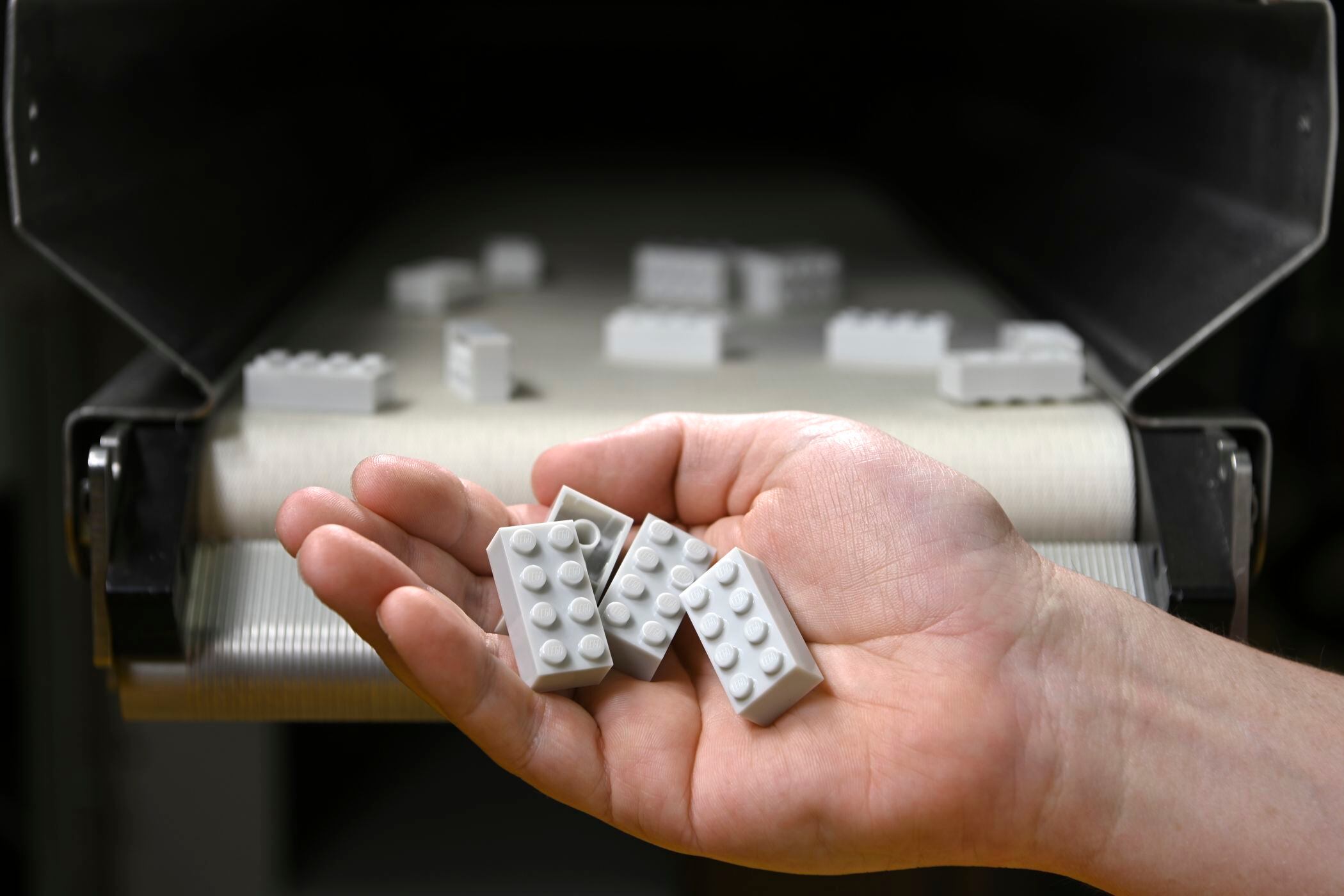
Danish toymaker Lego has presented its first building bricks made out of recycled drinks bottles — an experimental project that if successful could eventually go into production.
In a statement Wednesday, the group said the prototype uses plastic from discarded bottles from the United States. On average, a one-liter bottle provides enough raw material for ten Lego bricks with two rows of four studs, said the company which is based in Billund, western Denmark.
“We know kids care about the environment and want us to make our products more sustainable,” said Tim Brooks, the Lego group’s vice president of environmental responsibility. “Even though it will be a while before they will be able to play with bricks made from recycled plastic, we want to let kids know we’re working on it.”
The company said its discarded bottle suppliers use processes approved by the US Food & Drug Administration and the European Food Safety Authority.
The bottles are made of PET plastic, or polyethylene terephthalate, which doesn't degrade in quality when recycled.
The prototype followed more than three years of research during which hundreds of variations of PET materials and other plastic formulations were tested, Lego said. It can fit with Lego elements made over the past 60 years.
Lego said its team will continue to carry out tests over at least a year and then assess whether to move to the pilot production phase.
Lego was founded in 1932 by Ole Kirk Kristiansen. The name derived from the two Danish words LEg GOdt, which mean “Play Well.”
Geoff Freeman, president and CEO of the U.S. Travel association, explains why other nations are outcompeting the U.S., and the innovations that would put American back on top.
Tony Drake, founder of Drake & Associates, breaks down the latest CPI report, why ‘inflation is still trending down,’ and why the Fed doesn’t want to cut rates too soon.
Make sure your love don't cost a thing this Valentine's Day to any scammers. Note: we're not talking about your partner that didn't do the dishes after saying they would.
Landing founder and CEO Bill Smith shares how the company’s new Nomad pass and partnership with Frontier Airlines allows subscribers unlimited airfare and accommodations.
The pandemic yielded government financial support and (eventually) a surprisingly strong job market — but racial wealth disparities grew. Why is it so difficult to close the wealth gap?
Plenty of retailers and suppliers are reducing the variety of their offerings to focus instead on what they think will sell best. Many businesses have decided less is better, justifying their limited selection by asserting shoppers don’t want so much choice.
Joe Pompliano, author of the Huddle Up newsletter, breaks down the biggest moments from Super Bowl LVIII, from potentially record-breaking viewership to Taylor Swift’s highly anticipated appearance.
David Wright, President and owner of Wright Financial Group, shares his thoughts on why the Federal Reserve seems hesitant to cut rates, and why regional bank stocks could help move the needle.