For Black Americans, getting pulled over by police can be a more than terrifying experience, particularly when alone and other witnesses are out of sight. Mbye Njie said he founded the Legal Equalizer app to add a layer of protection for drivers and to hold officers accountable by recording interactions and even dialing-in witnesses.
“That’s the goal of it, right, is to change behavior and so that if a police officer pulls you [over] for speeding, legitimately, cool. Give me my ticket, let me get on. Let’s not ask questions about where I’m going, where I’ve been, what I’m doing. Let’s not hold people longer,” Njie told Cheddar.
To get going on the app, five contacts are linked and will receive notifications to tune in to a live Zoom call of the police stop. A user can simply use their voice to activate the app or just hit a button.
Recording police interactions is also an available feature in the app. While they vary across the 50 states, Njie said laws from each have also been added into the app’s features because, in many instances, people are unaware of their rights.
“As long as they know people are watching them, hopefully then when they start pulling people over, then it’s for the reason they pulled them over and not for any other excuses or anything that can escalate to something more tragic,” Njie said.
Holding Police Accountable
When it comes to police accountability, with enough data collected from the stops, according to the Legal Equalizer founder, the app will be able to compile a background on officers who are targeting specific groups.
To make the app helpful for both drivers and authorities, Njie asked police departments across the country, “What do you want us to do when you pull us over?”
“Most of the police chiefs I’ve spoken to love it because they say, 'We do want our officer recorded because if we trained them properly and we did things properly, then this is exactly what we need,'” Njie added.
Though Njie said he started the app after personal experiences with police, it has morphed into a hub that can help in a number of different scenarios, including domestic violence situations and school shootings.
Up next for the app, when it comes to law enforcement interactions, Njie said the company is working to expand capabilities that can tie in a database of attorneys who could also be tapped to join in during an encounter, offer advice, and stand as legal witnesses.
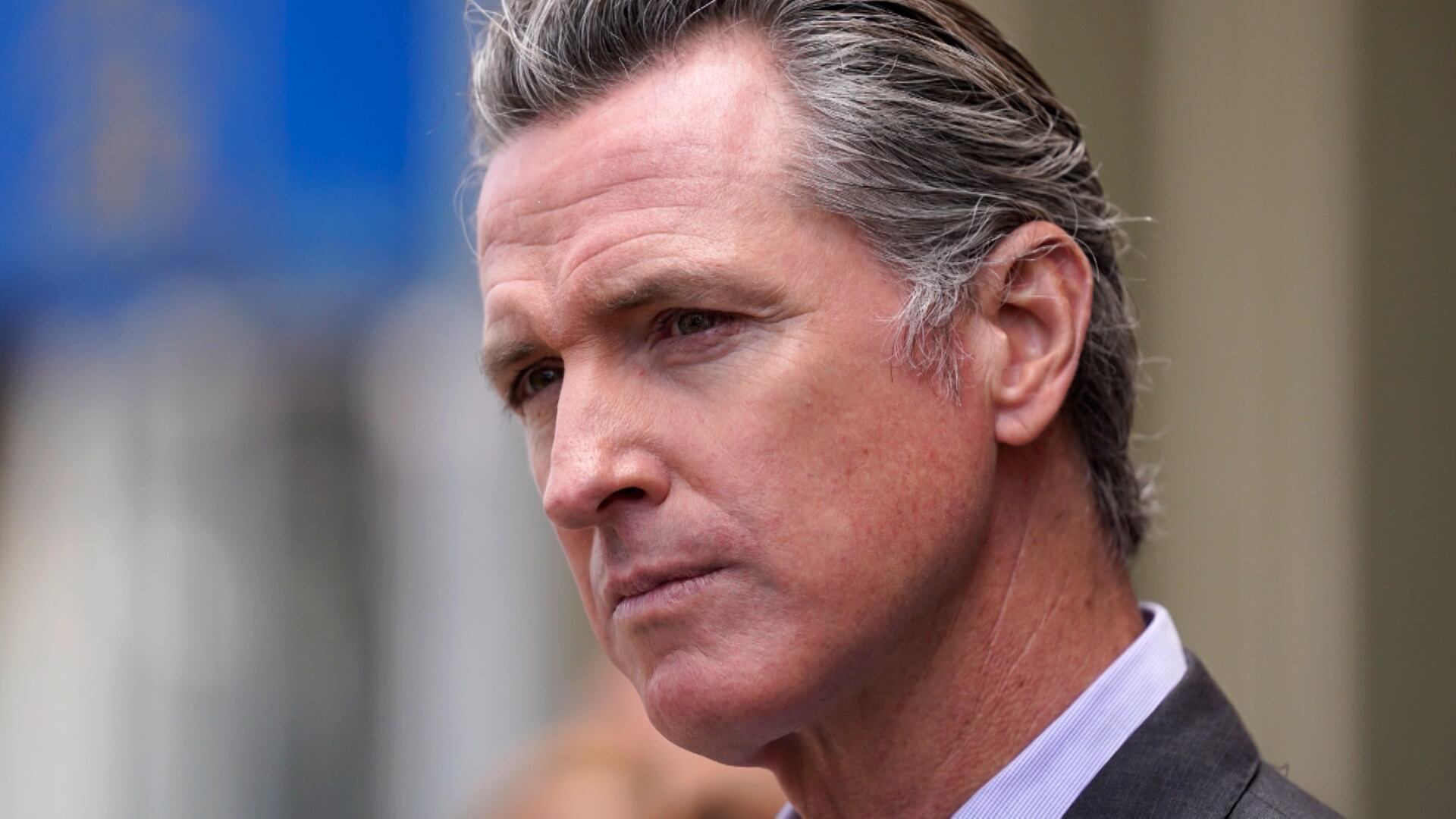
Emily Hoeven, newsletter editor at CalMatters, joins Cheddar News to discuss California Governor Gavin Newsom's gun law modeled after Texas's abortion law.
Chuck Rocha, host of 'Nuestro' podcast and opinion contributor at The New York Times, joins Cheddar News to discuss why Democrats are losing Hispanic voters.
More businesses are requiring workers to return to the office, but there is concern that many employees in the middle class, especially women and people of color, need remote work options for reasons including childcare and financial security. Joan Williams, director of the Center for WorkLife Law at the University of California, joined Cheddar to discuss why office mandates could be detrimental to the middle class. She noted that while companies claim a return to offices would help foster more collaboration and efficiency, reports show that they are successfully able to do their jobs from home.
The U.S. postal service has confirmed that it secretly developed and tested a blockchain-based mobile voting system ahead of the 2020 election. Susan Greenhalgh, senior advisor on election security, Free Speech for People, joins Cheddar News to discuss the cybersecurity complications of a mobile voting system.
The U.S. Supreme Court ruled to allow the controversial Texas abortion law to remain in effect, banning abortion at six weeks and allowing any private citizen to sue a person or doctor aiding or abetting someone seeking an abortion. Outraged at this decision, California Governor Gavin Newsom is working to draft a proposal in line with the law as it relates to guns. Shawn Hubler, California correspondent at the New York Times, joins Cheddar News to discuss.
Even as tech giant Google implements a vaccination mandate, charging its employees to declare their vaccine status within a time frame or risk dismissal, the federal government is tangled up in the court system trying to impose one of its own. Cindy Cohn, the executive director of the Electronic Frontier Foundation, and Harry Nelson, founder and managing partner of Nelson Hardiman LLP, joined Cheddar to debate the ethics, efficacy, and legality surrounding the issue. While Cohn noted that she thinks the federal mandate might be legally sound, her organization is also concerned with a separate question of privacy. "At EFF what we're most interested in is the digital surveillance that's going along with some of these attempts to try to track and confirm whether people are vaccinated or not," she said.