Leaders of women’s wellness company OneTaste guilty of forced labor
By Philip Marcelo
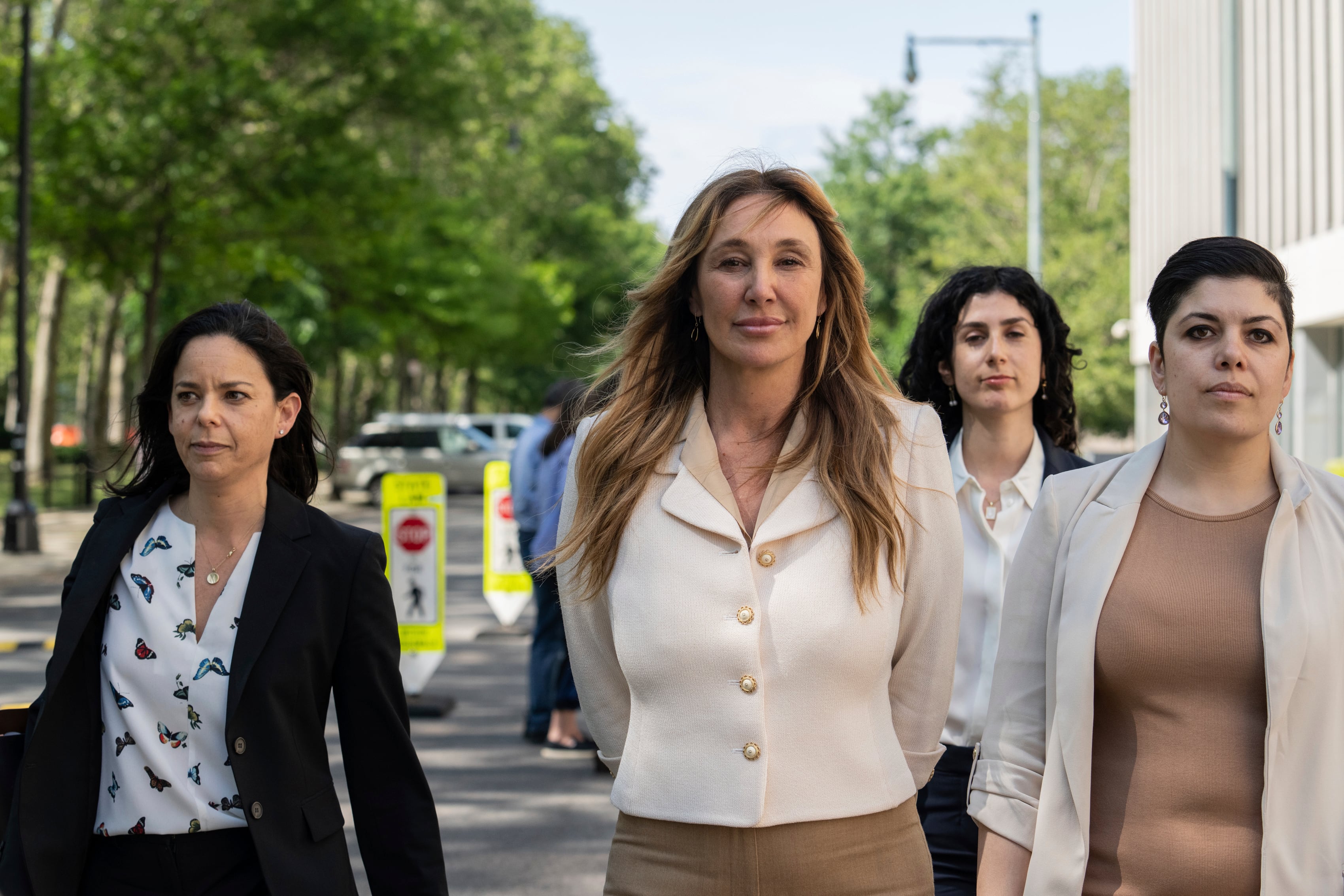
FILE - Nicole Daedone, center, founder and former CEO of OneTaste, departs Brooklyn federal court on Tuesday, June 13, 2023 in New York. (AP Photo/Jeenah Moon, File)
NEW YORK (AP) — The leaders of a sex-focused women’s wellness company that promoted “orgasmic meditation” have been convicted of federal forced labor charges.
A Brooklyn jury on Monday found Nicole Daedone, founder of OneTaste Inc., and Rachel Cherwitz, the California-based company’s former sales director, guilty of forced labor conspiracy after deliberating for less than two days following a roughly monthlong trial.
Daedone’s defense team had cast her as a “ceiling-shattering feminist entrepreneur” who created a unique business around women’s sexuality and empowerment.
But prosecutors argued the two women ran a yearslong scheme that groomed adherents — many of them victims of sexual trauma — to do their bidding.
They said Daedone and Cherwitz used economic, sexual and psychological abuse, intimidation and indoctrination to force OneTaste members into sexual acts they found uncomfortable or repulsive, such as having sex with prospective investors or clients.
The two told followers the questionable acts were necessary in order to obtain “freedom” and “enlightenment” and demonstrate their commitment to the organization’s principles.
Prosecutors said OneTaste leaders also didn’t pay promised earnings to the members-turned-workers and even forced some of them to take out new credit cards to continue taking the company’s courses.
Lawyers for the defendants said their clients maintain their innocence and intend to appeal.
“We are deeply disappointed in today’s verdict,” the lawyers said in a statement. ”This case raised numerous novel and complex legal issues that will require review by the Second Circuit. We find inspiration in our clients, Nicole and Rachel, who have shown incredible strength throughout this entire process.”
OneTaste started in San Francisco around 2005 as a sort of self-help commune that viewed female orgasms as key to sexual and psychological wellness and interpersonal connection.
A centerpiece was “orgasmic meditation,” carried out by men manually stimulating women in a group setting.
The company quickly opened outposts from Los Angeles to London following glowing media coverage in the 2010s. At the time, OneTaste was portrayed as a cutting-edge enterprise that prioritized women’s sexual pleasure.
But Daedone sold her stake in 2017 — a year before OneTaste’s marketing and labor practices came under scrutiny.
The company’s current owners, who have rebranded it the Institute of OM Foundation, have said its work has been misconstrued and the charges against its former executives were unjustified.
They maintain sexual consent has always been a cornerstone of the organization. The company didn’t immediately respond to an email seeking comment.
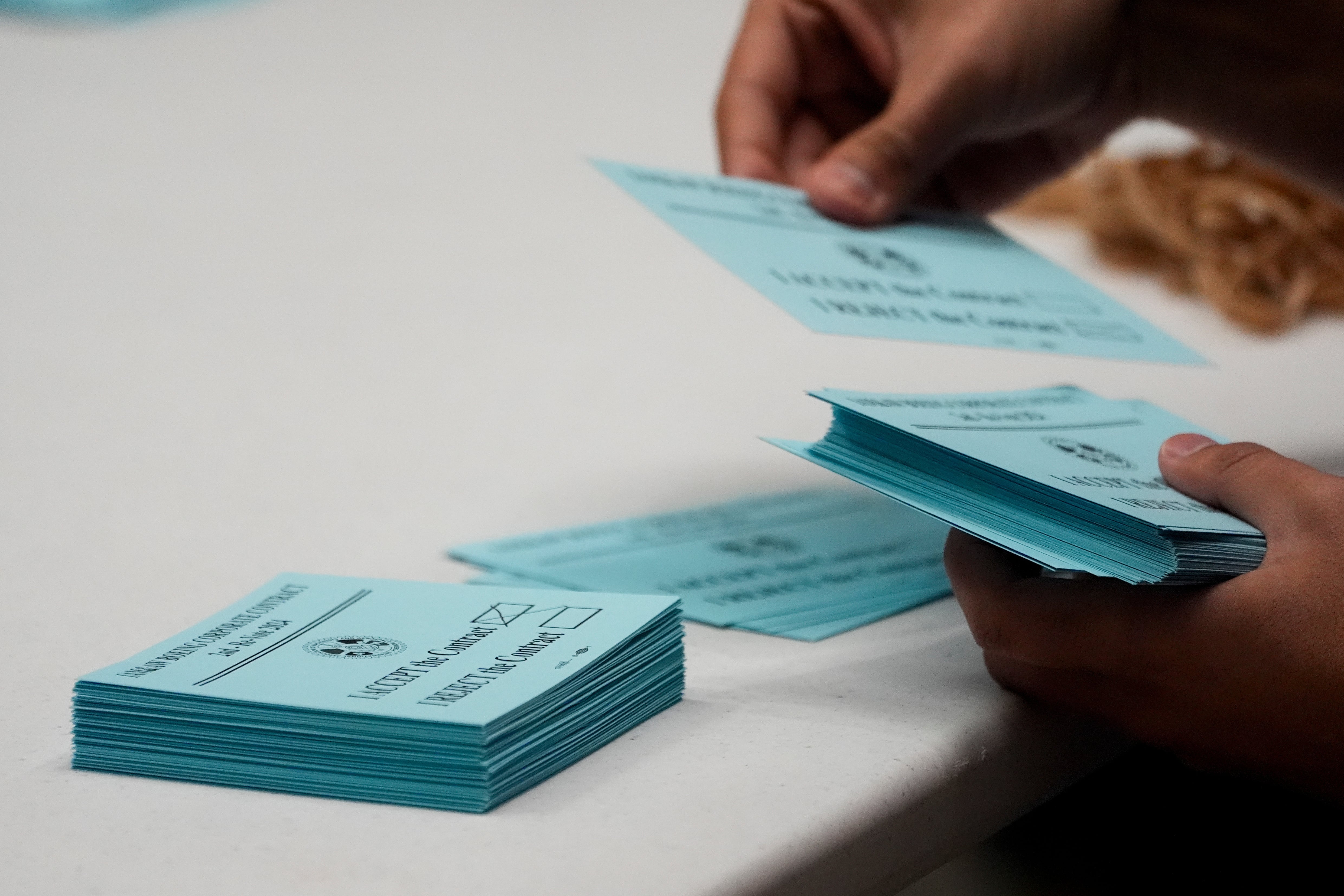
Boeing workers at three Midwest plants where military aircraft and weapons are developed have voted to reject the company’s latest contract offer and to continue a strike that started almost three months ago. The strike by about 3,200 machinists at the plants in the Missouri cities of St. Louis and St. Charles, and in Mascoutah, Illinois, is smaller in scale than a walkout last year by 33,000 Boeing workers who assemble commercial jetliners. The president of the International Association of Machinists says Sunday's outcome shows Boeing hasn't adequately addressed wages and retirement benefits. Boeing says Sunday's vote was close with 51% of union members opposing the revised offer.
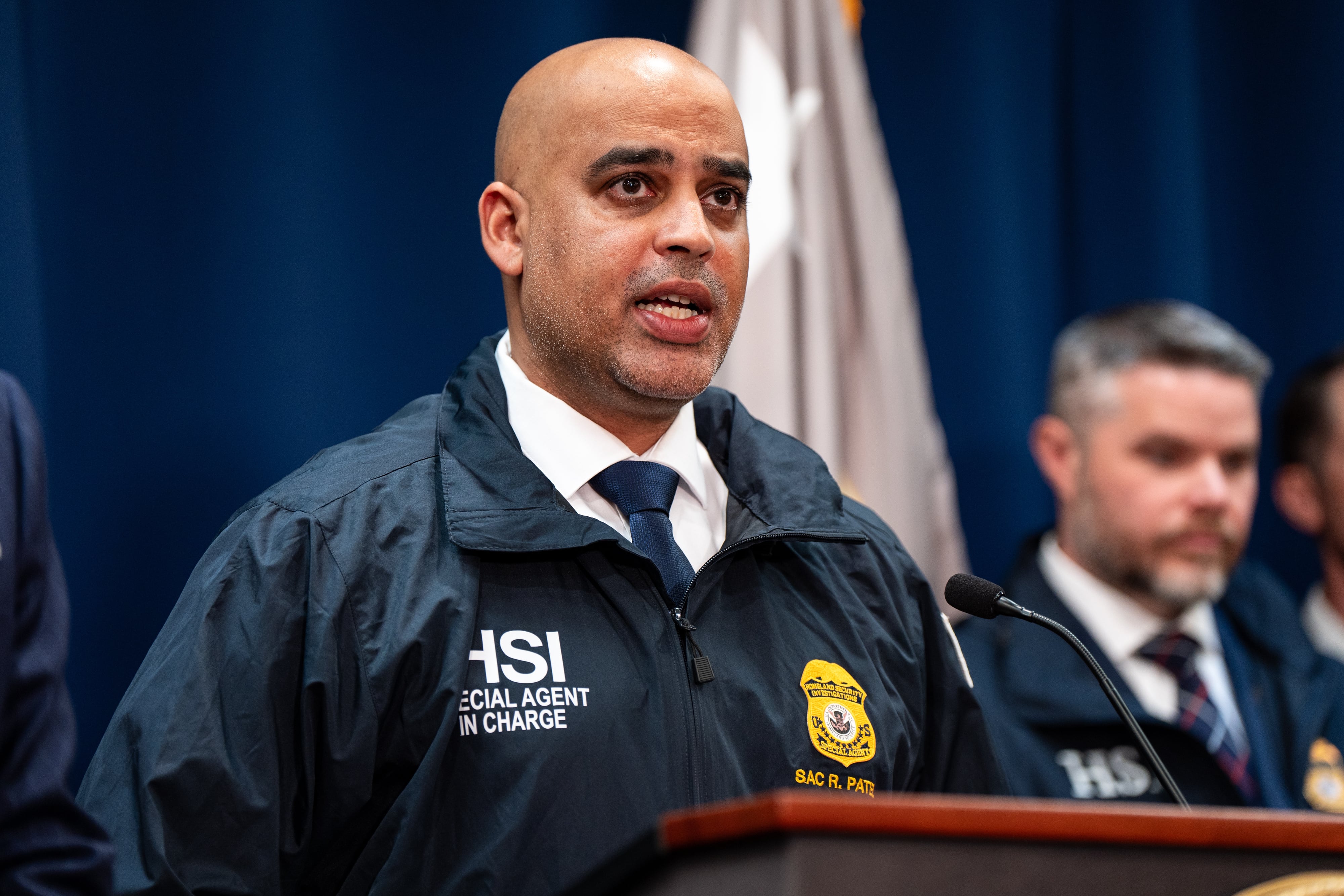
The stunning indictment that led to the arrest of more than 30 people — including Miami Heat guard Terry Rozier and other NBA figures — has drawn new scrutiny of the booming business of sports betting in the U.S. The multibillion-dollar industry has made it easy for sports fans — and even some players — to wager on everything from the outcome of games to that of a single play with just a few taps of a cellphone. But regulating the rapidly-growing industry has proven to be a challenge. Professional sports leagues’ own role in promoting gambling has also raised eyebrows.
Tesla, the car company run by Elon Musk, reported Wednesday that it sold more vehicles in the past three months after boycotts hit hard earlier this year, but profits still fell sharply. Third-quarter earnings fell to $1.4 billion, from $2.2 billion a year earlier. Excluding charges, per share profit of 50 cents came in below analysts' estimate. Tesla shares fell 3.5% in after-hours trading. Musk said the company's robotaxi service, which is available in Austin, Texas, and San Francisco, will roll out to as many as 10 other metro areas by the end of the year.
Starbucks’ AI barista aims to speed service and improve experience. Nick Lichtenberg, Fortune Business Editor, explains its impact on workers and customers.
As Big Tech reports Q3 earnings, investors await proof that massive AI and cloud investments from Meta, Apple, Microsoft, and Alphabet are driving real growth.
Eric Trump joins us to discuss American Bitcoin’s mission, market strategy, and why he believes the U.S. must lead the next era of digital currency innovation.
Unreal Snacks CEO Kevin McCarthy shares how dye-free candy is leading the sweets revolution—just in time for what could be a record-breaking Halloween 2025.