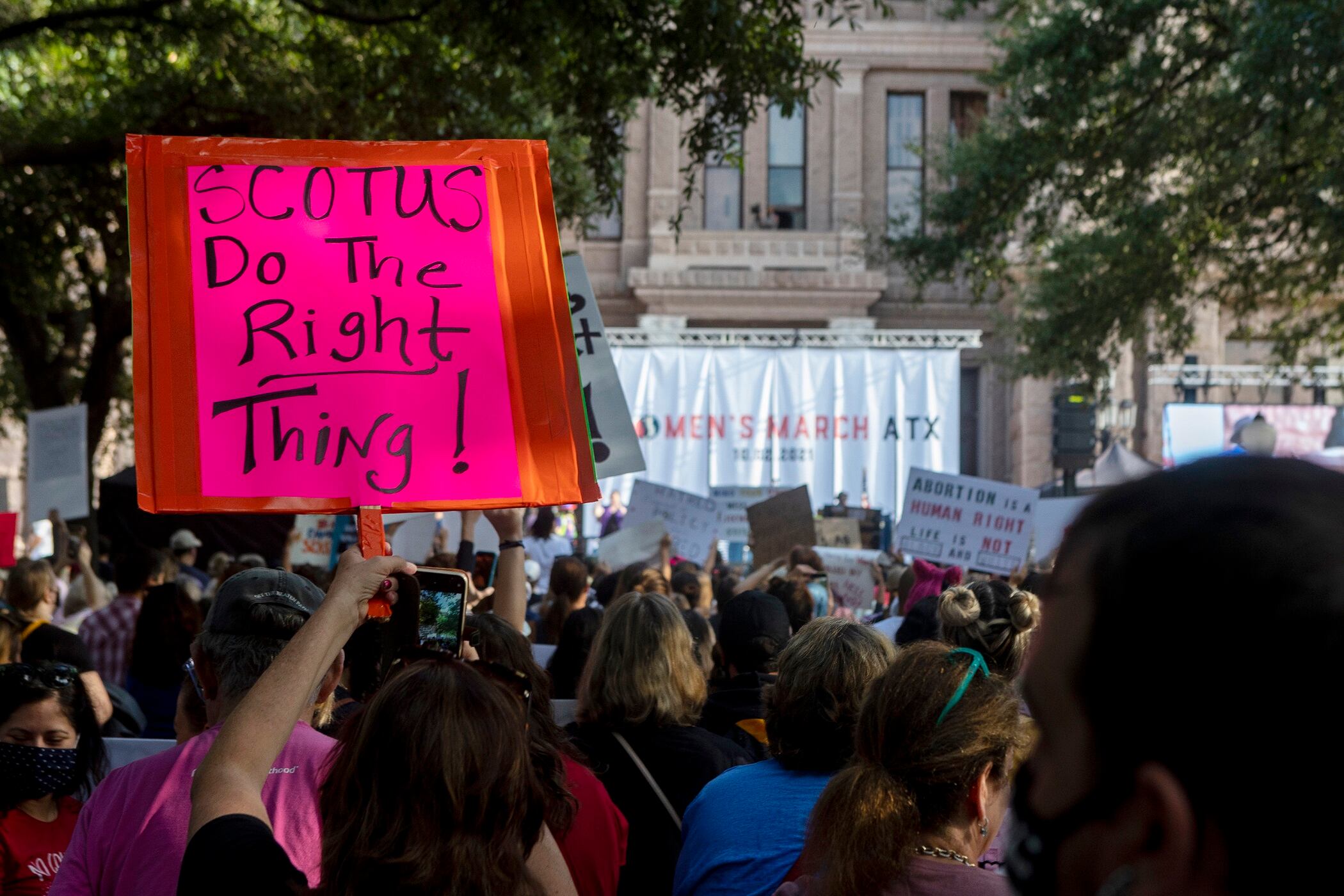
Senate Republicans on Thursday blocked a Democratic measure to revive the Equal Rights Amendment, dealing yet another blow to supporters who have pushed for more than five decades to amend the Constitution to prohibit discrimination based on sex.
Democrats failed to win the necessary 60 votes to move forward with the resolution, which would have removed a 1982 deadline for state ratification and reopened the process to amend the Constitution.
The 51-47 vote included support from two Republicans, Maine Sen. Susan Collins and Alaska Sen. Lisa Murkowski — well short of the 10 GOP votes needed.
Senate Majority Leader Chuck Schumer, D-N.Y., put the resolution up for a vote this week, even as it was unlikely to pass. He said it was especially timely in the wake of the Supreme Court’s decision last year to overturn Roe v. Wade and the constitutional right to an abortion.
“Women in America have far fewer rights today than they did even a year ago,” Schumer said.
After the vote, Schumer said the Senate is “not giving up,” and would keep trying to pass the measure.
Congress sent the amendment, which guarantees men and women equal rights under the law, to the states in 1972. It gave states seven years to ratify it, later extending the deadline to 1982. But the amendment wasn’t ratified by the required three-quarters of states before the deadline.
At the same time, several states — including Nebraska, Tennessee, Idaho, Kentucky and South Dakota — have attempted to remove their prior approval.
States can support the federal version individually, though it is not ratified into the U.S. Constitution, so those ratifications remain mostly symbolic.
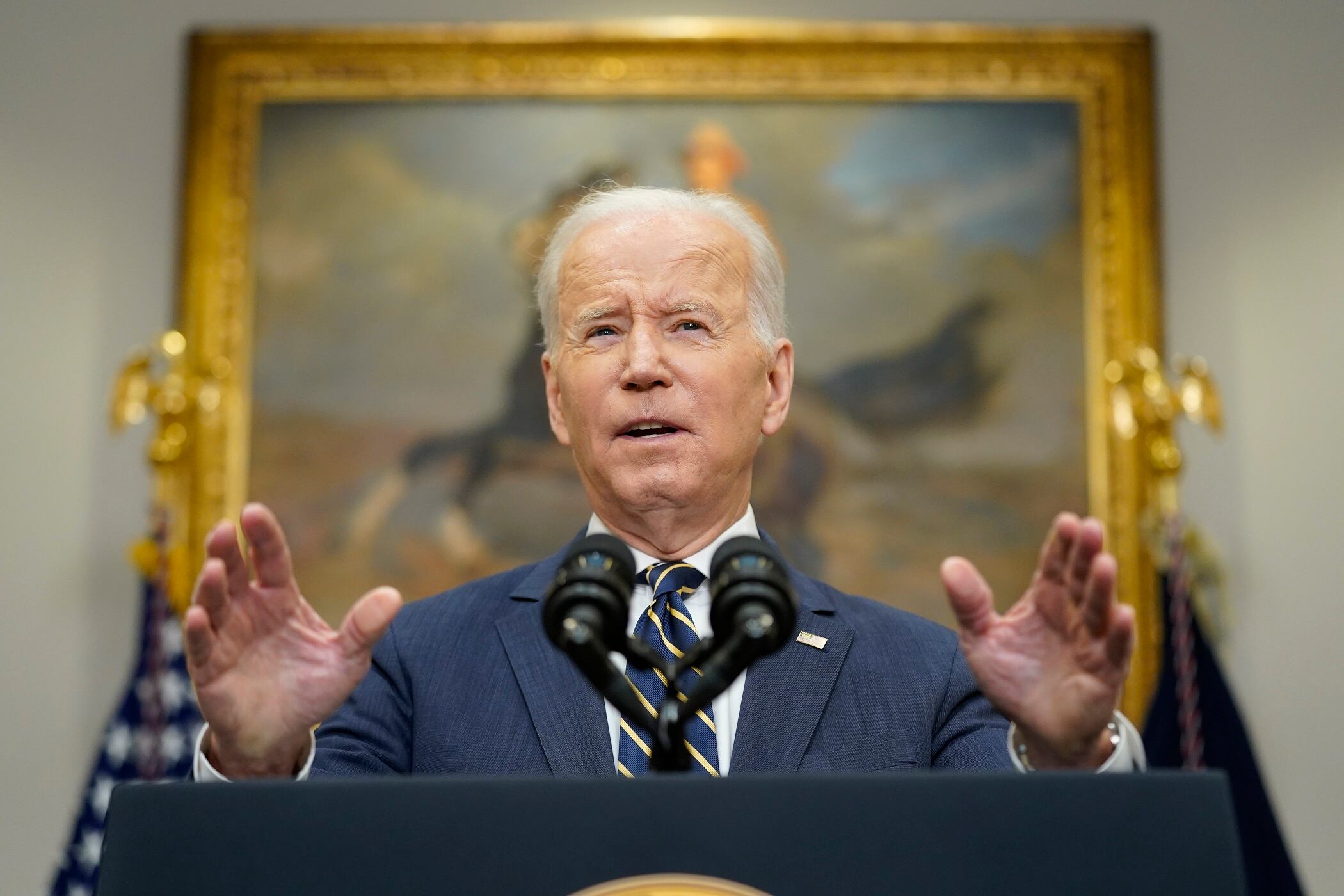
In a statement of policy, the White House said that President Joe Biden “strongly supports” extending the deadline and that it is long past time.
“Gender equality is not only a moral issue – the full participation of women and girls across all aspects of our society is essential to our economic prosperity, our security, and the health of our democracy,” the White House said.
Republicans have argued that Democrats are trying to rewrite history.
“The Democrats’ novel unconstitutional approach bypasses states’ rights and circumvents the process our founders put in place,” said Sen. Kevin Cramer, R-N.D., after the vote. “This is simply another liberal wish list item meant to drive a political wedge.”
President Joe Biden announced Friday that along with the European Union and the Group of Seven countries, the U.S. will revoke “most favored nation” trade status for Russia over its invasion of Ukraine.
The consumer price index jumped 7.9 percent in February, marking a 40-year high for inflation in the U.S. This report comes less than a week ahead of the Fed's all important meeting. Kayla Bruun, Economic Analyst, Morning Consult, joined Cheddar's Opening Bell to discuss.
Markets opened lower amid hotter-than-expected inflation data, which surged to its highest level in nearly 40 years. Lisa Erickson, Senior Vice President and Co-Head, Public Markets Group, U.S. Bank joined Cheddar's Opening Bell to discuss the significance of this figure ahead of the Federal Reserve's FOMC meeting.
As the Russia-Ukraine war disrupts the global economy, sending markets on a roller coaster ride, gold remains hovering around $2,000 an ounce. Often seen as a safe haven in times of economic crisis, Jason Cozens, founder and CEO of gold-as-currency platform Glint Pay, joined Cheddar’s Opening Bell to discuss the latest gold rush, how the war is impacting prices, and how people can use Glint to trade in the precious metal. “You know the stock markets and cryptocurrencies are risky investments," he stated. "Whereas gold is just reliable money. It's no one else's liability if you own."
As Western sanctions weigh on Russia's economy, the country is at the risk of defaulting on its debt. Fitch ratings agency has downgraded Russia's debt for the second time in a week, warning a "sovereign default is imminent." Jesse Wheeler, Economic Analyst at Morning Consult, explains what that means, and how it could have ripple effects across the global economy.
Uber Lyft and Doordash are all set to spend $1 million dollars on a campaign and efforts to stop lawmakers from classifying their gig workers as employees. The campaign features TV and online ads highlighting Washington area workers who say they prefer the flexibility of being an independent contractor rather than following the model of a company employee. Professor at NYU. Stern School of Business and author of the sharing economy, Arun Sundararajan, joined Cheddar to discuss more.
President Biden is looking at unlikely partners to buy oil, after banning all Russian energy imports. Among them is Venezuela, a regime that has been sanctioned by the U.S. since 2019. Ariel Cohen of the Atlantic Council explains to Cheddar News why that might not be a bad choice.