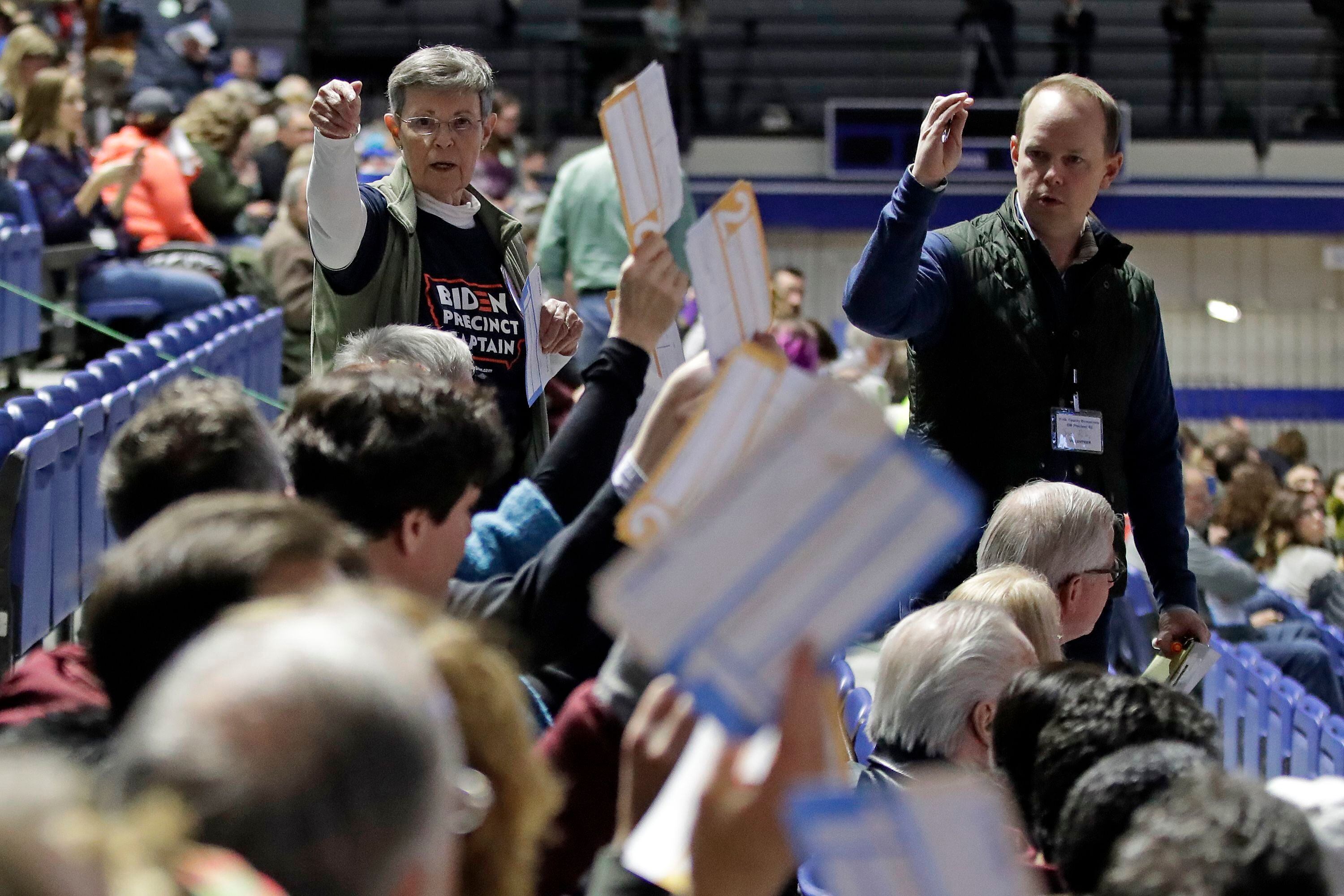
Voting in the 2020 election kicks off today, exactly nine months before Election Day, as Iowans gather at more than 1,600 caucus sites to pick their favorite candidate.
Candidates have been criss-crossing the Hawkeye State for more than two months (Andrew Yang and Amy Klobuchar have clocked in the most Iowa-time, spending 71 and 67 day there, respectively). The Iowa Caucuses are famous for person-to-person campaigning. It’s not just about making your picks inside a private voting booth — citizens can be swayed by their neighbors throughout the night to ditch their initial pick for nominee and go with a different candidate.
Many young voters will enter politics for the first time tonight, and during the day Cheddar caught up with a precinct captain at the University of Iowa.
While those in Iowa waited all day for tonight’s main events, caususes were also held overseas and Senator Elizabeth Warren got off to an early lead in Paris — one of three global sites where, for the first time, Iowans who are out of the country be able to participate in the Democratic caucuses.
Back in Iowa tonight the caucuses are underway and some caucusgoers brought their talking points to support their favorite candidates. Others brought liquid courage.
Now that the doors have closed across gymnasiums, community centers and libraries across the state, voters will pick their top choice. But some voters came in planning to vote for one candidate, only to meet another and change before the caucus even started.
So how does it work? This about sums it up.
At the Des Moines Knapp Center, Iowans are making moves into candidate corners. For those who have never seen how a caucus works, it's literally people moving to their respective corners.
Any candidate who gets at least 15 percent in most cases is considered a “viable” candidate and their supporters are locked into their choice.
But if a candidate gets less than 15 percent of the caucus, they are considered “not viable” and their supporters can opt to either move to another candidate’s corner or convince fellow caucusgoers to join them.
Of course, that begs the question: Is it humane or harsh that voters have to ditch their pick if they’re not viable?
Of course, only Americans over 18 can caucus today (or those who will be 18 by Election Day), but it's never too early to get a civics lesson!
The caucus has moved into the realignment phase — when citizens try to talk neighbors into switching camps. And when all else fails, there’s always a good ol’ fashioned coin toss.
Moving into the 11pm ET hour, it looks like there’s been a hitch in the caucuses’ giddyup.
Iowa appears to be reporting more results than in elections past, adding to the delay.
Although Iowa results are still forthcoming, Sen. Amy Klobuchar decided to go ahead and speak to her supporters around 11:30pm ET. So, with only 41 delegates of the required 1,991 needed to win the Democratic nomination up for grabs tonight, the ability shape her narrative tonight may count for something.
Yet Sen. Bernie Sanders remains confident...the results will come eventually.
Former VP Joe Biden says he’s feeling good...but he’s ready to move on to the next big event: New Hampshire!
But as the clock struck midnight (ET) on Iowa Caucus night, and the results escaped our grasp, many in the Twitter-verse agreed:
Inflation remains hot as the January PPI has increased by 1 percent, twice what analysts had been expecting with a jump of 9.7 over the year. Beth Ann Bovino, the U.S. chief economist, for S&P Global Ratings, joined Cheddar News to discuss the rapid pace of inflation alongside higher wages, predicting the Federal Reserve will act quickly and forcefully this year. "They haven't changed their forecast, yet, that's gonna come out soon. But we expect that a March rate hike is basically pretty much baked in the cake," she said. "We think six rate hikes in total for 2022."
For black history month, Cheddar is highlighting black business leaders who are driving the need for representation forward. On February 10, the U.S. Chamber of Commerce hosted an event called 'Developing the Black-Owned Business Ecosystem.' The virtual event was organized under the lobbying group's two initiatives -- the Equality of Opportunity Initiative, and the Coalition to Back Black Businesses. The event highlighted the developments needed to develop more black-owned businesses in the U.S. Dr. Anthony Wilbon, Dean of the School of Business at Howard University, joined Cheddar News' Closing Bell to discuss his experience as a speaker at the event.
A newly declassified letter by senators Ron Wyden and Martin Heinrich claimed the CIA. has been conducting a Secret Surveillance Program which has been collecting a bulk of data from American citizens. The letter which was written in April of 2021 urges the CIA to come clean about the kind of data it collects and how many Americans have been impacted. According to these two senators, the program did not have the safeguards of congressional oversight.
Art Hogan, Chief Market Strategist at National Securities, joined Cheddar News' Closing Bell, where he says investors are taking a wait-and-see approach when it comes to the situation between Russia and the Ukraine and elaborates on the impact higher oil prices stemming from the conflict would have on the market.
Last week, Senators Ron Wyden of Oregon and Martin Heinrich of New Mexico, Democrats on the Senate Intelligence Committee, wrote a a letter airing concerns that the CIA is collecting the data of American citizens without their consent. The lawmakers fear that the program might be exploiting private data. Morgan Wright, the chief security advisor at cybersecurity firm SentinelOne, joined Cheddar News to discuss the ramifications of the letter. "We don't have all the dots in one place to connect them," said Wright, cautioning against jumping to conclusions.
Russian President Vladimir Putin and his Foreign Minister Sergey Lavrov said that diplomacy is still possible, while U.S. officials warn that an attack on Ukraine is imminent. Cheddar News speaks with James Astill, Washington bureau chief of The Economist on the latest developments in Eastern Europe.
As the number of Russian troops rose to 130,000 along its Ukrainian border, hopes for a diplomatic solution remain among world leaders. Jason McMann, head of geopolitical risk analysis at Morning Consult, joined Cheddar News to break down the fluid situation. "We saw signs pointing towards an increase in tensions between Ukraine and Russia, whereas today we're seeing some signs that the Russian government may be willing to continue down a path of diplomatic negotiations to try and find some sort of non-military solution," he said.
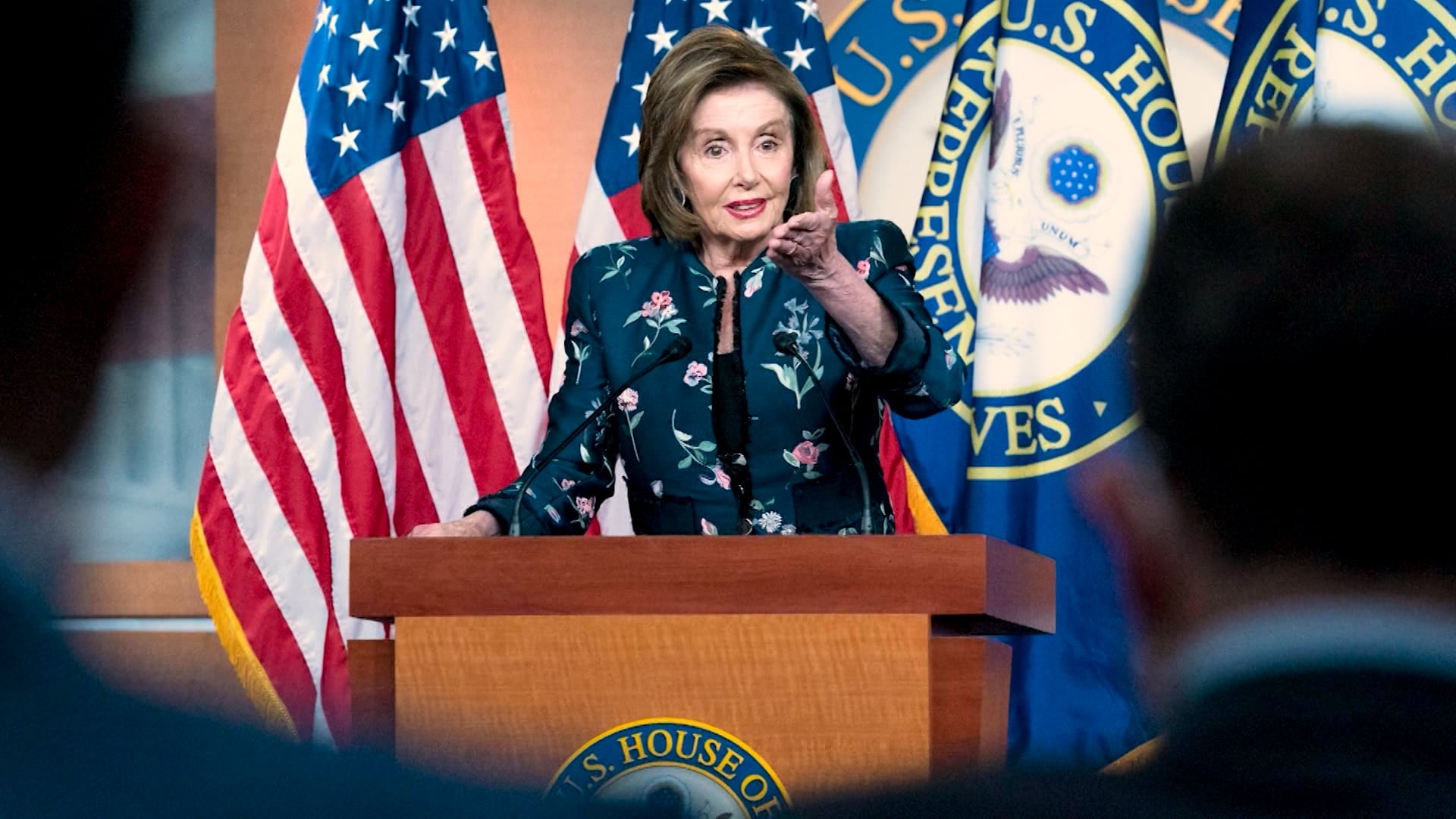
Nancy Pelosi and House Democratic leaders are now planning to amend the stop trading on congressional knowledge act, otherwise known as the 'Stock' Act. This 2012 law governs how members disclose the purchase or sale of stocks and amending it would close a loophole, eliminating the trading of individual stocks by members of congress. Pelosi has consistently opposed a ban on stock trading by lawmakers and congressional staff...so what's changed? Kedric Payne, Vice President of Campaign Legal Center, joins Cheddar News to discuss.
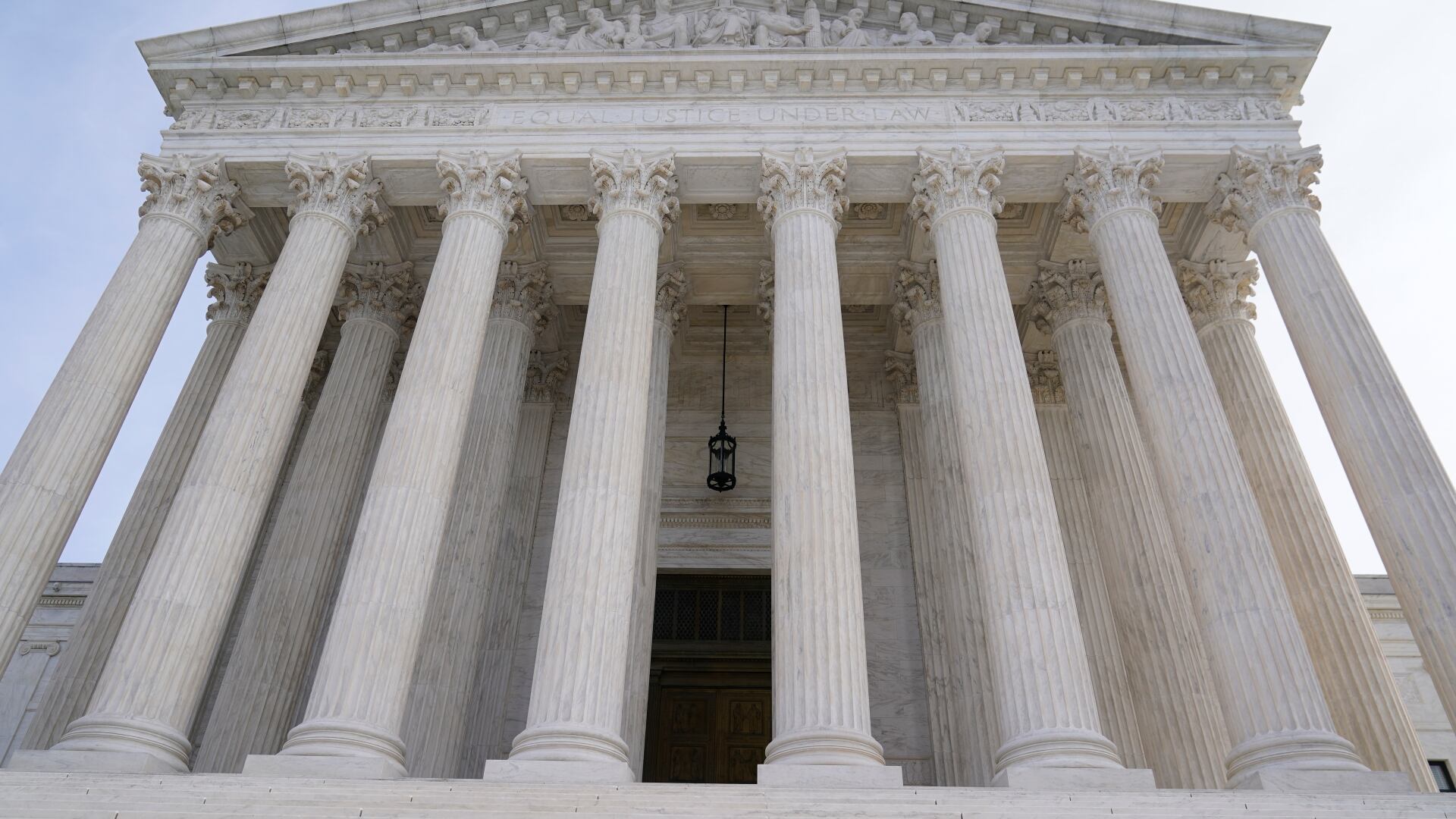
In a 5-4 vote, the U.S. Supreme Court allowed for a controversial new version of the Alabama congressional map to remain in place. The lower court had previously ordered that the state must redraw that congressional map because it violates the Voting Rights Act by diluting the political power of Black voters. Redistricting expert Yurij Rudensky joins Cheddar News to weigh in.