As Breast Cancer Awareness Month nears its end and the election looms, healthcare is top of people's minds. It became a focal point during Amy Coney Barrett's Supreme Court hearings as the Affordable Care Act waits for another day in court.
As the CEO of Susan G. Komen, Paula Schneider, a breast cancer survivor herself, told Cheddar's Opening Bell, "People need to care that their healthcare is one of the most important rights that they should have."
During the same interview, journalist Katie Couric, founder of Katie Couric Media, also called healthcare an essential right saying, "if you have a system that isn't open to people, it's just blatantly, terribly, un-American."
The National Cancer Institute estimates that as of January 2019, there are 16.9 million cancer survivors in the United States. This represents approximately 5 percent of the population, and that number of cancer survivors is projected to increase by nearly 30 percent, to nearly 22 million, by 2029.
Now amid the pandemic, people are delaying screening and routine care with a sharp drop in screenings and cancer diagnoses this year. According to a recent JAMA study, breast cancer diagnoses alone saw a 51.8 percent dip in March and April compared to previous years. According to Schneider, some reports show that drop being as large as 80 percent when it comes to breast cancer. "That doesn't mean it's not happening," she said. "It just means it's not being diagnosed, and therefore it's not being treated."
"Ladies get your mammograms."
As for Couric, she has faced the heartbreak of cancer within her own family. Her first husband Jay and her sister Emily both died following their battles with cancer. She said that one of the most important things a support system can do for a cancer patient is just to be there. "When Jay was sick he said having cancer is the loneliest experience in the world," Couric said.
That's part of the reason she partnered with pharmaceutical giant Merck for a new project called Your Cancer Story. The program provides information and support to cancer patients from diagnosis to treatment to survivorship. Couric said she wishes she had access to this kind of program for her own family years ago.
"You can see people talking about what they're going through. You can get advice. You can get guidance. You can get support," she explained. "Other survivors and other caregivers can talk about some of the things they wish they had known."
Catching you up on what you Need to Know on Mar 23, 2022, as NATO meets in Brussels to discuss Ukraine, mortgage rates rise, Justin Trudeau is set to lead Canada until 2025, tornadoes sweep through Louisiana, California may do away with SATs, and a Starbucks in Seattle unionizes.
MacKenzie Scott donated $436 million to Habitat for Humanity International and 84 of its U.S. affiliates – the largest publicly disclosed donation from the billionaire philanthropist since she pledged to give away the majority of her wealth in 2019.
The government can't afford to keep paying some Covid bills, a cheerleader gets an NIL deal for March Madness rescue, and fans will get to watch Beyoncé during the Oscars. Here is all the news you Need2Know for Wednesday, March 23, 2022.
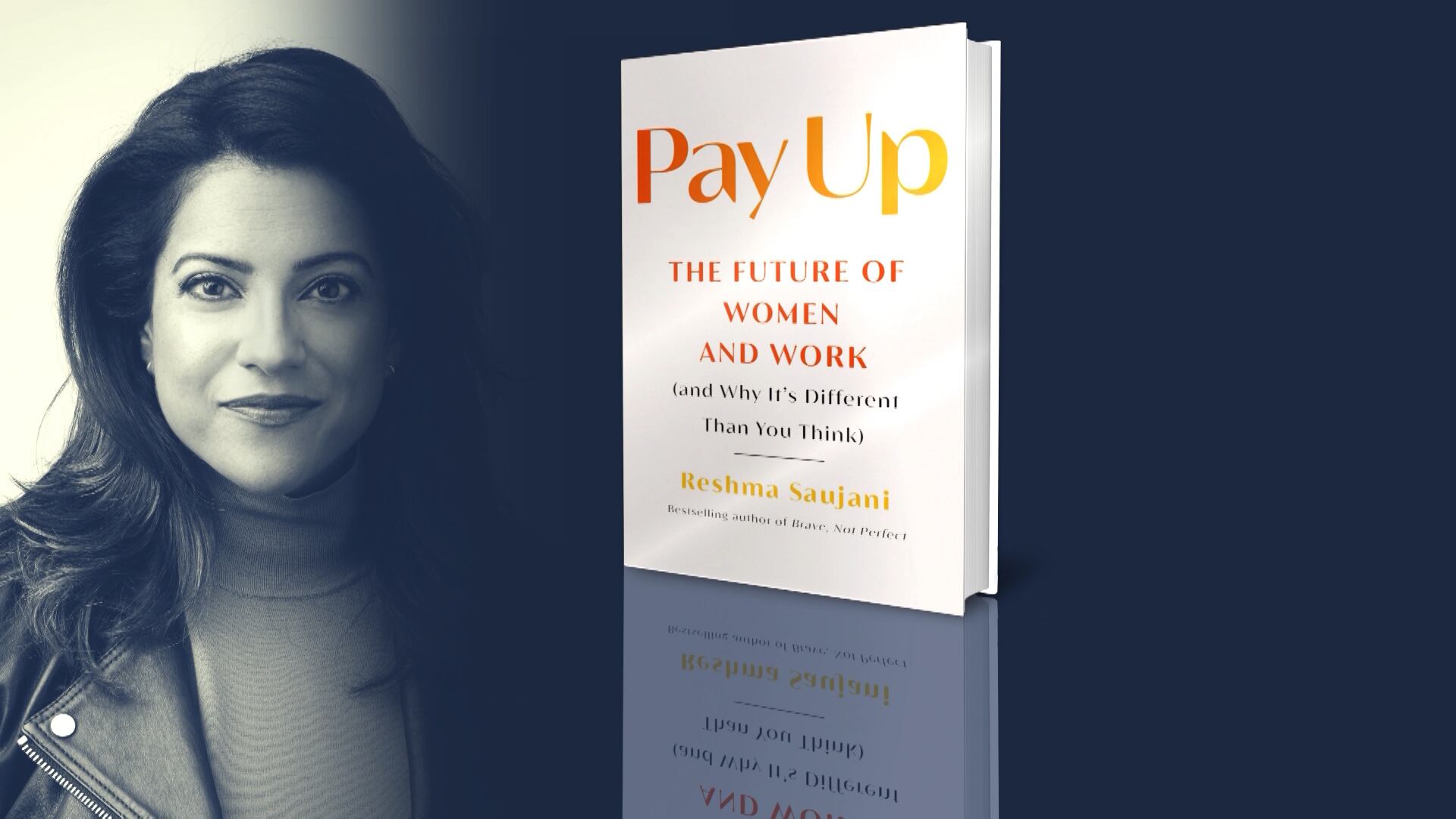
Reshma Saujani, the founder of Girls Who Code and author of "Pay Up: The Future of Women and Work (and Why It's Different Than You Think), joined Cheddar to discuss the many challenges for women in the workplace after the upheaval caused by the pandemic and the solutions she presents.
Companies are leaning towards hybrid workforces due to the pandemic as a means of bringing back workers to the office — especially women employees. Head of HR technology at Capital One, Maureen Jules-Perez, joined Cheddar News to talk about initiatives and technology that the bank is taking to set up a successful hybrid workplace. "Do we have the experiences or the spaces for everyone to feel belonging or included? Do we feel heard? And of course, when it comes to building products, we have all the different, diverse perspectives and thoughts and ideas being incorporated to have the optimal solution or delivery," she said.
Hate crimes from the start of 2022 against Asians reportedly more than doubled compared to 2021, according to the NYPD. Amid the surge of attacks, Amber Reed, the president and co-founder of the grassroots organization AAPI Montclair, joined Cheddar News to talk about how it's looking to help Asian Americans with classes and techniques to defend themselves. “We're seeing racism literally killing people who look like us, and these self defense classes are a chance for us to rewrite a narrative of victimhood into one of empowerment," she said. "We learn first how to be aware of our surroundings because we know that being distracted, appearing weak can make you a target, and then that we focus on disengagement."