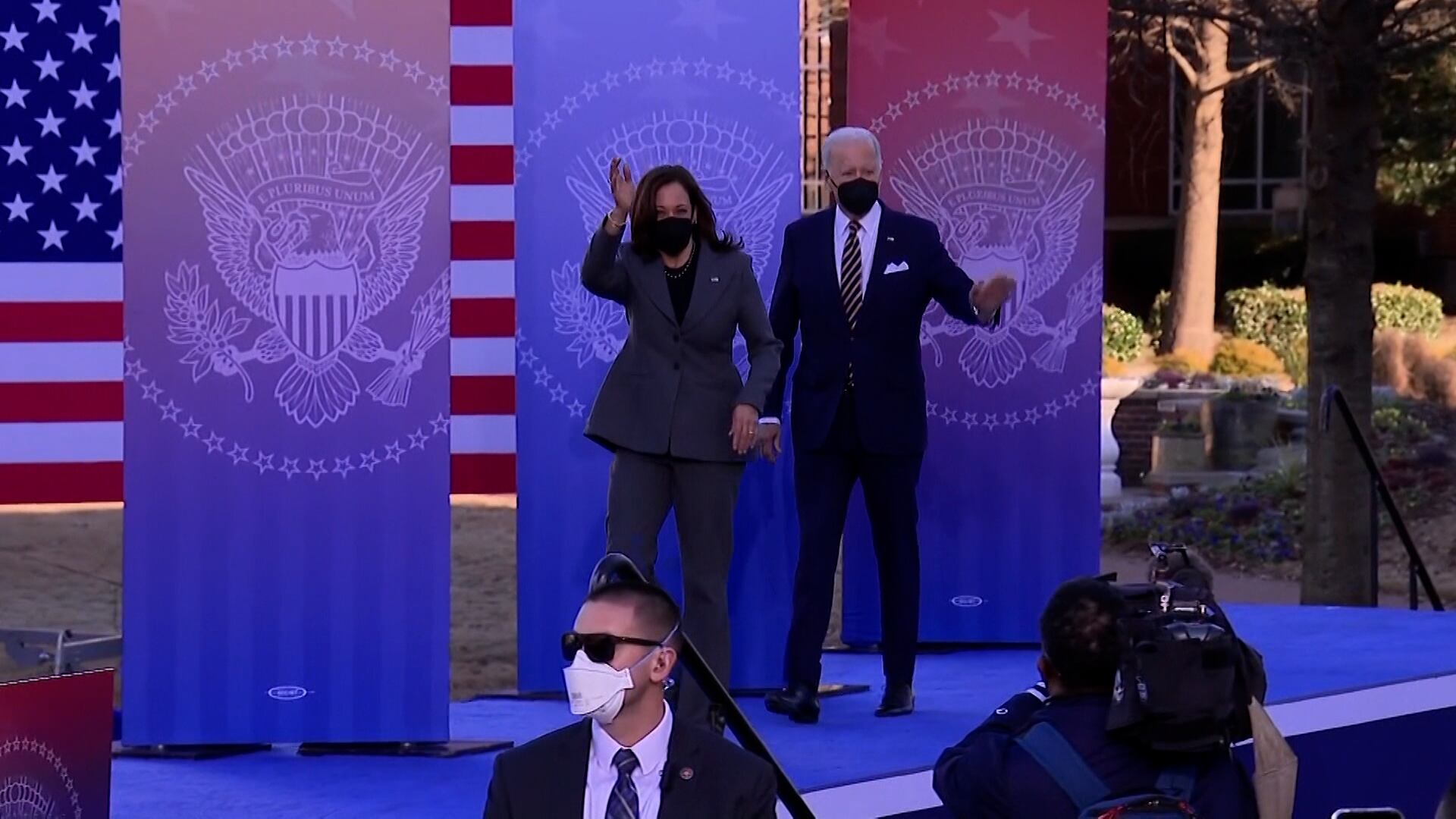
Sen. Kamala Harris (D-Calif.) took on the frontrunner, former Vice President Joe Biden, at last week's Democratic presidential debates, and a new poll shows that it may have paid off.

During the debate, Harris notably went after Biden for his nostalgia over working with segregationists in the Senate and his past opposition to busing for school integration.

In a new post-debate poll from CNN, Harris saw a 9 percent bump, now polling at 17 percent nationally, while Biden, saw a 10 percent decline, now polling at 22 percent.

Similarly, a post-debate poll from Morning Consult shows Harris gaining to land at 12 percent, which leaves her tied for third with Sen. Elizabeth Warren (D-Mass.). In that poll, Biden lost five points, still leaving him in the lead with 33 percent.

"Kamala Harris was the perfect foil for Joe Biden here, because one of the things that she did show is that she is tough and she could handle that," Patrick Murrary, Director of Monmouth University's Polling Center told Cheddar Politics Monday.

Murray says that this decline was expected following Biden's poor performance, despite weeks of solid numbers attributed to his nearly universal name recognition.

"A lot of Democratic voters are just starting to tune into this race," Murray said. "So, they really don't know these candidates, except by reputation. That's part of the reason why Joe Biden's been in the lead."

After the debates wrapped up, Harris' campaign announced the California Senator raised more than $2 million from small donors in the 24 hours following her performance.

Murray said the jump in the polls following her viral takedown of Biden's dicey past wasn't about race, but rather, shows that she has what it takes to rival the incumbent, which could give some Biden supporters pause as they cite his electability.

"Most of Joe Biden's supporters are older, they are more conservative than the rest of the party, they really couldn't care less whether he's woke or not on issues of race," Murray explained. "What they want to know is that he can handle the campaign, and what they're hearing from the media right now is that he didn't handle that well."

While Harris took a big jump forward, candidates like Mayor Pete Buttigieg and former Texas Congressman Beto O'Rourke went downhill. O'Rourke actually fell from 4 to 2 percent in the Morning Consult poll.

"Beto O'Rourke, I think, had the worst night out of the two," Murray said of the candidate, adding that he thinks the former Texas Congressman will ultimately "fade."

Despite the drop in the polls, Buttigieg announced Monday that his campaign reeled in nearly $25 million in donations during the second quarter of the campaign, tripling the amount raised in the first quarter.

Though many political junkies remain skeptical of early polling in the race to 2020, Murray said their importance is significantly different than past years because they are driving the narrative.

Other major 2020 polls ー as well as Q2 fundraising numbers ー are expected to drop throughout the week.

Share:
More In Politics
Biden's Approval Among Young Voters Dips
Just 27% of voters aged 18-29 approve of the job Biden is doing as president, according to a survey from The Economist and YouGov late last year. Santiago Mayer, executive director of Voters of Tomorrow, joins Cheddar Politics to discuss why President Biden is losing support among young voters.
One Year Into Donald Trump's Social Media Exile
Jesse Lehrich, co-founder of Accountable Tech, joins Cheddar News to discuss it being one year since Trump was exiled from social media and the former President's new platform 'Truth Social.'
Voting Rights Groups Push For Action Over Words
Cliff Albright, co-founder of the group Black Voters Matter, joins Cheddar Politics to discuss why he boycotted President Biden's voting rights speech this week, and the push from Senate Democrats to debate and vote on the Freedom to Vote Act and the John Lewis Voting Rights Advancement Act.
Competing Bills From Both Sides of the Aisle Look to Limit Lawmaker Stock Trading
Senator Jon Ossoff (D-Ga.) has teamed up with fellow Democratic senator and former astronaut Mark Kelly to introduce the Ban Congressional Stock Trading Act, a bill to essentially end stock trading by sitting lawmakers. From the other side of the aisle, Senator Josh Hawley (R-Mo.) introduced his own legislation to enact something similar. The dueling bills come at a time when it's popular to constrain members of Congress from owning and trading stocks. Karl Evers-Hillstrom, a business and lobbying reporter at The Hill, spoke to Cheddar about the significance of the bills, and what they could mean for lawmakers, their families, and staffers moving forward.
Second U.S. Starbucks Store Votes to Unionize
A second Starbucks location in the U.S. has officially voted to unionize. On Monday, the National Labor Relations Board announced workers at the Starbucks store located in the Buffalo, NY suburb of Cheektowaga voted 15-9 in favor of being represented by Workers United, an affiliate of the Service Employees International Union. The New York Times reports votes were tallied in December but remained inconclusive as the union challenged the ballots of several employees it said did not work at the store. A Starbucks spokesperson has said that it may appeal the labor board's decision, which comes as several other Starbucks stores across the country are also pushing to form a union. Danka Dragic, shift supervisor for the second Starbucks store in the country to unionize, joined Cheddar News' Closing Bell to discuss.
Rep. Tom Emmer Proposes Bill To Prevent Federal Reserve Control of U.S. Digital Currency
Earlier today, Minnesota Republican Representative, Tom Emmer, introduced a bill that would prevent the Federal Reserve from issuing a central bank digital currency directly to American consumers. According to the Congressman from Minnesota, requiring Americans to open a fed account to access a digital currency, would "put the Fed on insidious path akin to China's digital authoritarianism." Rep. Tom Emmer joined Cheddar's None of The Above to discuss more.
16 Elite Universities Sued Over Collusion To Limit Financial Aid
Sixteen of the country's most prestigious universities have been hit with a lawsuit claiming those schools illegally conspired to eliminate competitive financial aid offers for students. Just some of the schools mentioned include Yale, Brown, Columbia, UPenn, and Cornell. Author of "Who Gets In and Why" and Professor of practice at Arizona State University, Jeff Selingo, joined Cheddar to discuss more.
Load More