Justice Dept. Indicts 12 Russian Military Intelligence Officers for Election Interference
*By Alisha Haridasani*
Special counsel Robert Mueller’s investigation on Friday indicted 12 Russian military intelligence officers for interfering with the 2016 presidential election.
The defendants “used a variety of means to hack the email accounts of volunteers and employees of the U.S. presidential campaign of Hillary Clinton, including the email account of the Clinton campaign manager” with the intent to “stage releases of the stolen documents to interfere” with the election, the [indictment](https://www.justice.gov/file/1080281/download) stated.
All 12 defendants were identified as officers of GRU, an intelligence agency that functions within the Russian military, making this the first time Mueller’s probe has gone after the Kremlin. Previous indictments have been directed at Russian nationals and companies, as well as several former Trump campaign aides, including Paul Manafort and Michael Flynn.
The Russian-orchestrated plan disclosed Friday stopped short of altering the vote count, said Deputy Attorney General Rod Rosenstein in a news conference, reiterating a point that has been repeated by the agency and other intelligence committees multiple times during the drawn-out investigation.
"But what this gets to is that this was a misinformation campaign," said Louis Nelson, breaking news reporter at Politico. "Whether minds were changed, whether they were able to sway public opinion, that's the thing that's hard ー maybe impossible ー to quantify."
The news dropped just days ahead of Trump’s controversial one-on-one with Russian president Vladimir Putin in Finland, timing that's unusual for the typically nonpartisan agency.
"The Justice Department generally, typically, tries very hard to avoid even the appearance of doing anything that might be seen as politically motivated," said Nelson.
Mueller's "by-the-book" reputation also adds to the intrigue around the timing of the announcement.
"Frankly, it was a bit unexpected for him to have come out today with indictments today against Russian military officials," said Nelson. "Certainly, it changes the context of that meeting in Helsinki."
The indictments have prompted some Democrats to call for Trump to cancel the meeting.
"There should be no one-on-one meeting between this president and Mr. Putin. There needs to be other Americans in the room," said [Sen. Mark Warner,](https://www.cnn.com/politics/live-news/mueller-rosenstein-russia-indictments/h_4f0157a3b47ba1bed6b19ce61e38869a) a Democrat from Virginia who sits on the Senate Intelligence Committee.
Hours before Rosenstein’s announcement, the president was asked whether he would press Putin about the election meddling.
“I will absolutely bring that up,” said Trump, during a joint press conference with British Prime Minister Theresa May in the UK. “I don’t think you’ll have any, ‘Gee I did it, I did it, you got me.’ There won’t be a Perry Mason here.”
For the full segment, [click here.](https://cheddar.com/videos/mueller-indicts-12-russian-military-officials-and-what-it-means-for-the-trump-putin-summit)
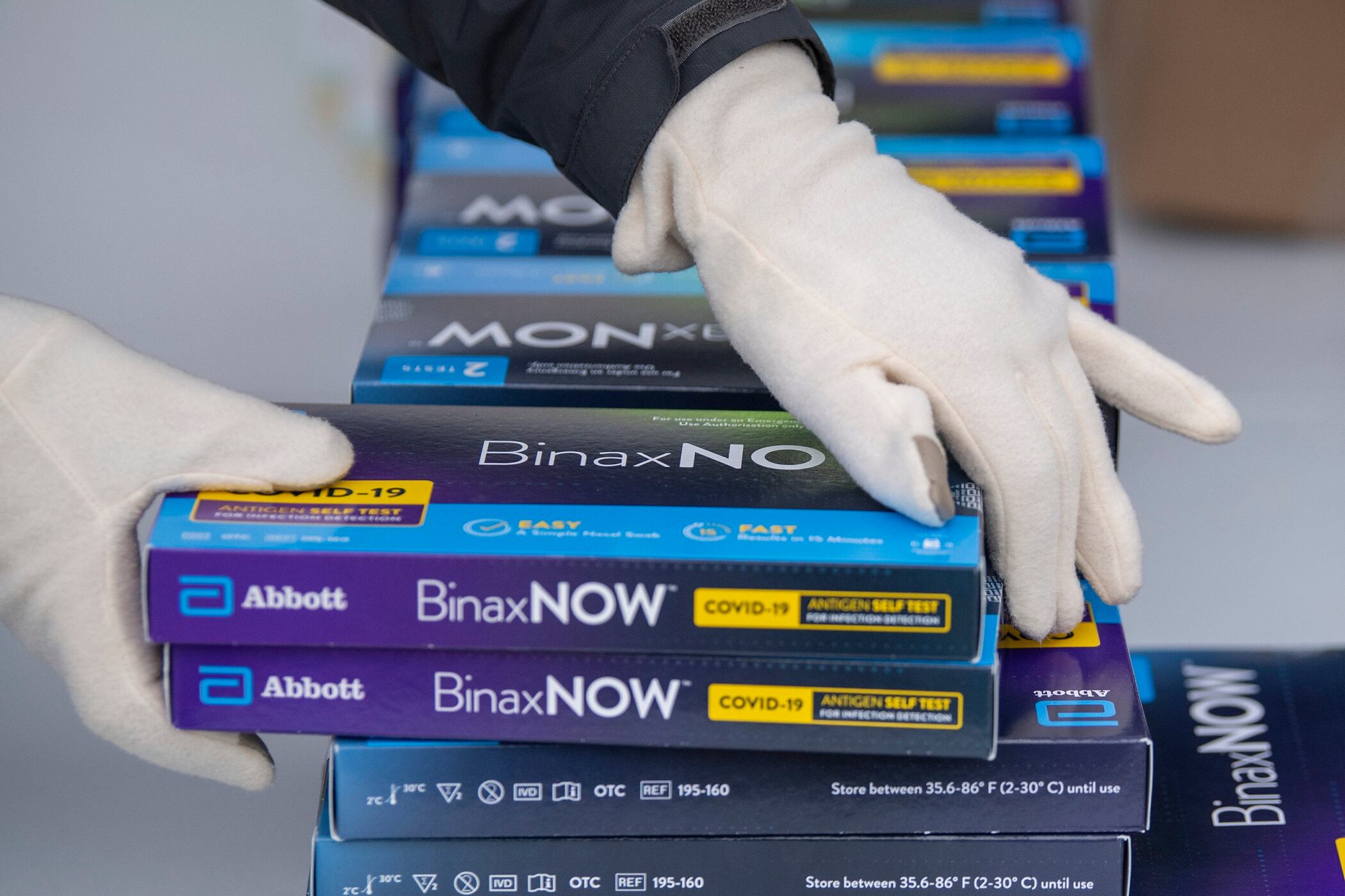
The Biden administration on Tuesday quietly launched its website for Americans to request free at-home COVID-19 tests, a day before the site was scheduled to officially launch.
Just 27% of voters aged 18-29 approve of the job Biden is doing as president, according to a survey from The Economist and YouGov late last year. Santiago Mayer, executive director of Voters of Tomorrow, joins Cheddar Politics to discuss why President Biden is losing support among young voters.
Jesse Lehrich, co-founder of Accountable Tech, joins Cheddar News to discuss it being one year since Trump was exiled from social media and the former President's new platform 'Truth Social.'
Cliff Albright, co-founder of the group Black Voters Matter, joins Cheddar Politics to discuss why he boycotted President Biden's voting rights speech this week, and the push from Senate Democrats to debate and vote on the Freedom to Vote Act and the John Lewis Voting Rights Advancement Act.
Senator Jon Ossoff (D-Ga.) has teamed up with fellow Democratic senator and former astronaut Mark Kelly to introduce the Ban Congressional Stock Trading Act, a bill to essentially end stock trading by sitting lawmakers. From the other side of the aisle, Senator Josh Hawley (R-Mo.) introduced his own legislation to enact something similar. The dueling bills come at a time when it's popular to constrain members of Congress from owning and trading stocks. Karl Evers-Hillstrom, a business and lobbying reporter at The Hill, spoke to Cheddar about the significance of the bills, and what they could mean for lawmakers, their families, and staffers moving forward.
A second Starbucks location in the U.S. has officially voted to unionize. On Monday, the National Labor Relations Board announced workers at the Starbucks store located in the Buffalo, NY suburb of Cheektowaga voted 15-9 in favor of being represented by Workers United, an affiliate of the Service Employees International Union. The New York Times reports votes were tallied in December but remained inconclusive as the union challenged the ballots of several employees it said did not work at the store. A Starbucks spokesperson has said that it may appeal the labor board's decision, which comes as several other Starbucks stores across the country are also pushing to form a union. Danka Dragic, shift supervisor for the second Starbucks store in the country to unionize, joined Cheddar News' Closing Bell to discuss.
Earlier today, Minnesota Republican Representative, Tom Emmer, introduced a bill that would prevent the Federal Reserve from issuing a central bank digital currency directly to American consumers. According to the Congressman from Minnesota, requiring Americans to open a fed account to access a digital currency, would "put the Fed on insidious path akin to China's digital authoritarianism." Rep. Tom Emmer joined Cheddar's None of The Above to discuss more.
Sixteen of the country's most prestigious universities have been hit with a lawsuit claiming those schools illegally conspired to eliminate competitive financial aid offers for students. Just some of the schools mentioned include Yale, Brown, Columbia, UPenn, and Cornell. Author of "Who Gets In and Why" and Professor of practice at Arizona State University, Jeff Selingo, joined Cheddar to discuss more.