Democratic presidential candidates are pouncing on President Donald Trump's hard-line border stance a day after a devastating image went viral, showing a father and young daughter who appeared to have drowned in the Rio Grande which flows between the U.S. and Mexico.
Julián Castro, former HUD Secretary under the Obama administration and 2020 presidential hopeful, said the image was "heartbreaking."
"It's heartbreaking because you know what they were looking for was a better life in this country," Castro told Cheddar hours before he was set to take the stage at the first Democratic debate in Miami, Florida.
The photo, shot by Julia Le Duc of the Associated Press, shows Andrés Manuel Lopez Óbrador laying dead with his 23-month-old daughter Valeria.
"I hate it," President Trump told reporters prior to departing the White House Wednesday en route to Japan for the G20 Summit.
The deaths come as the Trump administration faces new criticism for returning more than 100 migrant children to a Border Patrol facility in Clint, Texas that was reported to be unsanitary.
At an event in the White House on Tuesday, President Trump told reporters he is "very concerned" about the situation with detainee facilities, but claimed, "They're much better than they were under President Obama."
On Wednesday, the Senate approved bipartisan legislation which would provide $4.6 billion in aid for the migrant crisis at the border. The bill is similar to a package the House approved on Tuesday. Now the two chambers will have to work together to approve a bill which they can send to the president before the Independence Day recess.
Nevertheless, Castro says the deaths of Óscar, and his daughter, Valeria, were avoidable.
"This is preventable, and my immigration plan would end metering, and prevent situations like this," Castro said.
Castro, the only Latino running for president, has received praise for his comprehensive immigration proposal released in early April. The plan explicitly states it would end "metering" - a policy that limits the number of asylum seekers per day - as well as provide a path to naturalization for people without authorization.
"The family separations that we see today are made possible by the fact that you criminalize somebody being undocumented in this country, and I don't believe that that's the way to go," Castro added.
He referred to his proposal as a new Marshall Plan, explaining that it would guarantee safety for individuals in Central America so they do not feel the need to come to the United States in the first place.
On Tuesday, Sen. Elizabeth Warren (D-Mass.), who is the clear frontrunner on Wednesday's debate stage, submitted a statement to HuffPost, that supported Castro's plan to make "illegal entry" a civil offense rather a federal misdemeanor.
Warren said, "We should not be criminalizing mamas and babies trying to flee violence at home or trying to build a better future."
Castro is clear as to what is a driving force behind his immigration plan: saving lives.
"We need to immediately stop denying the ability of people trying to make their asylum claim so that tragedies like the one that we saw, that happened to Óscar and Valeria, don't happen again," Castro later said.
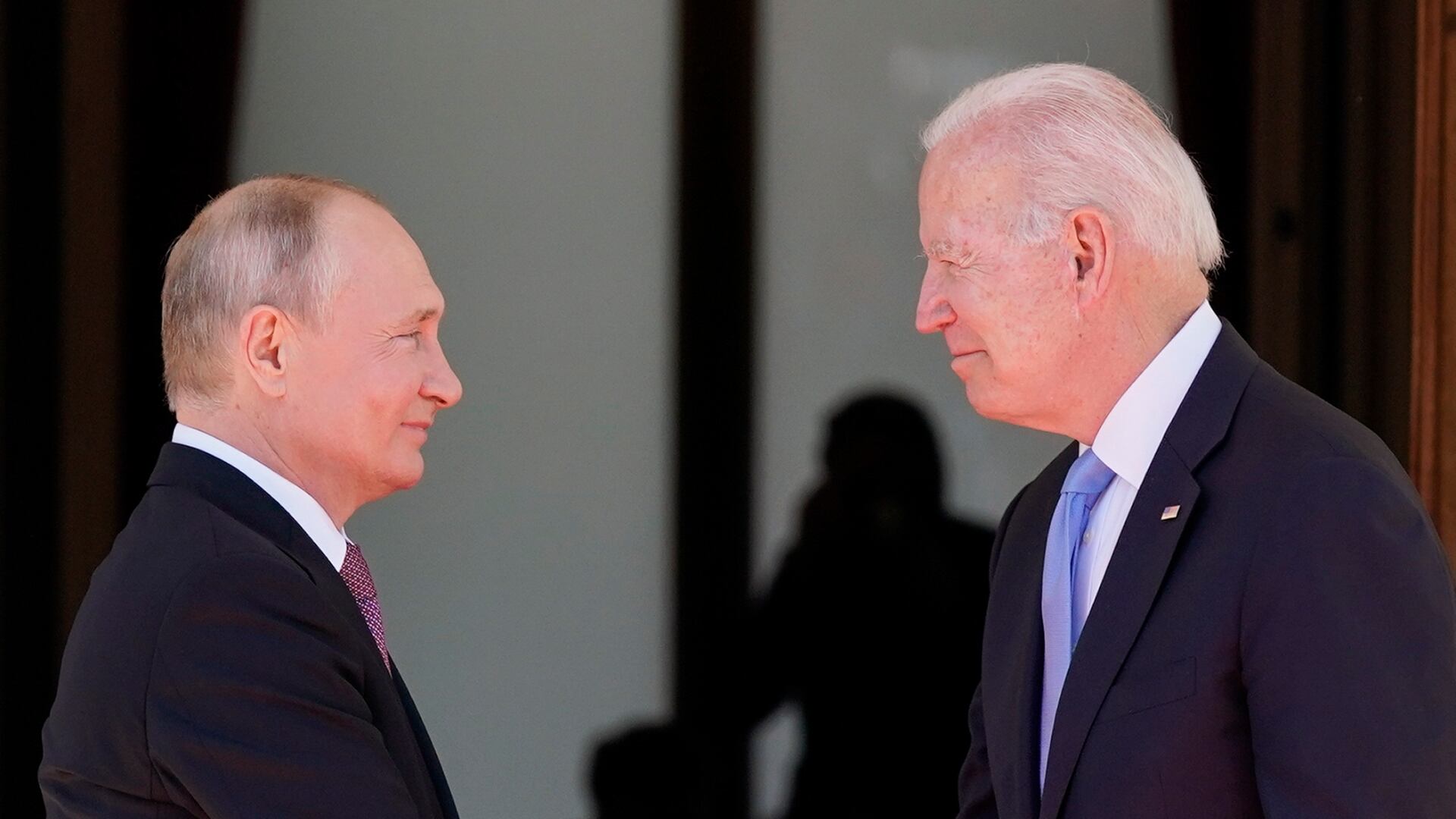
Face to face for just over two hours, President Joe Biden and Russia’s Vladimir Putin squared off in a secure video call Tuesday as the U.S. president put Moscow on notice that an invasion of Ukraine would bring enormous harm to the Russian economy.
Ahead of Instagram head Adam Mosseri's congressional hearing on the mental impact of the social platform on teens, the company announced a number of updates aimed at teen safety.
Troubled Chinese real estate giant Evergrande is once again nearing the brink of collapse. Shares of Evergrande sunk to a new record low on Monday, closing down 20 percent, as debt default fears resurfaced. Drew Bernstein, co-chairman at consultancy MarcumBP, joined Cheddar's Opening Bell to discuss. He said U.S. investors have to understand that "there is no company in China that's too big to fail, that's for sure," and that the Chinese government will be prioritizing the social welfare of the populace. Bernstein did note that it would be a managed collapse in some form.
Joan Greve, a politics reporter at The Guardian US, joined Wake Up With Cheddar to break down the implications of the Biden administration announcing a diplomatic boycott of the 2022 Beijing games in response to allegations of human rights abuses against Uyghur Muslims. She noted the significance of the move, assessing the already frayed relationship between the U.S. and China. "The Chinese have said that a boycott would be politically manipulative, and now they are actually threatening countermeasures," she said. "And that will certainly have an impact on the spirit of the games at the very least."
The Biden administration has reached an agreement with the Mexican government to resume the "Remain-in-Mexico" policy under court order. By reinstating a Trump-era border policy, asylum-seekers will be forced to stay in Mexico until their U.S. immigration court date. The program is set to resume on Monday. Ryan Devereaux, a reporter for The Intercept, joins Cheddar News to discuss.
The U.S. announced it will not send any official representation to the upcoming Beijing winter Olympics. Cheddar's Hena Doba speaks with East Asia expert Michael Swaine about the reasons behind the diplomatic move.
COVID-19 is still battering the nation's criminal justice system, causing a massive backlog in cases and delaying verdicts for months on end. This, combined with the fear of crowded prisons during a pandemic, has prompted many defendants to plead guilty in exchange for time served or probation. Tina Luongo, attorney-in-charge of the Criminal Defense Practice, joined Cheddar to discuss the court backlog, the rise in plea bargains, and why this was an issue long before the pandemic.
With so many high-profile court cases taking over the media, from the trial over the murder of Ahmaud Arbery to the trial of Kyle Rittenhouse to the ongoing Elizabeth Holmes trial, Cheddar took a look at these cases and why there is such a big interest in them. Rachel Fiset, a white collar criminal defense lawyer and partner with Zeiback, Fiset, and Coleman, and Bryan Hance, attorney-at-law, professor, and academic program director of the pre-law and paralegal studies program at National University, joined Cheddar for a roundtable discussion on why there is so much public interest in so-called courtroom drama.