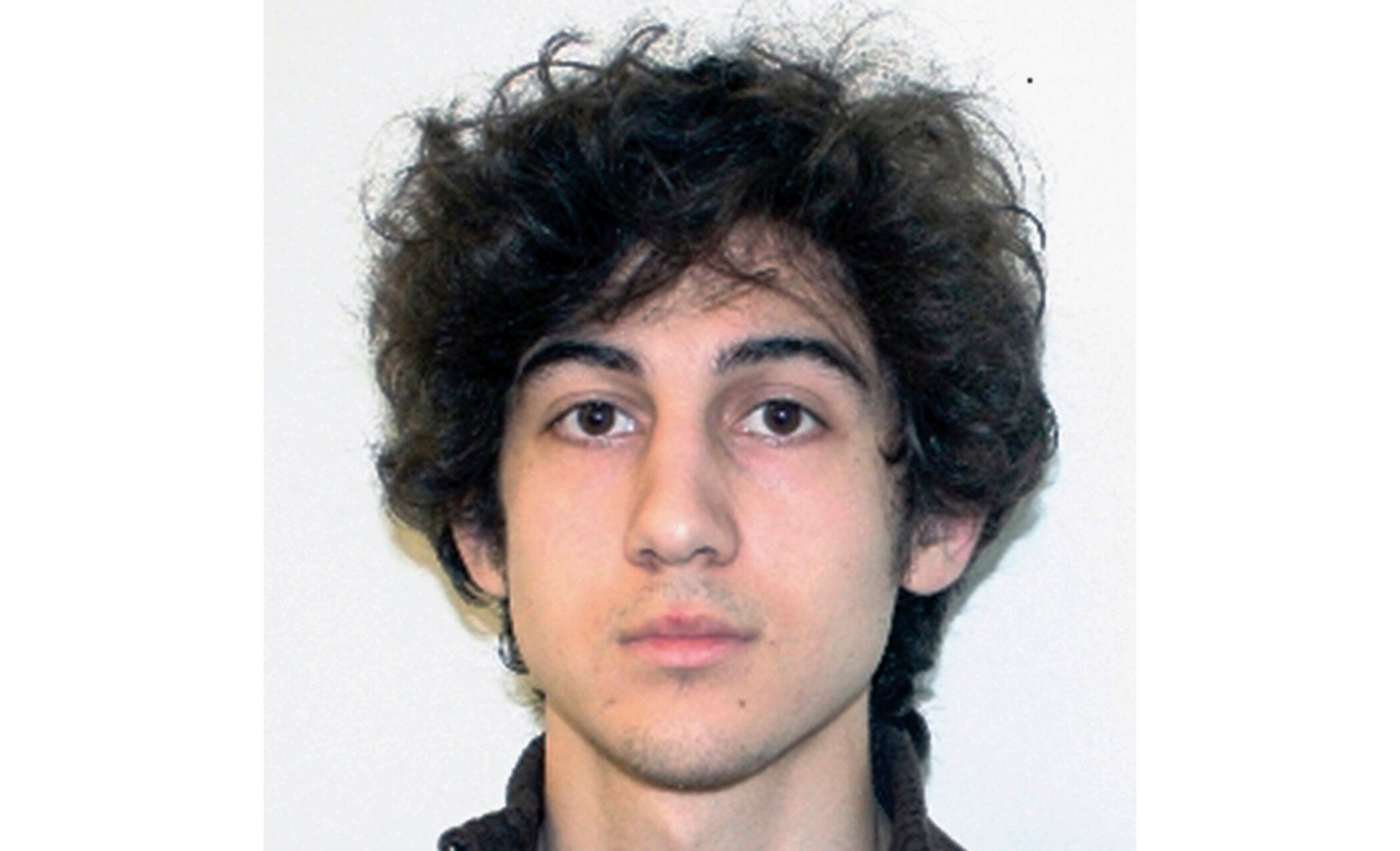
A U.S. District Court judge agreed to let federal prosecutors use convicted Boston Marathon bomber Dzhokhar Tsarnaev's $1,400 COVID-19 stimulus payment, as well as other money held in his inmate trust account, to help pay the millions of dollars he was ordered to pay his victims, The Wall Street Journal reported Thursday.
In a filing Wednesday, the U.S. attorney's office in Boston asked a judge to order the federal Bureau of Prisons to turn the money over to the Clerk of the Court “as payment towards his outstanding criminal monetary penalties, including unpaid special assessment and restitution."
In addition to the stimulus payment, Tsarnaev, who's being held at a maximum security prison in Florence, Colorado, has received money from dozens of sources during his incarceration, including the federal public defender's office and regular payments from individuals living in Indiana, New Jersey and Maryland, according to the filing by acting U.S. Attorney for Massachusetts, Nathaniel Mendell.
As of Dec. 22, Tsarnaev had $3,885 and change in his account.
He was convicted in 2015 of 30 charges in connection with the 2013 bombing at the Boston Marathon finish line that killed three spectators and injured more than 260 others. In 2016 he was ordered to pay a $3,000 special assessment and more than $101 million in criminal restitution.
So far, Tsarnaev has paid a little more than $2,200 of that, all toward the assessment, according to the filing.
And although he has not paid a penny in restitution, Tsarnaev has used his inmate account to pay his siblings for items such as “gifts,” “support,” and “books,” according to the filing.
“The United States submits that the requested relief is reasonable and appropriate in this instance, especially in light of the defendant prioritizing payments to his siblings over the victims of his crimes,” prosecutors wrote.
An email seeking comment was left with Tsarnaev's attorneys.
Tsarnaev was originally sentenced to death, but the federal appeals court in Boston threw out the death sentence in July 2020 because, it said, the judge at his trial did not do enough to ensure the jury would not be biased against him. He is currently serving a life sentence.
The Biden administration has asked the Supreme Court to reinstate Tsarnaev's death sentence. The high court heard arguments in October but has yet to rule.

Carlo and Baker preview President Biden's address to the nation as Omicron becomes the new dominant Covid strain. Plus, Trump gets booed for getting his booster and the White House gets a new puppy.
Briana Marbury, Executive Director of the Interledger Foundation, joins ChedHER to discuss how she's creating pathways to financial access, and advice for pursuing a career in philanthropy.
Sharon Marcil, North America Regional Chair of Boston Consulting Group, joins ChedHER to discuss how she's paving the way for women in leadership positions, and advice for career advancement.
On this episode of ChedHER: North America Regional Chair of Boston Consulting Group breaks down how she's closing retention gaps in business, and advice for advancing in your career; Executive Director of the Interledger Foundation explains how she's working to create pathways to financial access; A look at how JPMorgan Chase is helping business owners in the Harlem community.
Ian Rogers, Chief Experience Officer, Ledger, joins Cheddar News to discuss innovation in crypto security, and why a hardware wallet is a critical tool for protecting digital assets.
Carlo and Baker cover the latest developments after a devastating tornado outbreak over the weekend, plus an eye on Omicron and inflation, and not even Spielberg can save the box office.
Reusable rocket developer Stoke Space Technologies raised $65 million in a Series A round led by Breakthrough Energy Ventures, a firm founded by Bill Gates. Stoke says its reusable rockets provide the satellite industry with low-cost, on-demand access to and from orbit. As companies like SpacX and Blue Origin are also making commitments to rocket reusability, Stoke says it is taking a different approach with a system designed to be 100% reusable, comprised of rockets designed to fly daily, like an airplane. Stoke co-founder and CEO Andy Lapsa joins Cheddar News' Closing Bell to discuss.
Humans are set to return to a place we have not been in nearly 50 years: the moon. NASA's Artemis program is expected to have astronauts back on the lunar surface by 2025. NASA says it will use what it learns on the moon to take the next giant leap - sending the first astronauts to Mars. The Artemis program also includes contributions from private companies like SpaceX, as well as academic research institutions like Georgia Tech. Georgia Tech professor of practice and former NASA astronaut Sandra Magnus joins Future of Space: Humankind's Leap Forward to discuss.