Arkansas is temporarily blocked from enforcing a law that would have allowed criminal charges against librarians and booksellers for providing “harmful” materials to minors, a federal judge ruled Saturday.

U.S. District Judge Timothy L. Brooks issued a preliminary injunction against the law, which also would have created a new process to challenge library materials and request that they be relocated to areas not accessible by kids. The measure, signed by Republican Gov. Sarah Huckabee Sanders earlier this year, was set to take effect Aug. 1.

A coalition that included the Central Arkansas Library System in Little Rock had challenged the law, saying fear of prosecution under the measure could prompt libraries and booksellers to no longer carry titles that could be challenged.

The judge also rejected a motion by the defendants, which include prosecuting attorneys for the state, seeking to dismiss the case.

The ACLU of Arkansas, which represents some of the plaintiffs, applauded the court's ruling, saying that the absence of a preliminary injunction would have jeopardized First Amendment rights.

“The question we had to ask was — do Arkansans still legally have access to reading materials? Luckily, the judicial system has once again defended our highly valued liberties," Holly Dickson, the executive director of the ACLU in Arkansas, said in a statement.

The lawsuit comes as lawmakers in an increasing number of conservative states are pushing for measures making it easier to ban or restrict access to books. The number of attempts to ban or restrict books across the U.S. last year was the highest in the 20 years the American Library Association has been tracking such efforts.

Laws restricting access to certain materials or making it easier to challenge them have been enacted in several other states, including Iowa, Indiana and Texas.

Arkansas Attorney General Tim Griffin said in an email Saturday that his office would be "reviewing the judge’s opinion and will continue to vigorously defend the law.”

The executive director of Central Arkansas Library System, Nate Coulter, said the judge's 49-page decision recognized the law as censorship, a violation of the Constitution and wrongly maligning librarians.

“As folks in southwest Arkansas say, this order is stout as horseradish!” he said in an email.

“I’m relieved that for now the dark cloud that was hanging over CALS’ librarians has lifted,” he added.

Cheryl Davis, general counsel for the Authors Guild, said the organization is “thrilled” about the decision. She said enforcing this law “is likely to limit the free speech rights of older minors, who are capable of reading and processing more complex reading materials than young children can.”

The Arkansas lawsuit names the state’s 28 local prosecutors as defendants, along with Crawford County in west Arkansas. A separate lawsuit is challenging the Crawford County library’s decision to move children’s books that included LGBTQ+ themes to a separate portion of the library.

The plaintiffs challenging Arkansas’ restrictions also include the Fayetteville and Eureka Springs Carnegie public libraries, the American Booksellers Association and the Association of American Publishers.
Share:
More In Politics
Race for Los Angeles Mayor Heads to November Runoff
Claudia Rosenbaum, freelance reporter for Vanity Fair, joins Cheddar Politics to discuss the race for Los Angeles mayor. Rick Caruso, a billionaire real estate developer, forced a runoff with the longtime Democratic Rep. Karen Bass, who had been the favorite in the race until an ad blitz from Caruso leaning on the city's issues with crime and homelessness.
Pressure to Settle $1 Billion Claim From Nassar Survivors Against FBI
Survivors of Larry Nassar, including Olympian Simone Biles, are seeking $1 billion in damages from the FBI due to its failure to investigate the former gymnastics team doctor convicted of committing years of serial sexual abuse of minors. Jack Queen, a senior reporter at Law360, joined Cheddar News to break down the legal grounds of this case. "This is one of the biggest black eyes that the Bureau has faced in generations, quite frankly, and the FBI has taken full responsibility and admitted that it completely botched this investigation," he said. "So, there's a lot of pressure to settle."
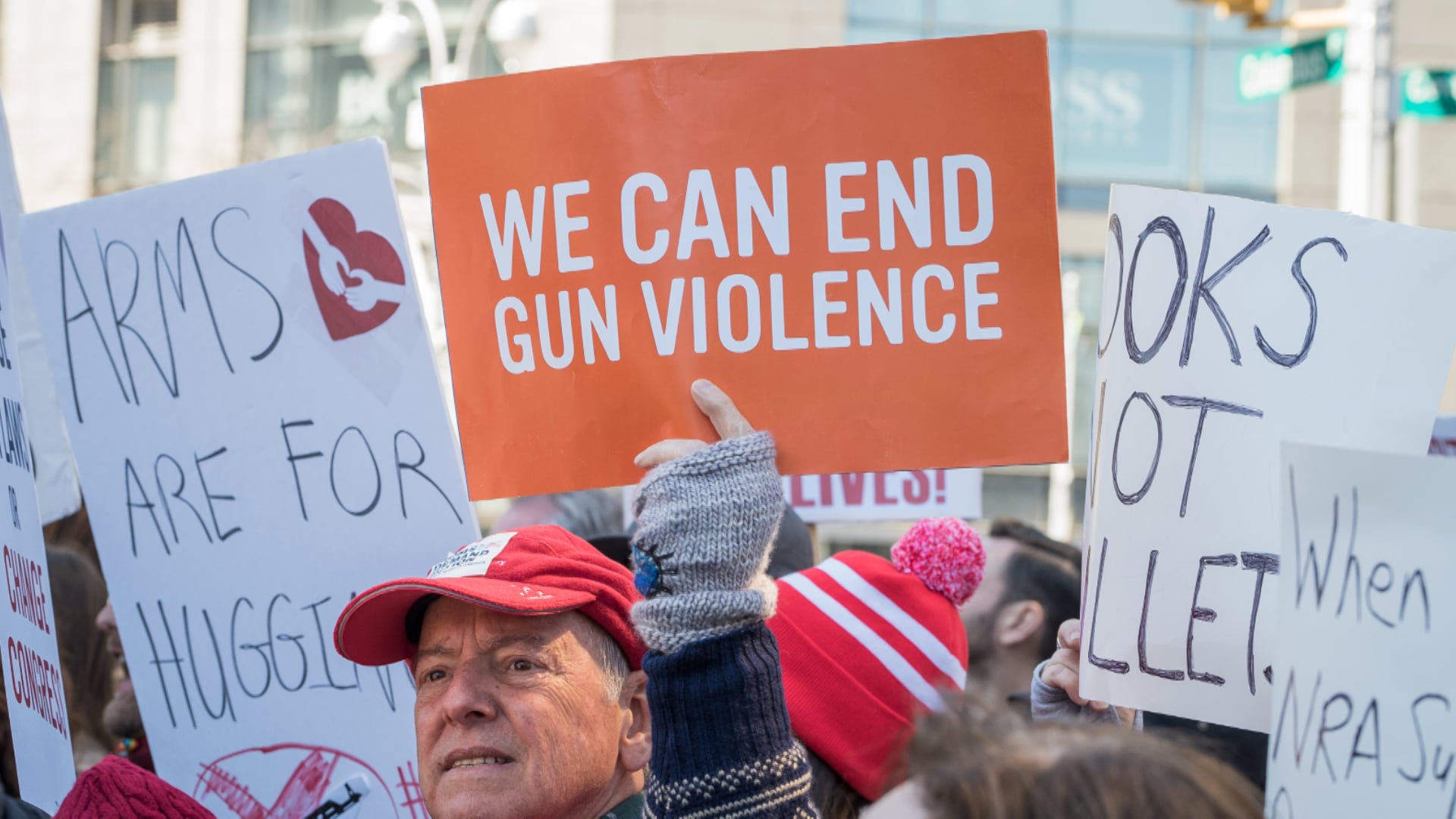
House Passes Gun Reform Legislation, But Will It Pass In The Senate?
The House has passed some of the most aggressive gun-control measures in years, including raising the minimum age to buy semi-automatic rifles from 18 to 21 and banning high-capacity magazines. Daniel Webster, Co-Director of the Center for Gun Violence Solutions, explains why this legislation has little chance to pass in the Senate, and what else can be done to curb gun violence in this country.
Hot summer could lead to rolling blackouts
We are already starting to feel the effects of summer. Heat waves in Texas and California are already sending temperatures soaring. That could spell trouble for the nation's power supply. there are new concerns about outages in many areas of the country. Cheddar's Shannon Lanier explains the two main causes of blackouts, and what states are doing to keep the lights on and the air conditioning running.
U.S. traffic deaths hit 16 year high
If you have been on the road this past year, you've probably seen more accidents on the road than you ever have. You're not wrong. Traffic fatalities are not only increasing they are hitting historic highs. Almost 43,000 people died in motor vehicle accidents in 2021. Cheddar's Shannon Lanier investigates - and finds out why.
U.S. Stocks Closed at Session Highs Tuesday
U.S. stocks close Tuesday at session highs after a subpar start to the trading day. Tim Chubb, Chief Investment Officer at the wealth advisory firm, Girard, joins Cheddar News' Closing Bell to discuss. 'We're starting to see the moderation of three core things -- we've seen the moderation of prices, we've seen the moderation of wage growth we've seen in the labor market, and we've also seen a moderation of job openings,' he says.
Post-covid payrolls show new labor market norms
A lot has changed since the pandemic began back in march 2020. COVID-19 caused a huge disruption in the U.S. labor force that is just beginning to normalize. As of last month, about 96% of jobs lost in the pandemic have returned. Still, where people work now looks very different from two years ago. Cheddar's Shannon Lanier looks at where the jobs are now and where they aren't.
Load More