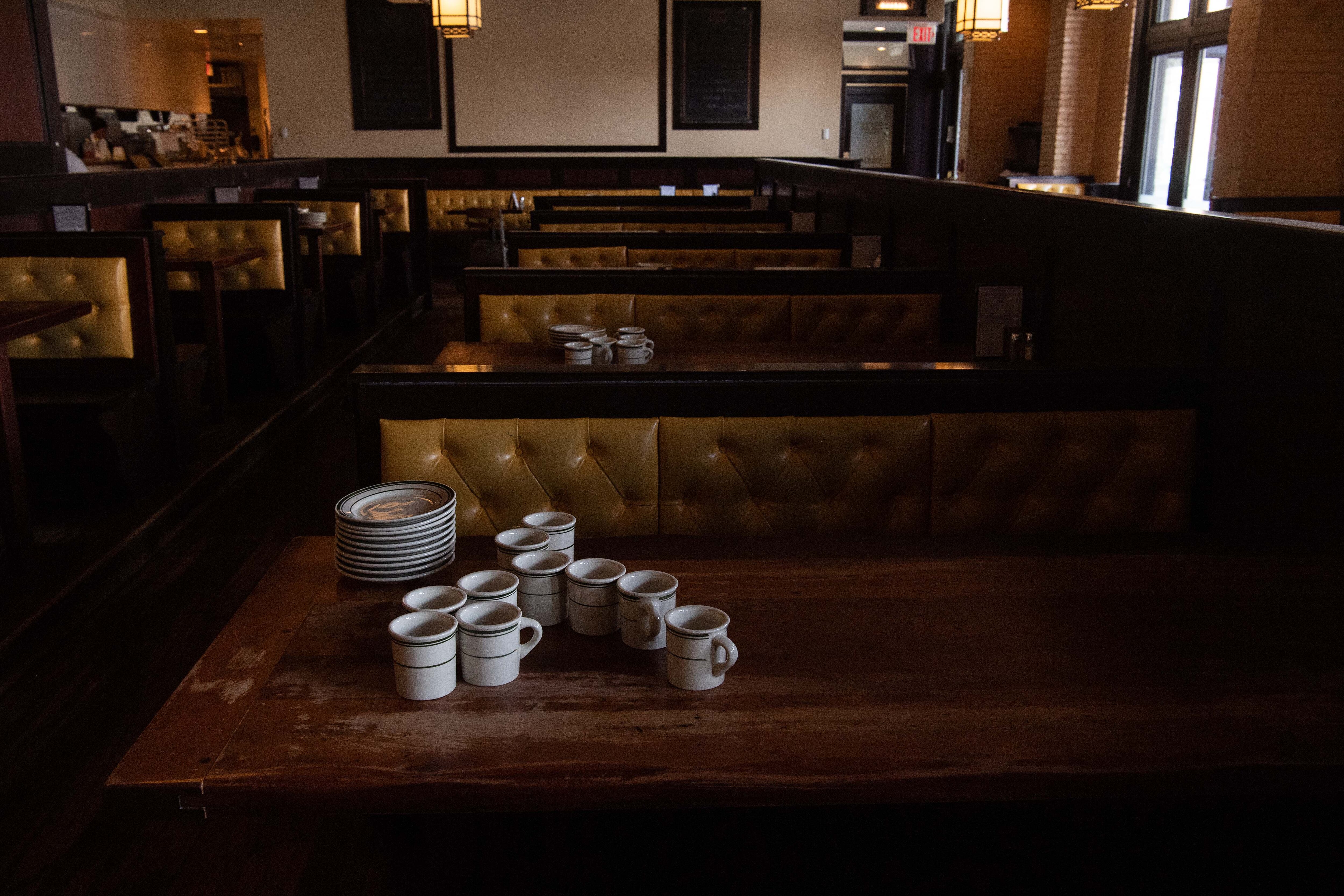
An empty restaurant serving only takeout due to the novel coronavirus, COVID-19, outbreak is seen in Washington, DC, on March 18, 2020. (Photo by NICHOLAS KAMM / AFP) (Photo by NICHOLAS KAMM/AFP via Getty Images)
JPMorgan Chase will invest $8 million in small businesses in the U.S., Europe, and China that have been hit hard by the public health and economic impacts of the COVID-19 crisis.
The investment is part of a much larger $50 million global philanthropic commitment to help provide emergency healthcare, food, and other humanitarian relief to vulnerable communities and existing nonprofit partners.
Chase will deploy the first $15 million “promptly” and the remainder over time. As consumers self-quarantine and cities go on lockdown, small businesses have already been majorly disrupted by the pandemic and are preparing for much worse over the coming weeks.
About half of small businesses have 14 or fewer cash buffer days, according to a JPMorgan research report on small business financial health in urban communities. In black or Hispanic communities, most small businesses have fewer than 21 cash buffer days.
Chase is working with its customers, including small businesses, to waive fees, extend payment due dates for cards, auto loans, and mortgages, and increase credit lines as needed due to coronavirus-related challenges, a spokesman for the company said.
Like most banks, it’s also directing people to its mobile app, but many small businesses still require branches to make change for drawers and to deposit cash.
The bank’s financial commitment follows one by Facebook, which said Tuesday it would invest a whopping $100 million in now struggling small businesses. Delivery startups like Grubhub and DoorDash are deferring or waiving commissions to encourage people to continue giving business to independent local restaurants.
CEO and founder of Pinstripes Dale Schwartz shares his thoughts on taking the company public, why they're set for growth this year, and why he's not concerned about inflation weighing on the restaurant sector.
With hype continuing to build for A.I. projects, expert insight on what companies seem poised to benefit, plus how it will impact the lives of everyday consumers.
Ford says it’s reducing production of the F-150 Lightning electric pickup vehicle as it adjusts to weaker-than-expected electric vehicle sales growth. The automaker said about 1,400 workers will be impacted by the move.
Walmart Inc. is raising the starting base pay for store managers, while redesigning its bonus plan that will put more of an emphasis on profits for these leaders.
Despite concerns about shipping delays in the Red Sea, RSM Chief Economist Joe Brusuelas says there are still reasons to be optimistic about the state of the U.S. economy.
Dan Ives, Managing Director and Senior Equity Analyst at Wedbush Securities dives deeper into a report by the International Data Corporation (IDC) that Apple has ended Samsung's 12-year reign as the world's largest smartphone seller.
Artificial intelligence is the biggest buzzword at the World Economic Forum’s annual meeting in Davos. Advances in generative AI stunned the world last year, and the elite crowd is angling to take advantage of its promise and minimize its risks.