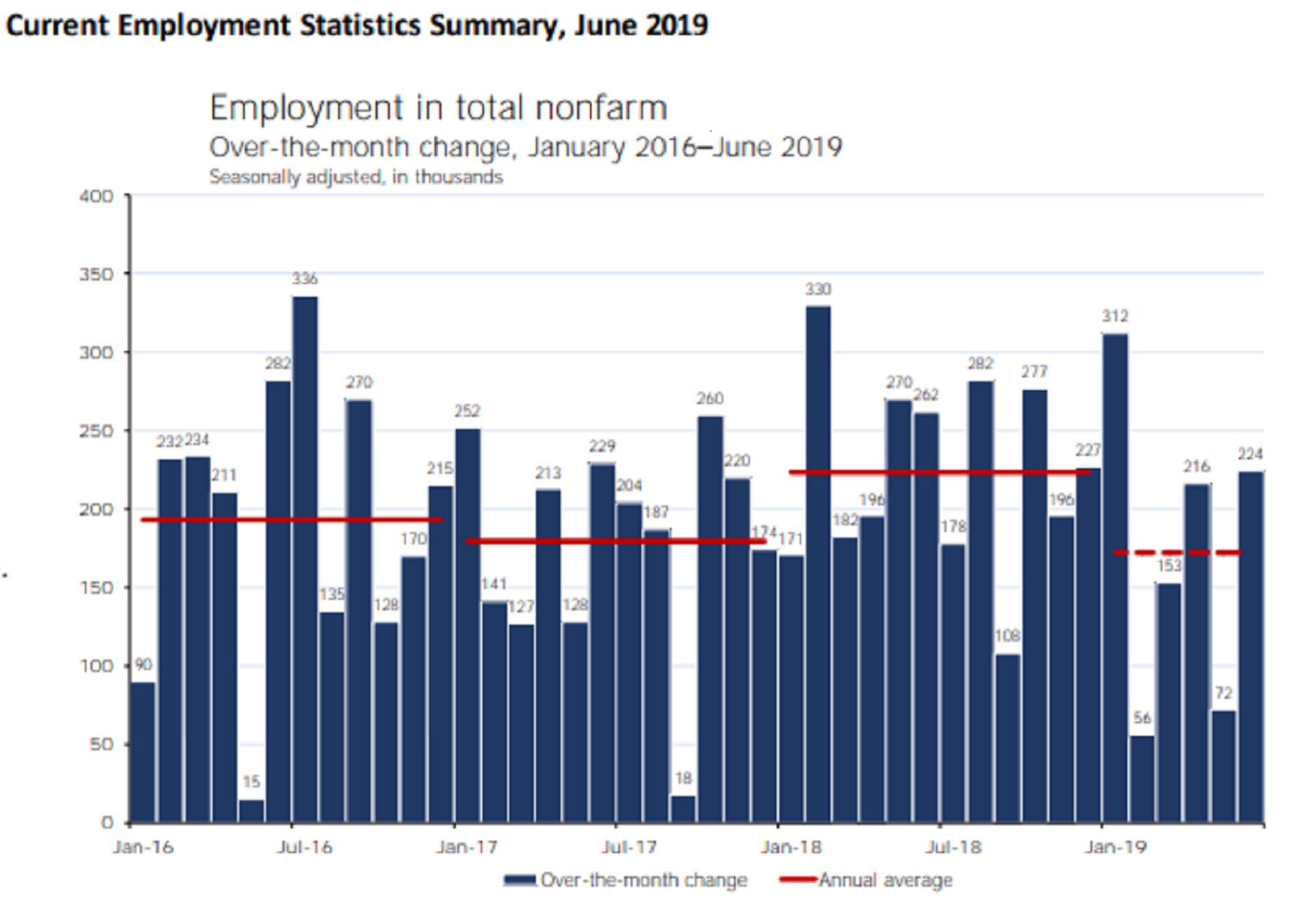
The U.S. economy added 224,000 jobs in June, heavily beating expectations and creating a cautious optimism among analysts wary of the dismal growth seen in May.
The unemployment rate remained largely unchanged at 3.7 percent — or 6 million people — in June, the Bureau of Labor Statistics (BLS) announced Friday in its monthly jobs report.
“The number did beat expections but ... it was pretty abysmal a month ago, and that was revised downward,” Mitch Roschelle, a partner at PwC, told Cheddar.
In Friday’s report, the BLS amended its May figures from 75,000 to just 72,000 jobs added. June’s employment growth was, however, way above the average of 172,000 per month in 2019 so far. The average monthly gain for 2018 was 223,000 jobs.
The industries with the largest gains were professional and business services and health care, which added more than 51,000 and 35,000 jobs in June respectively. The transportation and warehousing sector added roughly 24,000 jobs.
"JOBS, JOBS, JOBS!" President Donald Trump tweeted Friday morning.
<i>U.S. Labor Department</i>
In June, average hourly earnings rose by 6 cents and have increased by 3.1 percent over the past 12 months.
The report indicates “that the labor market remains a strength of the economy” and “should ease some of the pressure that the Fed faces to cut rates,” Doug Duncan, the senior vice president and chief economist at Fannie Mae, said in a statement to Cheddar.
The Federal Reserve is expected to cut interest rates at its Federal Open Market Committee meeting later this month in an effort to hinder a potential downturn in the economy, which is currently experiencing its longest expansion on record.
“There is really nothing out there short of some big black swan event that will slow down this economy,” Roschelle said, noting, however, that a shrinking of the global economy would threaten domestic growth.
Adtalem CEO Steve Beard addresses a report from Safkhet Capital taking the short position on the for-profit education giant, plus why he believes there should be financial recourse for student loan borrowers misled by their institutions.
CEO of Americares Christine Squires shares how the organization is helping provide medical assistance in a time of increasing instability, war, and climate-related disaster.
Doug Clinton, Deepwater Asset Management managing partner, shares tips for investors looking to take advantage of the massive boom in artificial intelligence beyond Microsoft and Nvidia.
Jason Moser, analyst and adviser at the Motley Fool, shares thoughts on recent tech earnings, including what’s behind Google’s share price drop and why A.I. could be Microsoft’s ‘iPhone moment.’
CEOs of social media platforms like Facebook, TikTok, and more meet with lawmakers Wednesday about how they are protecting children from sexual exploitation.
San Francisco 49ers president Al Guido discusses what goes into preparing for Super Bowl LVIII, building a championship-ready team, and how Taylor Swift and streaming are both bringing new fans to the NFL.
A $1 billion loss from a six-week strike did not crash GM's net income last year, which instead rose 12% — and the automaker expects improvement in 2024, too.
Accrue CEO and founder Michael Hershfield explains why Americans' credit card delinquencies are on the rise, advice on what can help, and the key difference between Boomers and Gen Z when it comes to money.
Senior Economist at Morning Consult Kayla Bruun shares thoughts on what to expect from the Fed's January meeting and where monetary policy is headed, as well as how consumers are faring.