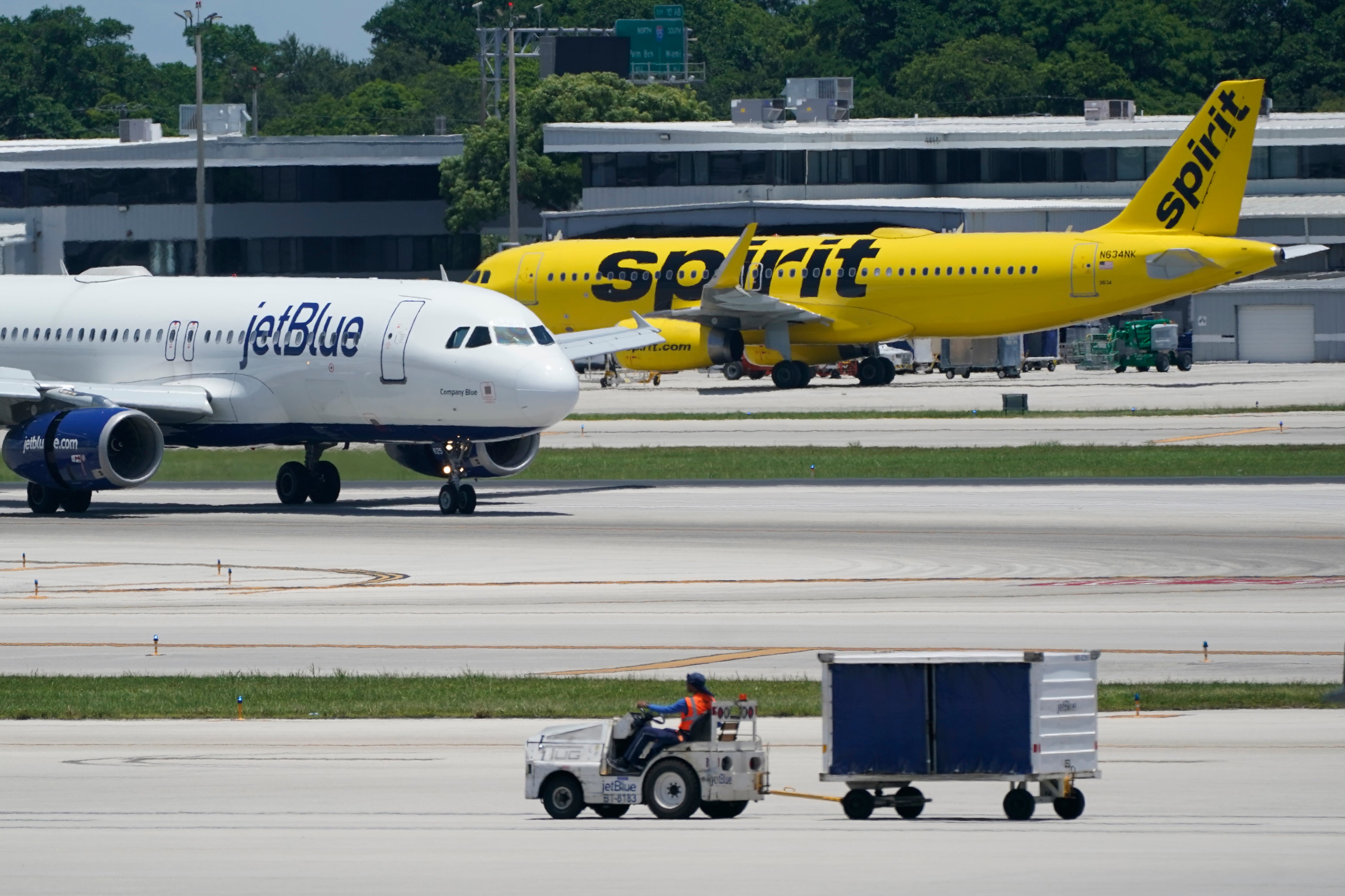
JetBlue Airways and Spirit Airlines are ending their proposed $3.8 billion merger weeks after a federal judge blocked the the deal, saying it would hurt consumers who depend on Spirit's lower fares.
JetBlue said Monday that even though both companies still believe in the deal, they were unlikely to meet the closing conditions required in the agreement before a July 24 deadline.
JetBlue's new CEO, Joanna Geraghty, called the merger “a bold and courageous plan intended to shake up the industry status quo” and speed JetBlue's growth.
“However, with the ruling from the federal court and the Department of Justice’s continued opposition, the probability of getting the green light to move forward with the merger anytime soon is extremely low,” Geraghty said in a memo to employees of New York airline. She said uncertainty over the merger's fate was distracting the airline from its effort to return to profitability.
Spirit CEO Ted Christie said he was disappointed that the airlines could not combine and create a new challenger to the nation's four biggest airlines but said he is confident that Spirit — which has been losing money since the pandemic started — can succeed on its own.
JetBlue will pay Spirit a $69 million termination fee.
The Justice Department sued to block the merger last year, saying it would reduce competition and drive up fares, especially for travelers who depend on low-fare Spirit.
In January, a federal district judge in Boston sided with the government and blocked the deal, saying it violated antitrust law.
The airlines appealed the ruling, and a hearing had been set for June.
Spirit and Frontier Airlines announced a $2.2 billion merger in early 2022 — a deal that would have combined two similar carriers that charge lower fares than the big airlines but add on fees that generate a large chunk of their revenue.
Spirit and Frontier Airlines announced a $2.2 billion merger in early 2022 — a deal that would have combined.
JetBlue jumped into the fray against the wishes of Spirit's management, which warned that it would be difficult to win regulatory approval for a Spirit-JetBlue combination. JetBlue went over the heads of Spirit's board, directly to Spirit's shareholders, and won a bidding war against rival Frontier a few month later.
While the deal was taking shape and wound up in court, there were continuing losses and other problems at Spirit, which is based in Miramar, Florida. In late January, JetBlue warned that it might terminate the agreement.
JetBlue has also been losing money and faces its own uncertain future. Activist investor Carl Icahn bought nearly 10% of JetBlue stock last month and won two seats on JetBlue's board.
The end of the JetBlue-Spirit deal raises questions about whether Alaska Airlines can pull off its proposed purchase of Hawaiian Airlines for $1 billion plus the assumption of about $900 million in debt. The Justice Department has not indicated whether it will sue to block that agreement.
Shares of JetBlue Airways Corp. rose 2% in morning trading, while Spirit sank 12%.