If someone who's already rich and in a family of millionaires goes on to become a billionaire through their own work and business acumen ー can that person really be considered "self-made"?
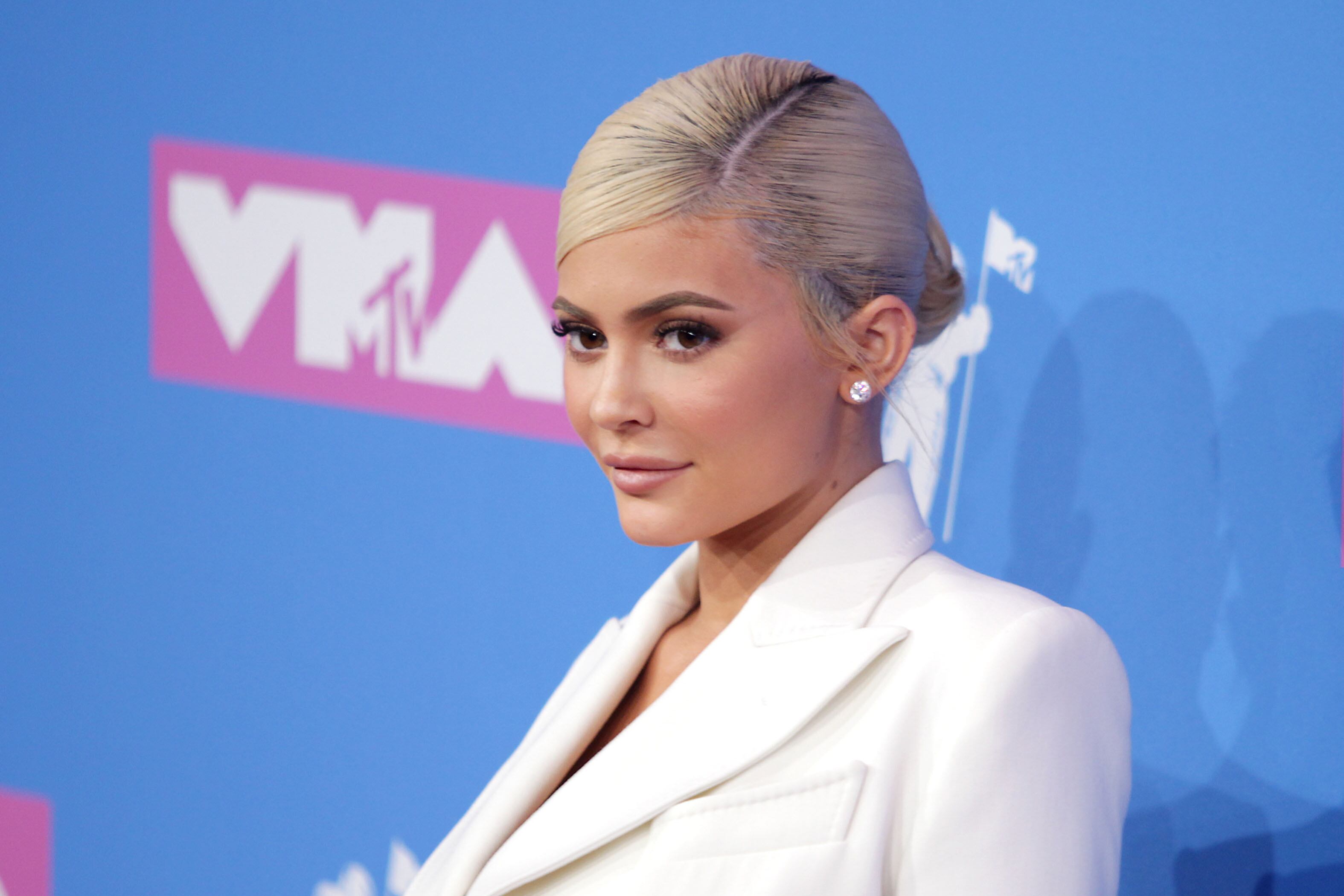
That was the question that ricocheted across social media after Forbes, the arbiter of such matters, crowned Kylie Jenner as the youngest self-made billionaire ever. She is 21.
Jenner's cosmetics empire ー which she owns in its entirety ー is worth at least $900 million, Forbes said. Combined with the estimated $100 million profit already amassed from Kylie Cosmetics' early success, Jenner now has an estimated net worth of $1 billion.
Last year, when Forbes put Jenner on its cover, it reported that she was on the path to become the youngest self-made billionaire ever. That led to an impassioned debate on social media, which was revived on Tuesday when the magazine announced she had officially crossed the mark, earlier than anyone in history. (Facebook's Mark Zuckerberg had previously held that record. He was 23 when he made his first billion.)
"We define a self-made billionaire as someone who did not inherit any fortune," said Jennifer Wang, the deputy editor of wealth at Forbes. So by that measure, Jenner is technically self-made. But not everyone was buying it.
Even Dictionary.com threw some shade.
Still, others gave Jenner credit for leveraging her fame and massive social media following into an extraordinarily profitable company in such a short time.
Kylie Cosmetics' path to a near billion-dollar valuation starts and ends with social media. Jenner, who counts nearly 130 million followers on Instagram alone and 175 million across all social platforms, has used her reach to promote $29 lip kits and pop-up shops to great effect. She leveraged that popularity on Instagram into a brick-and-mortar deal with Ulta Beauty, the nationwide cosmetics chain, which sold more than $50 million in Kylie product in just six weeks, according to Oppenheimer.
Jenner herself acknowledged her leg up thanks to social media ー her near-exclusive channels for all of the brand's marketing ー telling Forbes: “I had such a strong reach before I was able to start anything.”
But Jenner and her team also run the company with a bare-bones efficiency that allowed it to reach a $900 million value in three years. Kylie Cosmetics counts only a handful of employees. All of the production, packaging, and shipping is outsourced. The back-end e-commerce runs on Shopify. One of the biggest expenses is the 10 percent cut Kylie's mother, Kris Jenner, takes as a management fee for handling finance and PR, according to Forbes.
As with many Kardashian endeavors, Kylie Cosmetics was conceived in tabloid scandal. When fans began to poke fun at Jenner on social media for her enlarged lips ー which she later said came from temporary lip fillers ー Jenner sensed a business opportunity. She used her modeling earnings to launch her first lip kits, announcing the initial drop the day before on social media. They sold out in seconds ー and from there, an empire was born.
Jenner told Forbes, explaining her success: "I did what I usually do, and it just worked.”