By Mary Clare Jalonick
“This is how I'm going to die, defending this entrance," Capitol Police Sergeant Aquilino Gonell recalled thinking, testifying Tuesday at the emotional opening hearing of the congressional panel investigating the violent Jan. 6 Capitol insurrection.
Gonell told House investigators he could feel himself losing oxygen as he was crushed by rioters – supporters of then-President Donald Trump – as he tried to hold them back and protect the Capitol and lawmakers.
He and three other officers gave their accounts of the attack, sometimes wiping away tears, sometimes angrily rebuking Republicans who have resisted the probe and embraced Trump's downplaying of the day's violence.
Along with graphic video of the hand-to-hand fighting, the officers described being beaten as they held off the mob that broke through windows and doors and interrupted the certification of Democrat Joe Biden’s presidential win. The new committee launched its probe with a focus on the law enforcement officers who protected them — putting a human face on the violence of the day.
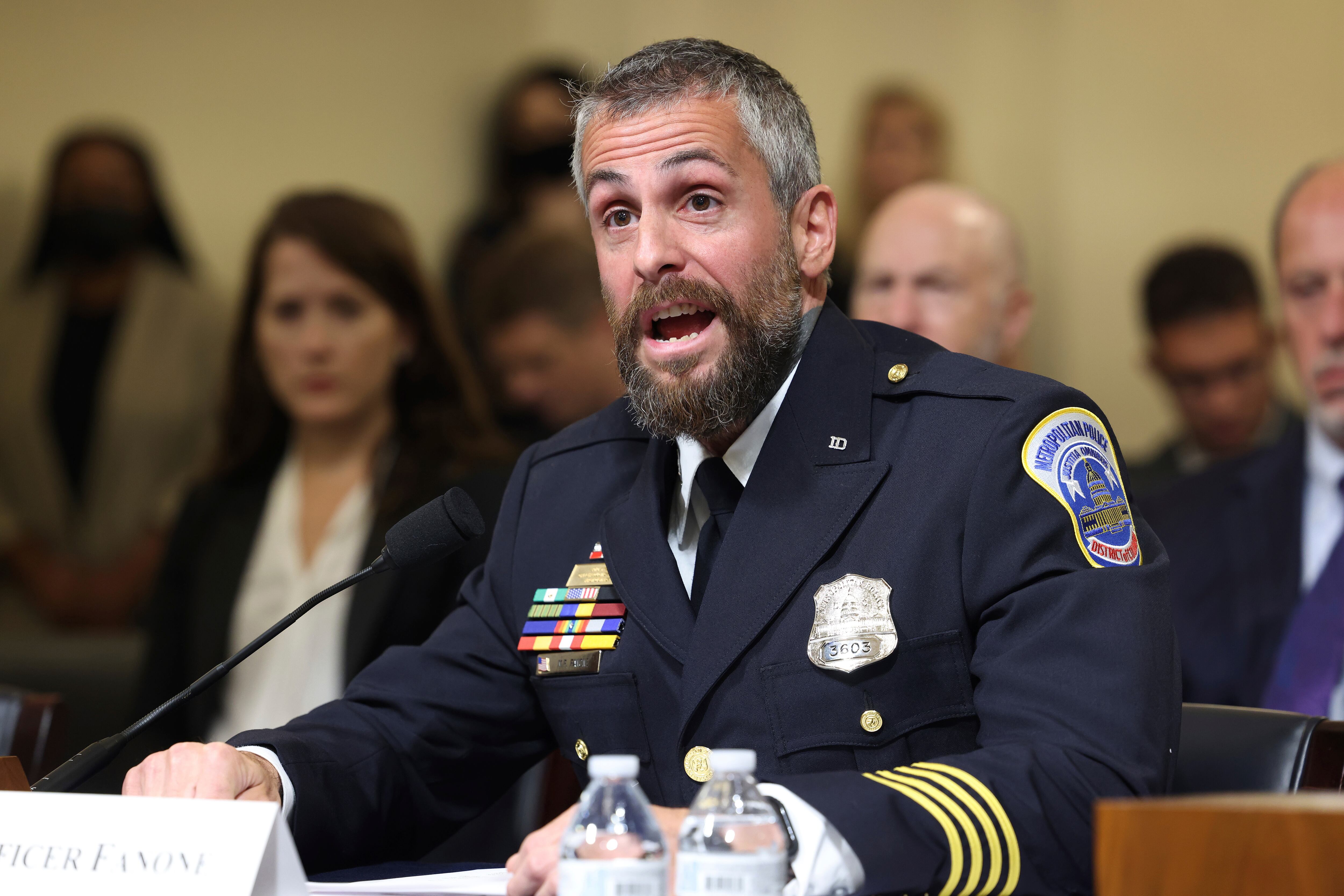
Metropolitan Police Officer Michael Fanone, who rushed to the scene, told the committee — and millions watching news coverage — that he was “grabbed, beaten, tased, all while being called a traitor to my country.” That assault on him, which stopped only when he said he had children, caused him to have a heart attack.
Daniel Hodges, also a D.C. police officer, said he remembered foaming at the mouth and screaming for help as rioters crushed him between two doors and bashed him in the head with his own weapon. He said there was “no doubt in my mind” that the rioters were there to kill members of Congress.
Capitol Police Officer Harry Dunn said one group of rioters, perhaps 20 people, screamed the n-word at him as he was trying to keep them from breaching the House chamber — racial insults he said he had never experienced while in uniform. At the end of that day, he sat down in the Capitol Rotunda and sobbed.
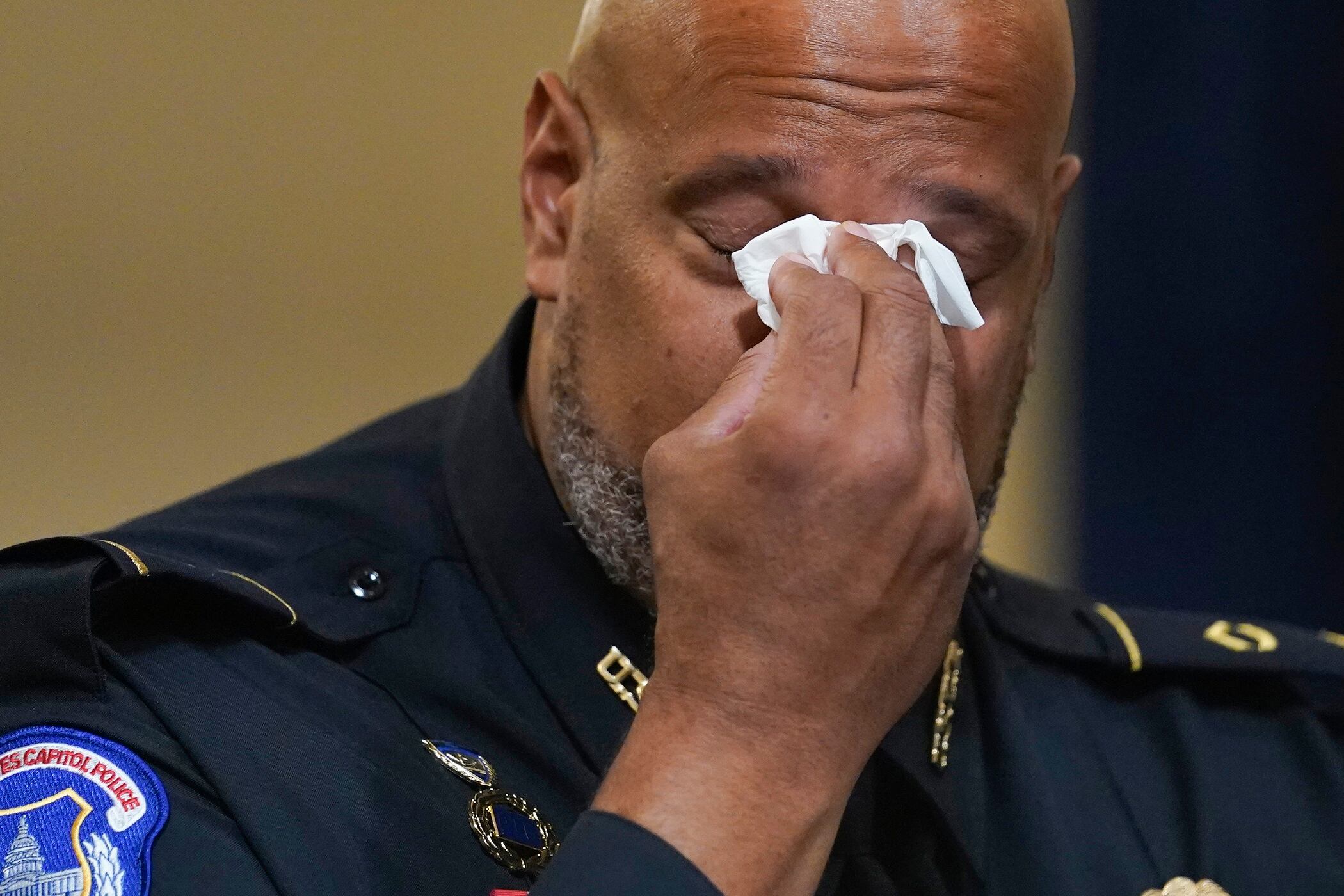
“I became very emotional and began yelling, 'How the (expletive) can something like this happen?” Dunn testified. "Is this America?”
“My blood is red,” he said. "I’m an American citizen. I’m a police officer. I’m a peace officer.”
Tensions on Capitol Hill have only worsened since the insurrection, with many Republicans playing down, or outright denying, the violence that occurred and denouncing the Democratic-led investigation as politically motivated. Democrats are reminding that officers sworn to protect the Capitol suffered serious injuries at the hands of the rioters.
All of the officers expressed feelings of betrayal at the Republicans who have dismissed the violence.
“I feel like I went to hell and back to protect them and the people in this room," Fanone testified, pounding his fist on the table in front of him. “Too many are now telling me that hell doesn’t exist or that hell actually wasn’t that bad. The indifference shown to my colleagues is disgraceful.”
The witnesses detailed the horror of their assaults and the lasting trauma in the six months since, both mental and physical. At the hearing’s end, the witnesses all pleaded with the lawmakers to dig deeper into how it happened.
The lawmakers on the committee, too, grew emotional as they played videos of the violence and repeatedly thanked the police for protecting them. Democratic Rep. Stephanie Murphy of Florida told them she was hiding near an entrance they were defending that day and said “the main reason rioters didn’t harm any members of Congress was because they didn’t encounter any members of Congress.”
Illinois Rep. Adam Kinzinger, one of two Republicans on the panel, shed tears during his questioning. He said he hadn’t expected to become so emotional.
“You guys all talk about the effects you have to deal with, and you talk about the impact of that day," Kinzinger told the officers. “But you guys won. You guys held.”
Wyoming Rep. Liz Cheney, the panel's other Republican, expressed “deep gratitude for what you did to save us” and defended her decision to accept an appointment by Democratic House Speaker Nancy Pelosi.
“The question for every one of us who serves in Congress, for every elected official across this great nation, indeed, for every American is this: Will we adhere to the rule of law, respect the rulings of our courts, and preserve the peaceful transition of power?”
“Or will we be so blinded by partisanship that we throw away the miracle of America?”
The House Republican leader, Kevin McCarthy, withdrew the participation of the Republicans he had appointed last week after Pelosi rejected two of them. She said their “antics” in support of Trump, and his lies that he won the election, weren’t appropriate for the serious investigation.
McCarthy has stayed close to Trump since the insurrection and has threatened to pull committee assignments from any Republican who participates on the Jan. 6 panel. He has called Cheney and Kinzinger “Pelosi Republicans."
On Tuesday, McCarthy again called the process a “sham." He told reporters that Pelosi should be investigated for her role in the security failures of the day but ignored questions about Senate Republican leader Mitch McConnell, who had identical authority over the Capitol Police and Capitol security officials.
After the hearing, Chairman Bennie Thompson, D-Miss., said that the testimony “sets the right tone” for the investigation, which will examine not only Trump’s role in the insurrection but the groups involved in coordinating it, white supremacists among them. He said the committee could start issuing subpoenas “soon.”
The probe will also look at security failures that allowed hundreds of people to breach the Capitol and send lawmakers running for their lives. Some of those who broke in were calling for the deaths of Pelosi and Vice President Mike Pence, who was hiding just feet away from the mob.
Capitol Police have repeatedly said they are hamstrung by a lack of funding. Senate leaders said Tuesday they had reached a deal on a $2.1 billion emergency spending bill that could provide more resources.
Shortly after the insurrection, most Republicans denounced the violent mob — and many criticized Trump himself, who told his supporters to “fight like hell” to overturn his defeat. But many have softened their tone in recent months and weeks.
And some have gone further, with Georgia Rep. Andrew Clyde saying video of the rioters looked like “a normal tourist visit,” and Arizona Rep. Paul Gosar repeatedly saying that a woman who was shot and killed by police as she was trying to break into the House chamber was “executed.”
___
Associated Press writers Nomaan Merchant, Brian Slodysko, Eric Tucker, Kevin Freking and Padmananda Rama contributed to this report from Washington. Associated Press writer Aaron Morrison contributed from New York.
Updated on July 27, 2021, at 4:35 p.m. ET with the latest details.