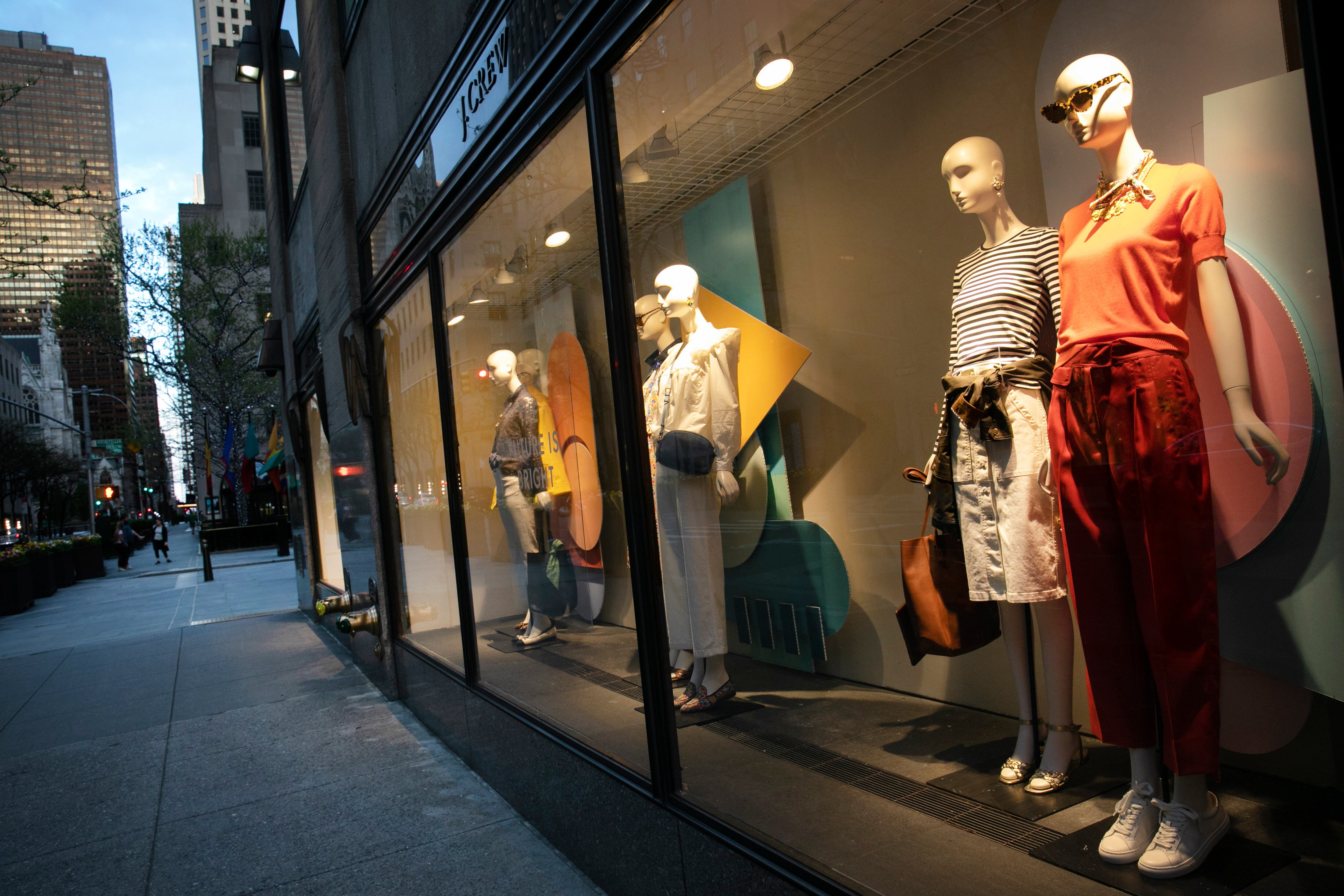
A window display at a J Crew store overlooks a quiet Rockefeller Center, Saturday, May 2, 2020, in New York. On April 30, the company announced it would apply for bankruptcy protection amidst the COVID-19 pandemic. (AP Photo/Mark Lennihan)
By Anne D'Innocenzio
The owner of J.Crew is filing for Chapter 11 bankruptcy, two months after the first person in New York tested positive for COVID-19.
The city, where J.Crew Group Inc. is based, went into lockdown soon after, followed by much the country. Retail stores in New York City and across the country shut their doors.
More bankruptcies across the retail sector are expected in coming weeks.
J.Crew, already in trouble before the pandemic and laden with debt, and was acquired by TPG Capital and Leonard Green & Partners for $3 billion in 2011.
Operations at J.Crew will continue throughout a restructuring and clothing will still be available to purchase online.
The company said Monday that it anticipates its stores will reopen when it's safe to do so.
Retail veteran Mickey Drexler led J.Crew for more than a decade when it become a coveted fashion brand. But the chain appeared to lose its way at some point and Drexler severed his last ties with the company in January 2019.
There are a number of retail chains that were already teetering at the start of the year, but the pandemic is wreaking havoc equally across the entire sector. J.Crew is not the first to seek protection during the coronavirus outbreak, and no one expects it to be the last.
J.C. Penney and Neiman Marcus are expected to follow J.Crew. Jeans maker True Religion Apparel Inc. filed for bankruptcy protection last month.
Clothing store sales plummeted 50.5% in March, according to the latest Commerce Department report, and it has grown worse since.
In its last full year of operations, J.Crew generated $2.5 billion in sales, a 2 percent increase from the year before.
J.Crew had aimed to spin off its successful Madewell division as a public company and use the proceeds to pay down its debt. The company said Monday that Madewell will remain part of J.Crew Group Inc.
There were 193 J.Crew stores, 172 J.Crew Factory outlets and 132 Madewell locations as of Feb. 1.
Super Bowl Champion, Julian Edelman, talks Chiefs' conspiracies, his fave TSwift song and his bet for Super Bowl LIX. Plus, the best time for a bathroom break.
Ron Hammond, Sr. Director of Government Relations at the Blockchain Association, breaks down Trump’s plan to strengthen U.S. leadership in financial technology.
BiggerPockets Money podcast is now available on Cheddar Wednesdays at 10am ET! Mindy Jensen shares how her podcast is helping people gain financial freedom.
The social video platform's future remains in doubt, as players scramble to profit from the chaos. Plus: Big oil gets bigger, DOGE downsizes, and tariffs!
Ty Young, CEO of Ty J. Young Wealth Management, joins Cheddar to discuss Trump's moves as he returns to Washington D.C. and how it may affect the U.S. economy.
Starbucks’ decision to restrict its restrooms to paying customers has flushed out a wider problem: a patchwork of restroom use policies that varies by state and city. Starbucks announced last week a new code of conduct that says people need to make a purchase if they want to hang out or use the restroom. The coffee chain's policy change for bathroom privileges has left Americans confused and divided over who gets to go and when. The American Restroom Association, a public toilet advocacy group, was among the critics. Rules about restroom access in restaurants vary by state, city and county. The National Retail Federation says private businesses have a right to limit restroom use.
President Donald Trump is talking up a joint venture investing up to $500 billion for infrastructure tied to artificial intelligence by a new partnership formed by OpenAI, Oracle and SoftBank. The new entity, Stargate, will start building out data centers and the electricity generation needed for the further development of the fast-evolving AI in Texas, according to the White House. The initial investment is expected to be $100 billion and could reach five times that sum. While Trump has seized on similar announcements to show that his presidency is boosting the economy, there were already expectations of a massive buildout of data centers and electricity plants needed for the development of AI.
Chris Ruder, Spikeball Founder and CEO, explains how he and his friends put roundnet on the global map, plus, how Spikeball helps people "find their circle."