California leaders were on Capitol Hill Tuesday to fight back against a Trump administration policy that seeks to pull the state's ability to set its own auto emissions standards.
"In the words of the esteemed philosopher, Kermit the Frog: 'it's not easy being green.' The federal government shouldn't make it harder," San Jose Mayor Sam Liccardo told the House Subcommittee on Environment.
In mid-September, the White House revoked a waiver that allows California to implement stricter emission standards than what the federal government puts forward under the Clean Air Act. The waiver was first granted in the 1960s, a time when Los Angeles was confronting a dangerous smog crisis, and has since allowed California to become a driver of auto market trends and a leader in combating air pollution. President Trump, meanwhile, has claimed that California's stricter standards could bankrupt car companies.
"The Trump administration is gambling with people's lives here … and actively preventing states from protecting their own citizens," said the subcommittee chairman, Rep. Harley Rouda, a California Democrat from Orange County.
Rouda called the hearing Tuesday to discuss the health and environmental impact on the state and its residents if Trump's policy change is implemented. Top California officials last month vowed to fight the revocation, which House Speaker Nancy Pelosi called an "outrageous, partisan assault" on her home state and an example of Trump's "toxic special interest agenda" and big donor priorities.
"We know there are a lot of kids that are suffering from asthma as a result of living in neighborhoods near freeways," Liccardo told Cheddar after the hearing. "We critically need higher emission standards to protect those kids."
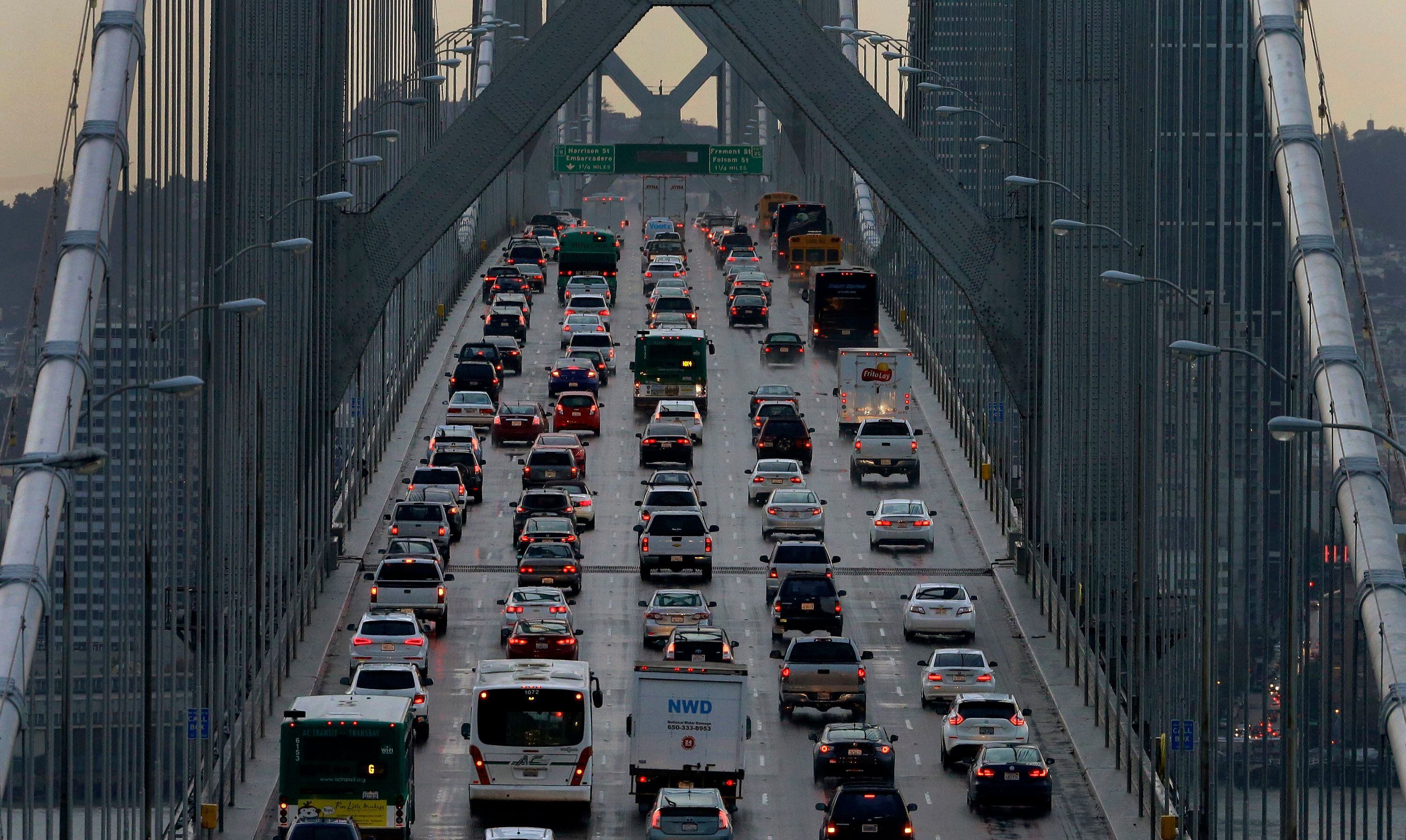
The waiver was revoked by the Environmental Protection Agency and the National Highway Traffic Safety Administration, which jointly announced the policy — called the One National Program Rule — that was part of a 2018 White House initiative that aimed to roll back stricter emission standards put in place under President Barack Obama.
EPA Administrator Andrew Wheeler said that the move is essential to provide "regulatory certainty" for carmakers and will "save lives and promote economic growth" by lowering the cost of new vehicles. Secretary of Transportation Elaine Chao added that "uniform fuel economy standards" across the U.S. will ensure "no state has the authority to opt-out of the nation's rules" and that no state, no matter how big, can influence policy over other jurisdictions.
Yet already, over a dozen states have matched California's standards and several car manufacturers — Ford, Honda, Volkswagen, and BMW — have agreed to adhere to the state's regulations. The automaker's deal with the California Air Resources Board, which essentially bucked the White House's emission standards rollback, was slammed by Trump who called the auto executives "foolish" and "politically correct."
At Tuesday's hearing, Republican lawmakers, like Rep. James Comer of Kentucky, expressed support for the president's policy and argued that state regulations should not supersede those of the federal government — a striking reversal from past GOP positions.
"I don't know why the Republican Party has chosen a flat earth approach and denies science. This is going to affect their kids too," former Gov. Jerry Brown, who led California from 1975 to 1983 and again from 2011 to 2019, told the subcommittee on Tuesday.
Several speakers also stressed that weakening emissions standards will not only hurt the environment but will stifle innovation and actually increase costs for consumers. A study released in August from Consumer Reports found that Trump's rollbacks would increase the oil consumption of cars produced in the next 15 years by 320 billion gallons, which would cost consumers an additional $460 billion. Maintaining the Obama-era standards through 2025 model year cars, the report found, would save Americans a total of $660 billion through fuel-efficient advancements.
"One thing all parties can agree on is that it is good to save money," Liccardo told Cheddar.