In this photo March 22, 2013, photo, the exterior of the Internal Revenue Service (IRS) building in Washington. The IRS sys it will stop using facial recognition technology to authenticate people who create online accounts after the practice came under criticism from privacy advocates and lawmakers (AP Photo/Susan Walsh, File)
By Fatima Hussein
The IRS said Monday it will suspend the use of facial recognition technology to authenticate people who create online accounts after the practice was criticized by privacy advocates and lawmakers.
The agency said it would no longer use a third-party service, called ID.me, for facial recognition. Critics of the software said the database could become a target for cyberthreats. They also expressed concern about how the information could be used by other government agencies, among other concerns.
Earlier Monday, Senate Finance Committee Chair Ron Wyden, D-Ore., called on the agency to end its use of the ID.me software. After the IRS announced the practice would be suspended, Wyden said "the Treasury Department has made the smart decision to direct the IRS to transition away from using the controversial ID.me verification service.”
"No one should be forced to submit to facial recognition to access critical government services,” he added.
The IRS is currently grappling with a worker shortage and an expanded workload from processing tax filings and administering pandemic-related programs. Legislation that would have given the agency billions of dollars to more expeditiously process returns is stalled.
“The IRS takes taxpayer privacy and security seriously, and we understand the concerns that have been raised,” said IRS Commissioner Chuck Rettig.
“Everyone should feel comfortable with how their personal information is secured, and we are quickly pursuing short-term options that do not involve facial recognition.”
The agency said the transition would occur “over the coming weeks in order to prevent larger disruptions to taxpayers during filing season.”
Russian forces escalated their attacks on populated urban areas Tuesday, bombarding the central square in Ukraine’s second-largest city and Kyiv’s main TV tower.
A bipartisan group of 43 representatives joined forces in a letter to President Joe Biden to remind the executive branch that it must seek the approval of Congress before authorizing a war — whether or not its in Ukraine as Russia continues its invasion. Rep. Peter DeFazio (D-Ore. 4th District) led the effort and joined Cheddar News Wrap to explain. "It's time for Congress to get back the authority, which is vested to us in the constitution, not in the executive branch," he said. "The president. once we're at war, we speak with one voice with the commander in chief. But before that, it's up to the American people and Congress whether or not we're going to become engaged in a war."
Chris Konstantinos, Chief Investment Strategist at RiverFront Investment Group, explains why he remains encouraged about the S&P and the state of the market despite the major indexes closing mostly lower on Monday.
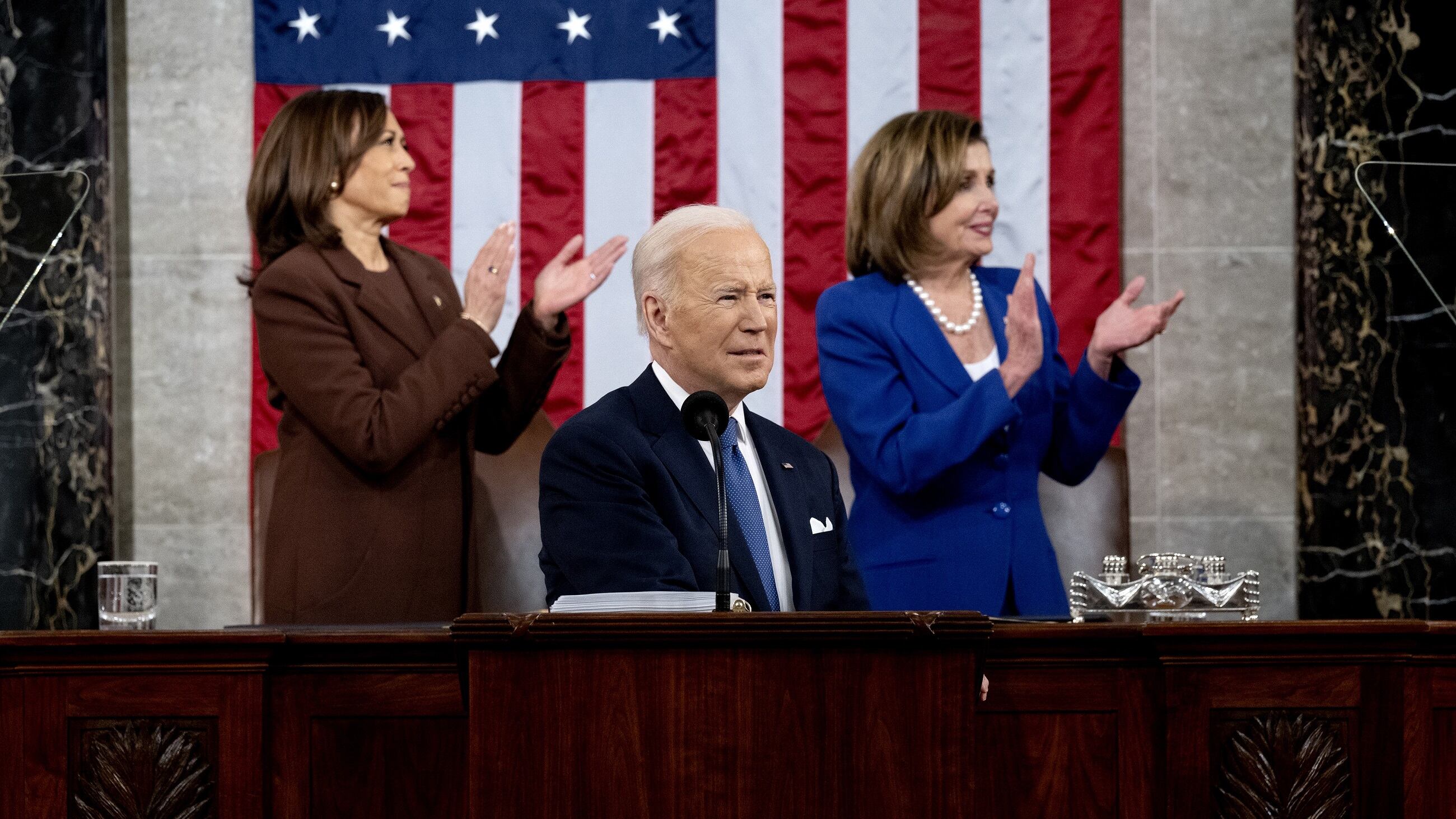
President Joe Biden will be delivering his first State of the Union address on Tuesday night, and with so many issues from Ukraine to inflation, everyone will be focused on what he might say. Rep. Nicole Malliotakis (R-N.Y. 11th District) joined Cheddar News to discuss what she thinks the president should address. "I think what he hasn't done yet is go after the gas, the oil, the minerals, the mining industries, that is incredibly important," she said. "There's still some banks there that are not sanctioned. He needs to go after all the banks, but I also think that providing the equipment that Ukraine needs to continue to protect its capital and its country are incredibly important."
As Russia’s attack on Ukraine continues, one of its few big allies remaining appears to be China. Gordon Chang, Asian affairs expert and author of "The Coming Collapse of China," joined Cheddar News to discuss what might be behind China's support for Putin's current strategy. “I think China is looking at what Putin did yesterday, which is to raise his nuclear forces on a higher alert level,” Chang stated, “If they see that Putin gets away with his nuclear threats, which he's been making over the last three or four days, then I'm sure that Beijing is going to ramp up its threats as well, and it could ramp them up against any number of different countries with which it perceives it has a problem with"
Joel Rubin, president of the Washington Strategy Group and former Deputy Assistant Secretary of State, joins Cheddar News to discuss the Russia-Ukraine tensions and the new sanctions President Biden placed on Russia.