By NASSER KARIMI, AMIR VAHDAT and JON GAMBRELL/Associated Press
TEHRAN, Iran (AP) — Iran struck back at the United States for the killing of a top Iranian general early Wednesday, firing a series of ballistic missiles at two Iraqi bases housing U.S. troops in a major escalation that brought the two longtime foes closer to war.
Iranian state TV said it was in revenge for the U.S. killing of Revolutionary Guard Gen. Qassem Soleimani, whose death last week in an American drone strike near Baghdad prompted angry calls to avenge his slaying.
Soleimani's killing and the strikes by Iran came as tensions have been rising steadily across the Mideast after President Donald Trump's decision to unilaterally withdraw America from Tehran's nuclear deal with world powers. They also marked the first time in recent years that Washington and Tehran have attacked each other directly rather than through proxies in the region. It raised the chances of open conflict erupting between the two enemies, which have been at odds since Iran's 1979 Islamic Revolution.
Iran initially announced only one strike, but U.S. officials confirmed both. There was no immediate word on injuries. U.S. defense officials were at the White House, likely to discuss options with Trump, who launched the strike on Soleimani while facing an upcoming impeachment trial in the Senate.
Iran’s Revolutionary Guard warned the U.S. and its regional allies against retaliating over the missile attack against the Ain al-Asad air base in Iraq’s western Anbar province. The Guard issued the warning via a statement carried by Iran’s state-run IRNA news agency.
“We are warning all American allies, who gave their bases to its terrorist army, that any territory that is the starting point of aggressive acts against Iran will be targeted,” The Guard said. It also threatened Israel.
After the strikes, a former Iranian nuclear negotiator posted a picture of the Islamic Republic's flag on Twitter, appearing to mimic Trump who posted an American flag following the killing of Soleimani and others Friday in a drone strike in Baghdad.
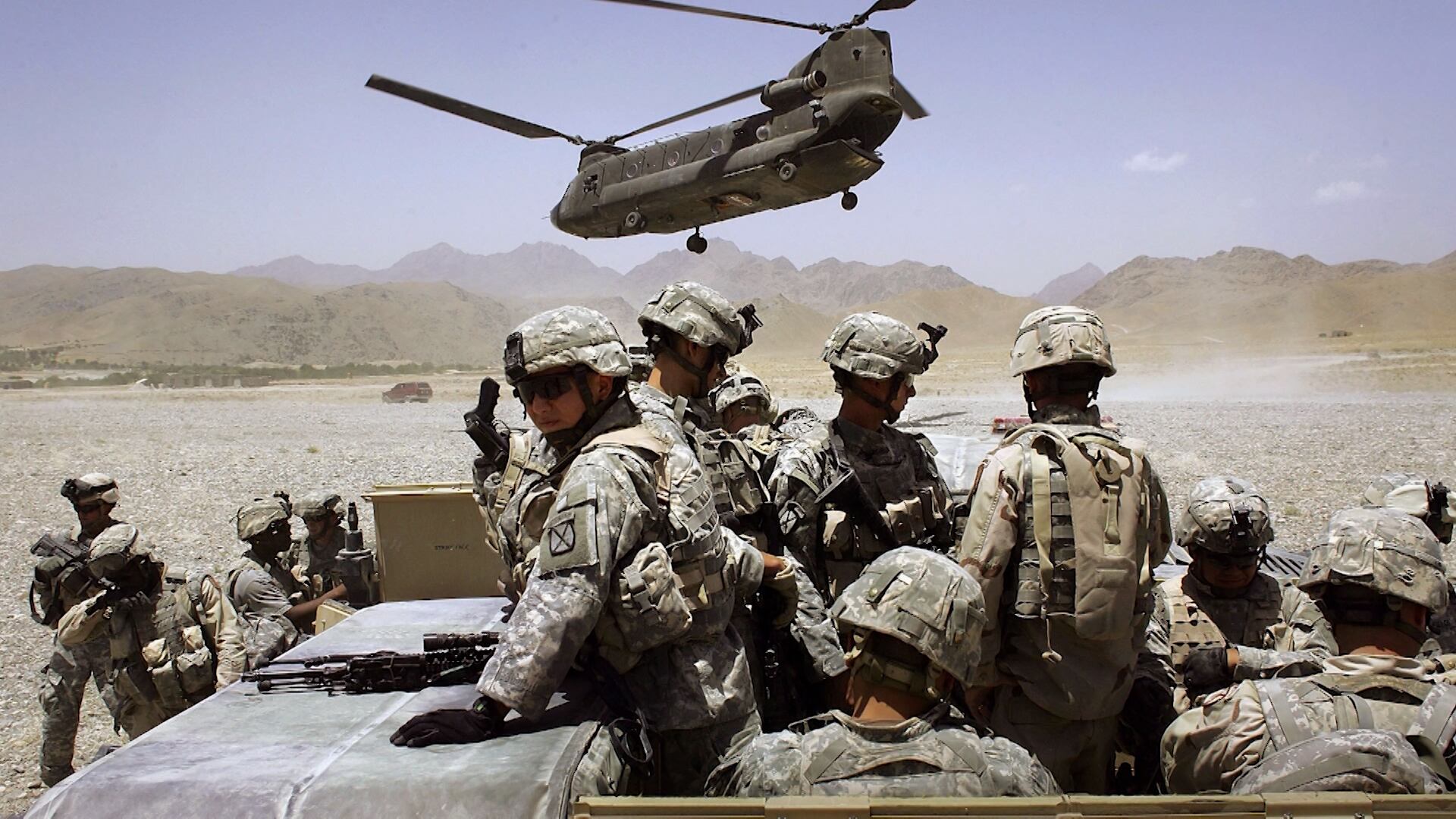
Ain al-Asad air base was first used by American forces after the 2003 U.S.-led invasion that toppled dictator Saddam Hussein, and later saw American troops stationed there amid the fight against the Islamic State group in Iraq and Syria. It houses about 1,500 U.S. and coalition forces.
About 70 Norwegian troops also were on the air base but no injuries were reported, Brynjar Stordal, a spokesperson for the Norwegian Armed Forces told The Associated Press.
Trump visited the sprawling Ain al-Asad air base, about 100 miles or 60 kilometers west of Baghdad, in December 2018, making his first presidential visit to troops in the region. He did not meet with any Iraqi officials at the time, and his visit inflamed sensitivities about the continued presence of U.S. forces in Iraq. Vice President Mike Pence also has visited the base.
Iranian State TV said the Guard’s aerospace division that controls Iran’s missile program launched the attack, which it said was part of an operation dubbed “Martyr Soleimani.” Iran said it would release more information later.
The U.S. also acknowledged another missile attack on a base in Irbil in Iraq's semiautonomous Kurdish region.
“As we evaluate the situation and our response, we will take all necessary measures to protect and defend U.S. personnel, partners, and allies in the region,” said Jonathan Hoffman, an assistant to the U.S. defense secretary.
Wednesday's revenge attack came a mere few hours after crowds in Iran mourned Soleimani and as the U.S. continued to reinforce its own positions in the region and warned of an unspecified threat to shipping from Iran in the region's waterways, crucial routes for global energy supplies. U.S. embassies and consulates from Asia to Africa and Europe issued security alerts for Americans.
A stampede broke out Tuesday at Soleimani's funeral for a top Iranian general slain in a U.S. airstrike, and at least 56 people were killed and more than 200 were injured as thousands thronged the procession, Iranian news reports said.
Tuesday's deadly stampede took place in Soleimani's hometown of Kerman as his coffin was being borne through the city in southeastern Iran, said Pirhossein Koulivand, head of Iran’s emergency medical services.
There was no information about what set off the crush in the packed streets, and online videos showed only its aftermath: people lying apparently lifeless, their faces covered by clothing, emergency crews performing CPR on the fallen, and onlookers wailing and crying out to God.
“Unfortunately as a result of the stampede, some of our compatriots have been injured and some have been killed during the funeral processions," Koulivand said, and state TV quoted him as saying that 56 had died and 213 had been injured.
Soleimani's burial was delayed, with no new time given, because of concerns about the huge crowd at the cemetery, the semi-official ISNA news agency said.
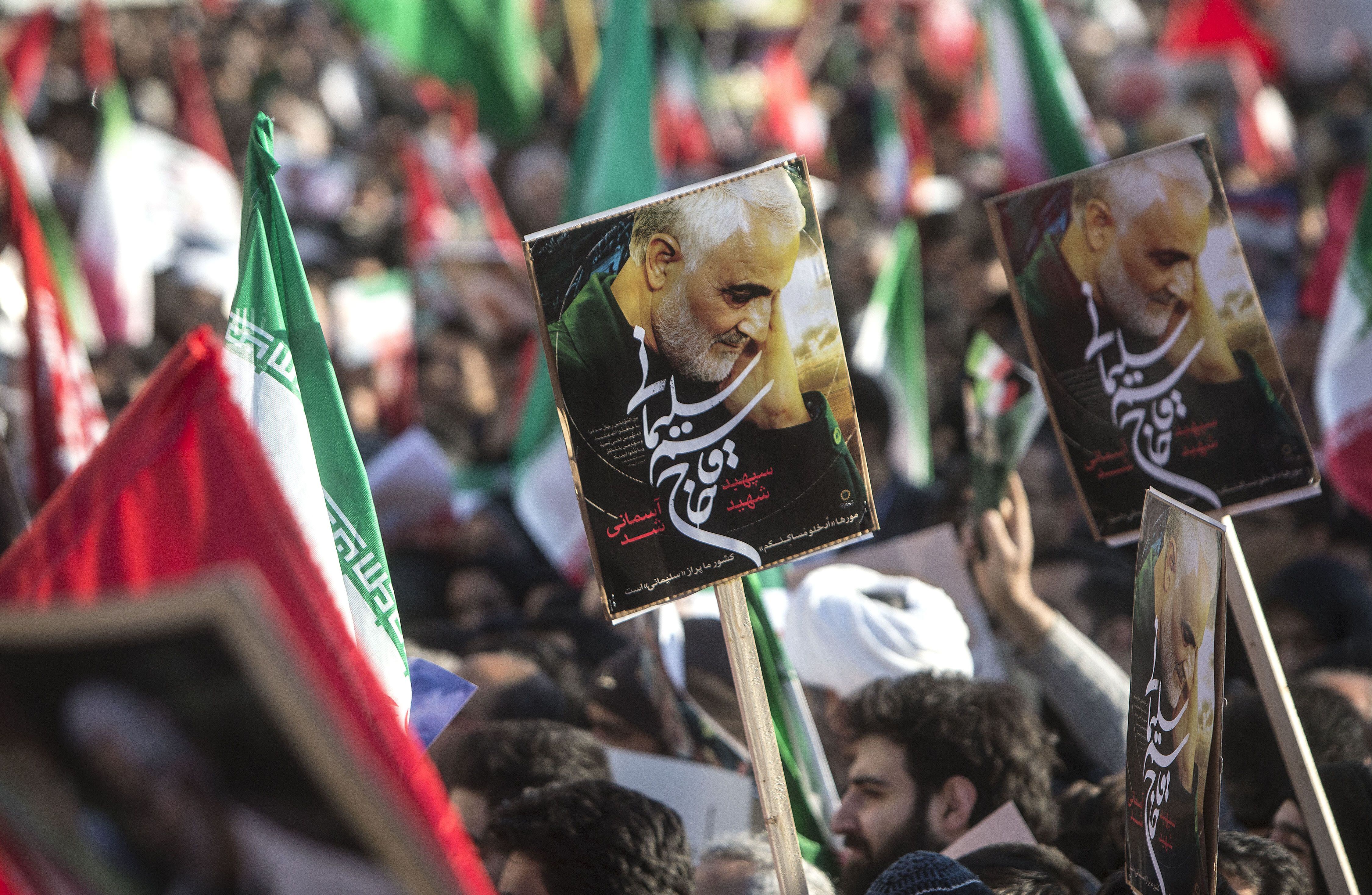
A procession in Tehran on Monday drew over 1 million people in the Iranian capital, crowding both main avenues and side streets in Tehran. Such mass crowds can prove dangerous. A smaller stampede at the 1989 funeral for Ayatollah Ruhollah Khomeini killed at least eight people and injured hundreds.
Hossein Salami, Soleimani's successor as leader of the Revolutionary Guard, addressed a crowd of supporters gathered at the coffin in a central square in Kernan. He vowed to avenge Soleimani, who was killed in a U.S. drone strike Friday near Baghdad's airport.
“We tell our enemies that we will retaliate but if they take another action we will set ablaze the places that they like and are passionate about," Salami said.
“Death to Israel!” the crowd shouted in response, referring to one of Iran's longtime regional foes.
Salami praised Soleimani's work, describing him as essential to backing Palestinian groups, Yemen's Houthi rebels and Shiite militias in Iraq and Syria. As a martyr, Soleimani represented an even greater threat to Iran's enemies, Salami said.
Soleimani will ultimately be laid to rest between the graves of Enayatollah Talebizadeh and Mohammad Hossein Yousef Elahi, two former Guard comrades killed in Iran's 1980s war with Iraq. They died in Operation Dawn 8, in which Soleimani also took part. It was a 1986 amphibious assault that cut Iraq off from the Persian Gulf and led to the end of the war that killed 1 million.
The funeral processions in major cities over three days have been an unprecedented honor for Soleimani, seen by Iranians as a national hero for his work leading the Guard’s expeditionary Quds Force.
The U.S. blames him for killing U.S. troops in Iraq and accused him of plotting new attacks just before he was killed. Soleimani also led forces supporting Syrian President Bashar Assad in that country's civil war, and he also served as the point man for Iranian proxies in countries like Iraq, Lebanon and Yemen. Russian President Vladimir Putin met with Assad in Syria on Tuesday amid the tensions between Washington and Tehran.
Soleimani's slaying already has led Tehran to abandon the remaining limits of its 2015 nuclear deal with world powers as his successor and others vow to take revenge.
In Iraq, pro-Iranian factions in parliament have pushed to oust American troops from Iraqi soil following Soleimani's killing. Germany and Canada announced plans to move some of their soldiers in Iraq to neighboring countries.
The U.S. Maritime Administration warned ships across the Mideast, citing the rising threats. “The Iranian response to this action, if any, is unknown, but there remains the possibility of Iranian action against U.S. maritime interests in the region,” it said.
Oil tankers were targeted in mine attacks last year that the U.S. blamed on Iran. Tehran denied responsibility, although it did seize oil tankers around the crucial Strait of Hormuz, the narrow mouth of the Persian Gulf through which 20% of the world’s crude oil travels.
The U.S. Navy's Bahrain-based 5th Fleet said it would work with shippers in the region to minimize any possible threat.
The 5th Fleet “has and will continue to provide advice to merchant shipping as appropriate regarding recommended security precautions in light of the heightened tensions and threats in the region,” 5th Fleet spokesman Cmdr. Joshua Frey told The Associated Press.
Iran's parliament, meanwhile, has passed an urgent bill declaring the U.S. military's command at the Pentagon and those acting on its behalf in Soleimani's killing as “terrorists," subject to Iranian sanctions. The measure appears to be in response to a decision by Trump in April to declare the Revolutionary Guard a “terrorist organization.”
The U.S. Defense Department used that terror designation to support the strike that killed Soleimani. The action by Iran’s parliament was done by a special procedure to speed it into law and also saw the lawmakers approve funding for the Quds Force with an additional 200 million euros, or about $224 million.
Gambrell reported from Dubai, United Arab Emirates. Associated Press writer Matthew Lee in Washington contributed.