Iowa Governor Kim Reynolds is urging lawmakers in Washington to ratify the United States-Mexico-Canada Agreement (USMCA), which she says will help bring stability to her state's agriculture industry.
"Our message to Congress is to please rectify the USMCA. That'll bring a lot of certainty and predictability to the market," Reynolds told Cheddar on Thursday.
Following a year of negotiations, the USMCA was signed by President Donald Trump, now former Mexican President Enrique Peña Nieto, and Canadian Prime Minister Justin Trudeau last November at the G-20 Summit in Buenos Aires. The trade deal was meant to replace the North American Free Trade Agreement (NAFTA), which was established in 1994 and created a free trade zone between the three neighbors.
In an overwhelming vote last week, Mexico's General Congress approved the USMCA making Mexico the first country to fully sign onto the deal. The U.S. Congress and the Canadian Parliament have yet to ratify the pact.
"This is a very important advance," Mexican President Andrés Manuel López Obrador said at a press conference last week. "It is a clear sign that there is unity in the country."
Canada and Mexico are currently the second and third largest trading partners with the U.S., with total trade topping $617 billion and $611 billion in 2018 respectively, according to government figures.
The USMCA covers numerous aspects of cross-border trade, including labor laws, environmental standards, and intellectual property rights. It also has specific provisions for various sectors like auto manufacturers, digital services, and agriculture. The U.S., for instance, negotiated hard for easier access to the Canadian dairy market.
Democrats, however, have expressed concerns over weak enforcement measures on workers' rights and environmental regulations, and have refused to hold a vote on the deal in the House.
"Without real enforcement mechanisms we would be locking American workers into another bad deal. A new trade agreement without enforcement is not progress for the American worker, just a press release for the President," House Speaker Nancy Pelosi (D-Calif.) said in a statement in May. "We have been on a path to yes, but it must be a path that leads to an agreement that delivers positive results for American workers and farmers."
Nonetheless, Reynolds told Cheddar that Iowa's economy is growing, despite "some significant challenges with agricultural." Iowa is currently the second largest agricultural exporter in the U.S., with nearly 50 percent of its exports going to Canada and Mexico in 2018.
Farmers "really, really, really would like to see USMCA ratified," the Republican governor said.
Elaine Low, Senior Entertainment Business Reporter at Insider
joins Cheddar News to discuss the Animation Guild's upcoming contract negotiations, hoping to close pay gap with live-action counterparts.
Sam Burd, president of Dell Technologies Client Solutions Group, joined Cheddar to talk about the firm's Q3 earnings beat and what consumers can expect from the tech company in the future. He noted a return to offices alongside the overall change to how people work as sources for the earnings beat. Burd also discussed how the company has been able to navigate the ongoing global semiconductor chip shortage.
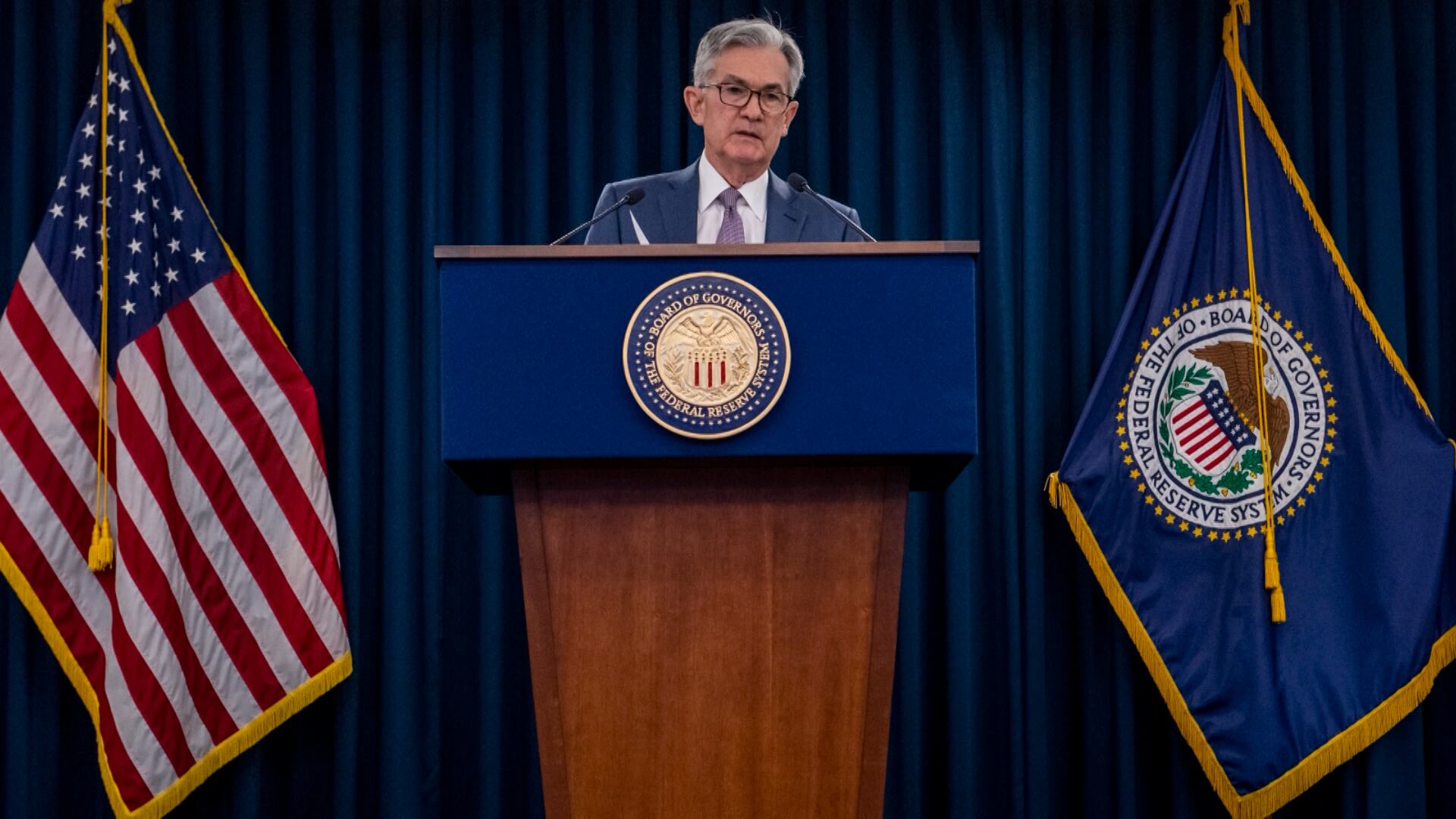
Matt Peron, Director of Research at Janus Henderson Investors, joins Cheddar News' Closing Bell, where he breaks down the factors leading to today's market slide and says there's more to it than Fed Chair Jerome Powell's comments about speeding up tapering efforts.
The United Nations Secretary-General said this year that his agency's warning about climate change was a 'code red for humanity.' So how will political pledges to lower emissions, increase green energy, and ramp up electric vehicle infrastructure play out, and can we reverse some climate damage next year? Vijay Vaitheeswaran, Global energy & climate innovation editor for The Economist, and host of 'To a Lesser Degree,' The Economist’s podcast on climate change, joins Cheddar Climate to discuss what we can look ahead to in 2022, including global policy shifts and investments from the private and public sectors, holding global leaders accountable, and more.
In recent years, extreme weather events like flooding and wildfires have become more frequent, and more severe - and scientists say global warming is to blame. Climate crises could leave people in need of help, and that's where Global Rescue steps in. The crisis response firm employs former Navy Seals and Army Rangers to rescue travelers from climate-related emergencies. Global Rescue CEO Dan Richards joins Cheddar Climate to discuss.
Cloud-based AI-powered writing assistant Grammarly recently raised $200 million in a funding round that values the company at $13 billion. The funding will be used to help Grammarly achieve its goal of becoming more ubiquitous, as the company says it wants to be the go-to writing assistant for wherever people type. Grammarly also says it aims to solve what it calls one of the most critical problems facing people and businesses today -- ineffective communication. Grammarly global head of product Rahul Roy-Chowdhury joins Cheddar News' Closing Bell to discuss.
The Competition and Markets Authority in the UK moved to block Facebook parent company Meta from acquiring the image sharing platform Giphy after saying advertisers and consumers would be adversely impacted. Hatem Dhiab, managing partner at Gerber Kawasaki Wealth & Investment, joined Cheddar to break down the decision and noted that the CMA's order could also halt other big tech firms from making similar purchases in the future. "I think this is going to be true for Facebook, it's going to happen for other big tech companies — Amazon, perhaps Google, so it's interesting that the UK is starting this wave," he said.