Iowa Governor Kim Reynolds is urging lawmakers in Washington to ratify the United States-Mexico-Canada Agreement (USMCA), which she says will help bring stability to her state's agriculture industry.
"Our message to Congress is to please rectify the USMCA. That'll bring a lot of certainty and predictability to the market," Reynolds told Cheddar on Thursday.
Following a year of negotiations, the USMCA was signed by President Donald Trump, now former Mexican President Enrique Peña Nieto, and Canadian Prime Minister Justin Trudeau last November at the G-20 Summit in Buenos Aires. The trade deal was meant to replace the North American Free Trade Agreement (NAFTA), which was established in 1994 and created a free trade zone between the three neighbors.
In an overwhelming vote last week, Mexico's General Congress approved the USMCA making Mexico the first country to fully sign onto the deal. The U.S. Congress and the Canadian Parliament have yet to ratify the pact.
"This is a very important advance," Mexican President Andrés Manuel López Obrador said at a press conference last week. "It is a clear sign that there is unity in the country."
Canada and Mexico are currently the second and third largest trading partners with the U.S., with total trade topping $617 billion and $611 billion in 2018 respectively, according to government figures.
The USMCA covers numerous aspects of cross-border trade, including labor laws, environmental standards, and intellectual property rights. It also has specific provisions for various sectors like auto manufacturers, digital services, and agriculture. The U.S., for instance, negotiated hard for easier access to the Canadian dairy market.
Democrats, however, have expressed concerns over weak enforcement measures on workers' rights and environmental regulations, and have refused to hold a vote on the deal in the House.
"Without real enforcement mechanisms we would be locking American workers into another bad deal. A new trade agreement without enforcement is not progress for the American worker, just a press release for the President," House Speaker Nancy Pelosi (D-Calif.) said in a statement in May. "We have been on a path to yes, but it must be a path that leads to an agreement that delivers positive results for American workers and farmers."
Nonetheless, Reynolds told Cheddar that Iowa's economy is growing, despite "some significant challenges with agricultural." Iowa is currently the second largest agricultural exporter in the U.S., with nearly 50 percent of its exports going to Canada and Mexico in 2018.
Farmers "really, really, really would like to see USMCA ratified," the Republican governor said.
Breakthrough Energy Catalyst, a private-public fund backed by Bill Gates, is planning to invest up to $15 billion in clean technology initiatives across the U.S., UK, and European Union. It will target four key areas and help fund large projects that otherwise would not be financially possible. Bobby Hollis, Director of Breakthrough Energy Catalyst, joins Cheddar News' Closing Bell to discuss.
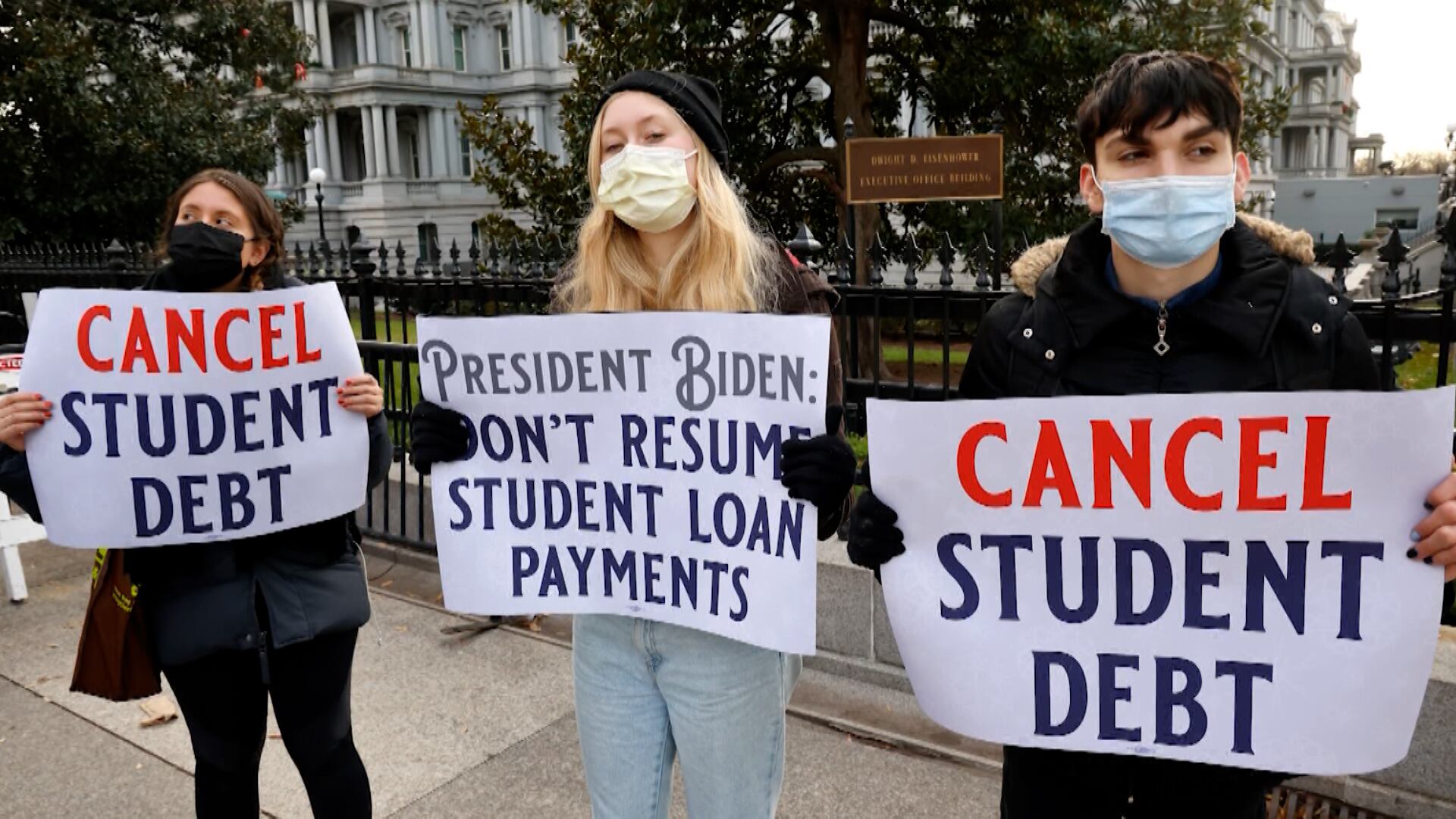
Student loan collection company Navient agreed to cancel $1.7 billion in debt and paid more than $140 million in other penalties to settle a lawsuit over abusive lending practices. Josh Shapiro, the attorney general of Pennsylvania who led negotiations in the settlement, joined Cheddar to go over the details of the company's predatory lending. "What Navient would do is charge [borrowers] these exorbitantly high rates, even though they knew people couldn't pay them or they would likely default on them," he explained.
An economic development agency, the Northwest Arkansas Council, is looking to draw technology professionals to their region of the Southern state with incentives like $10,000 worth of Bitcoin and a new bicycle. Nelson Peacock, president and CEO of the private nonprofit made up of companies like Walmart and Tyson Foods, joined Cheddar to talk about the program to further power his local economy. "By offering the payment in Bitcoin, we're looking to identify those people with interest and expertise in the underlying technologies, the blockchain technologies," he said.
Stocks closed mixed Friday with big bank stocks dragging on the Dow after a few lackluster earnings reports. Both the Nasdaq and the S&P 500 gained, but overall, stocks notched a second losing week in a row to start 2022. Tom Kozlik, Head of Research and Analytics at Hilltop Securities, joins Cheddar News' Closing Bell to discuss today's close, expectations for 2022 earnings reports, whether or not the COVID-19 omicron variant is being properly priced into markets, and more.
After months of investors turning to crypto as a hedge against inflation, instead of the traditional hedge of gold, one crypto exchange is working with a token creator to launch a digital coin backed by a physical asset. GCOIN gives customers a digital title of ownership to 99.99% pure physical gold which is stored in a secured vault. Brent de Jong, GCoin's founder and Kristin Boggiano, Co-Founder and President of CrossTower, a cryptocurrency exchange, join Cheddar News' Closing Bell to discuss the GCOIN rollout, customer interest, why crypto is used as an inflation hedge, and more.
Retail platform operator and delivery company, Foxtrot,
raised $100 million in a Series C round led by D1 Capital Partners. Foxtrot bills itself as the modern convenience store that combines what it calls in-store curated discovery with 30-minute delivery and 5-minute pickup. Since launching first as a digital-only delivery service, the company has since grown into a popular local retailer, opening 16 brick and mortar locations across Chicago, Dallas, and Washington, DC. Foxtrot co-founder and CEO Michael LaVitola joined Cheddar News' Closing Bell to discuss.