Iowa Governor Kim Reynolds is urging lawmakers in Washington to ratify the United States-Mexico-Canada Agreement (USMCA), which she says will help bring stability to her state's agriculture industry.
"Our message to Congress is to please rectify the USMCA. That'll bring a lot of certainty and predictability to the market," Reynolds told Cheddar on Thursday.
Following a year of negotiations, the USMCA was signed by President Donald Trump, now former Mexican President Enrique Peña Nieto, and Canadian Prime Minister Justin Trudeau last November at the G-20 Summit in Buenos Aires. The trade deal was meant to replace the North American Free Trade Agreement (NAFTA), which was established in 1994 and created a free trade zone between the three neighbors.
In an overwhelming vote last week, Mexico's General Congress approved the USMCA making Mexico the first country to fully sign onto the deal. The U.S. Congress and the Canadian Parliament have yet to ratify the pact.
"This is a very important advance," Mexican President Andrés Manuel López Obrador said at a press conference last week. "It is a clear sign that there is unity in the country."
Canada and Mexico are currently the second and third largest trading partners with the U.S., with total trade topping $617 billion and $611 billion in 2018 respectively, according to government figures.
The USMCA covers numerous aspects of cross-border trade, including labor laws, environmental standards, and intellectual property rights. It also has specific provisions for various sectors like auto manufacturers, digital services, and agriculture. The U.S., for instance, negotiated hard for easier access to the Canadian dairy market.
Democrats, however, have expressed concerns over weak enforcement measures on workers' rights and environmental regulations, and have refused to hold a vote on the deal in the House.
"Without real enforcement mechanisms we would be locking American workers into another bad deal. A new trade agreement without enforcement is not progress for the American worker, just a press release for the President," House Speaker Nancy Pelosi (D-Calif.) said in a statement in May. "We have been on a path to yes, but it must be a path that leads to an agreement that delivers positive results for American workers and farmers."
Nonetheless, Reynolds told Cheddar that Iowa's economy is growing, despite "some significant challenges with agricultural." Iowa is currently the second largest agricultural exporter in the U.S., with nearly 50 percent of its exports going to Canada and Mexico in 2018.
Farmers "really, really, really would like to see USMCA ratified," the Republican governor said.
Cristyl Kimbrough, real estate attorney and star of 'Ladies Who List: Atlanta,' joins Cheddar News to discuss her new show on OWN and breaking into Atlanta's luxury real estate space.
Carl Tobias, professor of law at the University of Richmond, joins Cheddar News to talk about how Johnson & Johnson funded experiments on mostly Black men comparing the effects of talc and asbestos on their skin.
Amazon unveiled its new mobile app called Amp as a direct competitor to Clubhouse, allowing people to host live radio shows. Although it is still in beta, users can join the waitlist from the iOS store.
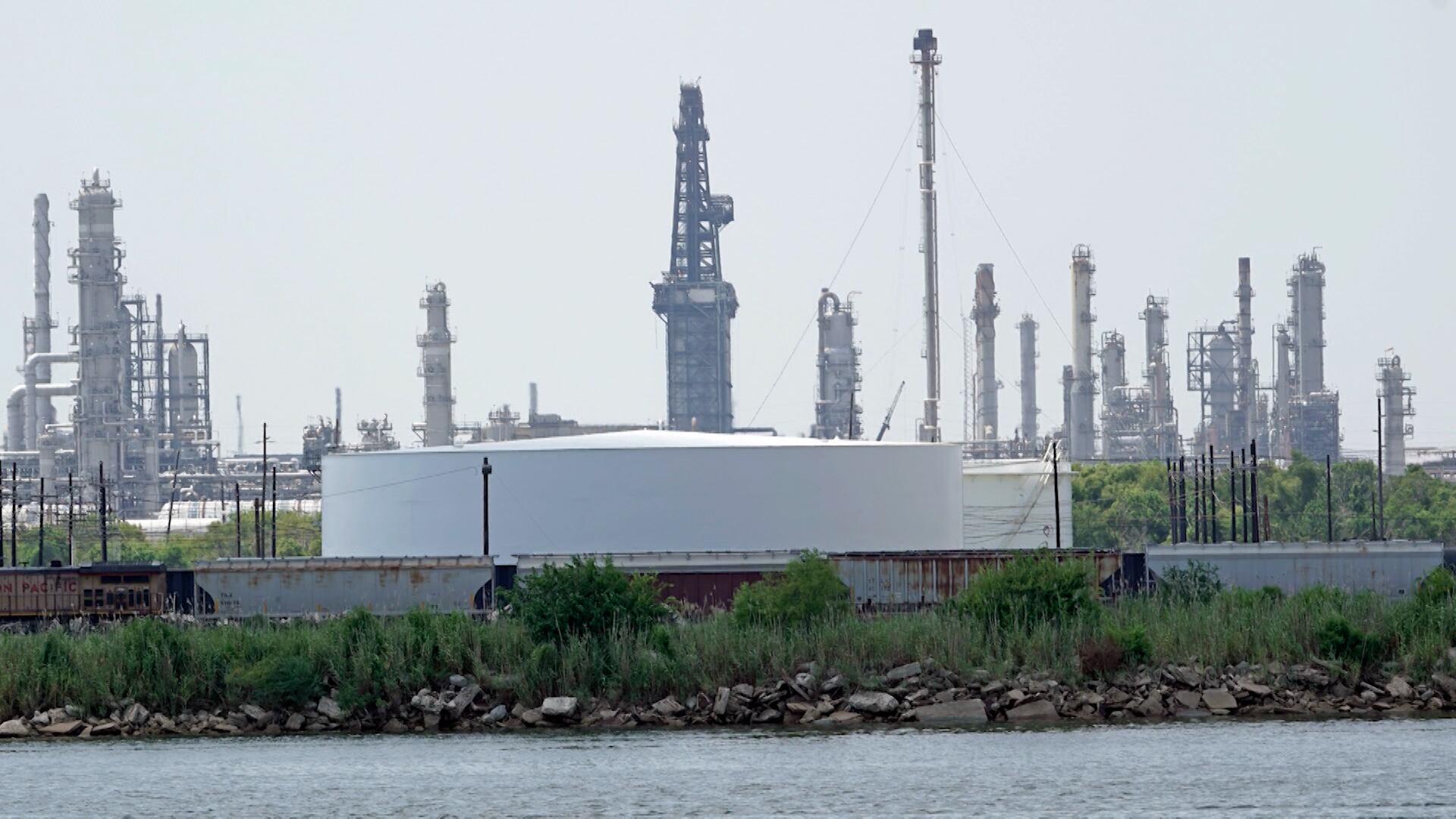
President Biden announced a ban on Russian oil and natural gas imports to the U.S. in response to its invasion of Ukraine, a move he warned could lead to an even greater surge in gas prices. The ban is prompting a conversation about the current oil production levels in the U.S. and whether or not the industry can ramp up production to soften the blow to American families at the gas pump. Clark Williams-Derry, Energy Finance Analyst with the Institute for Energy Economics and Financial Analysis, breaks down the state of the U.S. oil industry and how the ban might impact production levels here at home.
PepsiCo, Coca-Cola, McDonald’s, and Starbucks are the latest American food brands to have halted business operations in Russia after having faced scrutiny and criticism for originally failing to do so amid the country's invasion of Ukraine.
As Russia intensifies its war on Ukraine, President Biden announced a ban on oil imported from the aggressor nation. Critics of Russia have said this would be the best way to force Putin to pull back, but curbs on Russian oil exports are expected to send already skyrocketing oil and gas prices even higher, further impacting consumers, businesses, financial markets, and the global economy. Leslie Beyer, CEO of the Energy Workforce and Technology Council, joined Cheddar News' Closing Bell to discuss. "It's certainly going to increase pricing, but it is the right thing to do," she said. "The industry itself has already pulled out of the significant portion of its operations in Russia."
As airlines recover from COVID-19 and the industry becomes more competitive than ever, low-fare carrier Breeze Airlines is offering 35 new routes and reduced prices for its first-class experiences. CEO David Neeleman joined Cheddar News to talk about the rollout of services amid plenty of headwinds including high fuel costs. "We can limit a lot of costs because we're a technology company that happens to fly airplanes," he noted.
Despite women as a whole being among the groups most impacted by pandemic job losses, homesharing platform Airbnb reported that women hosts brought in $12 billion in revenue last year. Catherine Powell, Airbnb's global head of hosting, joined Cheddar News to discuss how women hosting has become a huge asset for the company. "Last year 21 percent more women joined the platform than men," she said. "So they are joining the platform. They are being successful. They're more super hosts, and they're doing incredibly well."