By Ciarán Giles
Millions of people around the world planned to demonstrate, attend conferences and enjoy artistic events Wednesday to mark International Women's Day, an annual observance established to recognize women and to demand equality for half of the planet's population.
While activists in some nations noted advances, repression in countries such as Afghanistan and Iran, and the large numbers of women and girls who experience sexual assaults and domestic violence worldwide highlighted the ongoing struggle to secure women's rights.
United Nations Secretary-General Antonio Guterres noted this week that women’s rights were “abused, threatened and violated” around the world and gender equality won’t be achieved for 300 years given the current pace of change.
Progress won over decades is vanishing because “the patriarchy is fighting back,” Guterres said.
The United Nations recognized International Women's Day in 1977, but the occasion has its roots in labor movements of the early 20th century. The day is commemorated in different ways and to varying degrees in different countries.
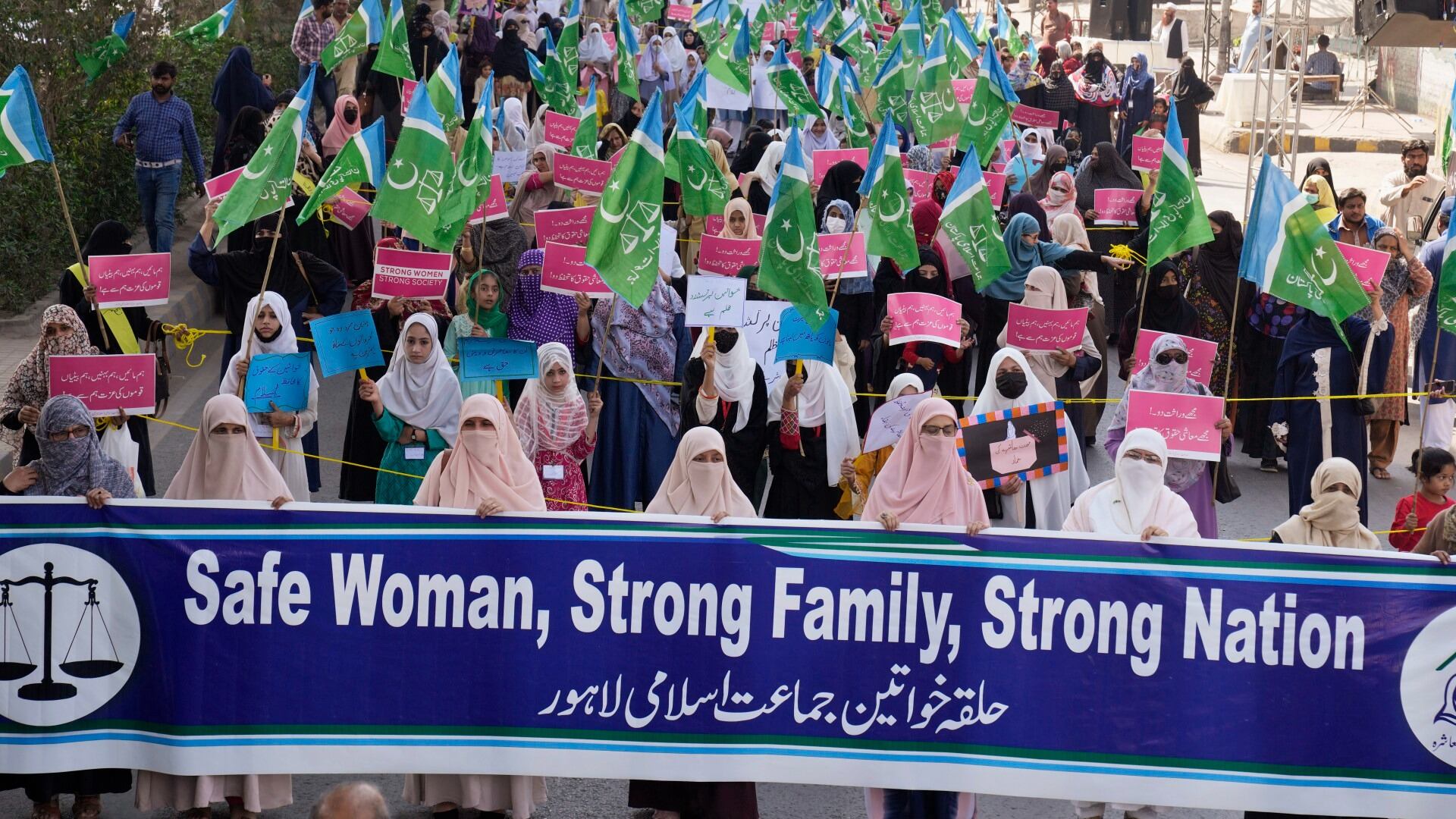
Women gathered in Pakistan’s major cities to march amid tight security. Organizers said the demonstrations were aimed at seeking rights guaranteed by the constitution. Some conservative groups last year threatened to stop similar marches by force.
Women’s rights activists in Japan held a small rally to renew their demand for the government to allow married couples to keep using different surnames. Under the 1898 civil code, a couple must adopt “the surname of the husband or wife” at the time of marriage.
The activists argued the law contributes to gender inequality because women experience strong pressure to take their husband’s name. Surveys show majority support for both men and women keeping their own names.
In the Philippines, hundreds of protesters from various women’s groups rallied in Manila for higher wages and decent jobs.
“We are seeing the widest gender pay gap,”protest leader Joms Salvador said. “We are seeing an unprecedented increase in the number of women workers who are in informal work without any protection.”
The United Nations identified Afghanistan as the most repressive in the world for women and girls since the Taliban takeover in 2021. The U.N. mission said Afghanistan’s new rulers were “imposing rules that leave most women and girls effectively trapped in their homes.”
They have banned girls’ education beyond sixth grade and barred women from public spaces such as parks and gyms. Women must cover themselves from head to toe and also barred from working at national and international nongovernmental organizations.
In Spain, more than 1 million people were expected to attend raucous evening demonstrations in Madrid, Barcelona and other cities. Big rallies were also organized are also expected in many other cities around the world, while in some countries only minor events are held.
Spain on Tuesday passed a new parity law requiring that women — and men — make up at least 40% of the boards of directors of listed companies and large private companies. The same will apply to the Spanish government Cabinet.
Political parties also must have to have gender equity on their electoral lists, with names of male and female candidates alternating.
Activists and left-wing governments in Spain have advanced women's rights in areas such as abortion access, menstrual leave and parental leave over the past two decades. Many European countries also have made strides toward gender equity.
This is the first International Women's Day since the U.S. Supreme Court ended the constitutional right to abortion last year and many states adopted restrictions on abortion.
___
Associated Press writers across the world contributed to this report.