By Tom Murphy
Some private insurers are balking at paying for the first drug fully approved to slow mental decline in Alzheimer’s patients.
Insurers selling coverage in North Carolina, Pennsylvania and New York, among other states, told The Associated Press they won’t cover Leqembi with insurance offered on the individual market and through employers because they still see the $26,000-a-year drug as experimental.
Their decision stands in contrast to Medicare, which will wind up covering most patients who take the drug. The federal coverage program mainly for people ages 65 and older announced shortly after Leqembi received full approval last month that it will cover the treatment while still tracking its safety and effectiveness.
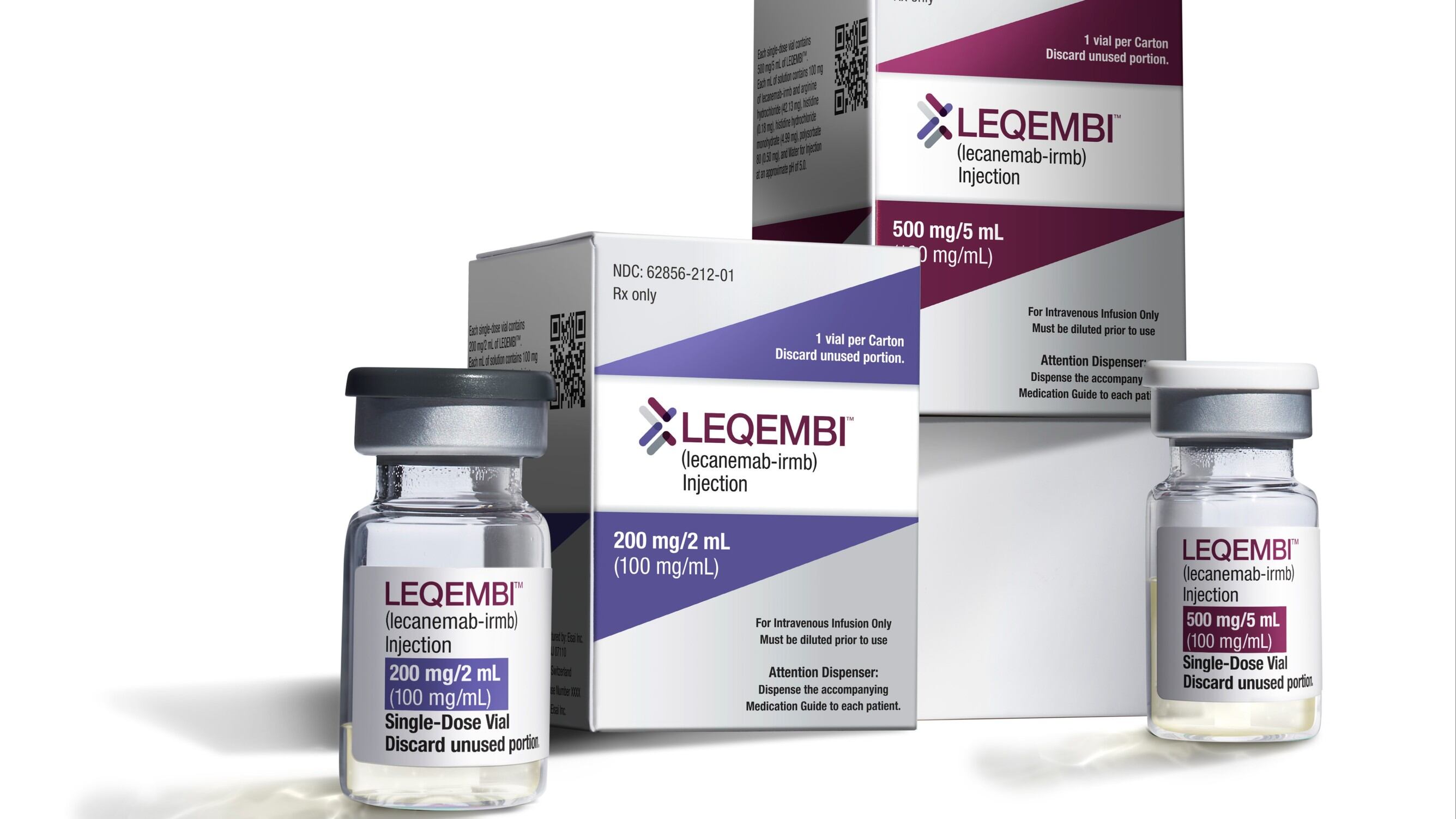
Leqembi is the first medicine that’s been convincingly shown to slow the cognitive decline caused by Alzheimer’s disease, though only modestly. The U.S. Food and Drug Administration approved the IV drug for patients with mild dementia and other symptoms caused by early Alzheimer’s.
That approval came after regulators reviewed data from a large study in which the drug slowed memory and thinking decline by about five months in those who got the treatment compared with those who got a dummy drug. Some Alzheimer's experts say the delay is likely too subtle for patients or their families to notice.
Alzheimer’s mainly affects the elderly. About 76% of the people taking Leqembi will be covered by Medicare, according to the Japanese drugmaker Eisai, which developed the drug and is co-marketing it with Cambridge, Massachusetts-based Biogen Inc.
But people under 65 — even, rarely, as young as their 30s — also can get diagnosed. They are more likely to have commercial coverage.
“That’s why we’re just dumbfounded that commercial plans are not covering it,” said Christine Mann, chief operating officer of the Buffalo, N.Y.-area Dent Neurologic Institute, which will provide the IV drug to patients. “It’s almost like discrimination against these patients.”
The full picture on commercial insurance is still emerging in the patchwork U.S. system of coverage.
Companies saying no so far include Highmark, which provides Blue Cross and Blue Shield coverage in New York, Pennsylvania, Delaware and West Virginia; Blue Cross and Blue Shield of North Carolina, which has about 1.8 million commercial customers; and Philadelphia-based Independence Blue Cross.
Highmark and the North Carolina plan say they are still monitoring Leqembi and could re-evaluate their decision.
Independence Blue Cross made its decision after reviewing published, peer-reviewed studies and publicly available FDA materials.
“That re-evaluation made it clear to us that the existing evidence does not allow for conclusions to be drawn about the safety and effectiveness of Leqembi,” said Dr. Heidi Syropoulos, a medical director with the insurer.
A Highmark spokesman said that company made its decision after also consulting with specialists to determine if the drug's benefit outweighs its side effects, which include brain bleeding and swelling.
Prominent insurers that will cover the drug for commercial plans include Kaiser Permanente and Elevance Health, the largest provider of Blue Cross-Blue Shield plans in the United States. A spokesman for another big health insurer, UnitedHealthcare, declined to comment when contacted by AP.
Because Medicare covers the drug, patients with privately run Medicare Advantage plans will receive coverage, said Juliette Cubanski, of the non-profit KFF, which researches health care issues.
Many other insurers say they have yet to make a decision.
Most insurers will probably cover the drug but heavily restrict its use through things like requiring pre-approval, said Greg Warren, a health actuary and member of the Society of Actuaries.
For commercial coverage, insurers often pay for treatments that have full FDA approval. But that is not guaranteed.
Tufts Medical Center in Boston maintain a database that includes more than 11,000 commercial insurance coverage decisions on specialty drugs. In 2% of the decisions, insurers did not cover the FDA-approved use, said researcher James Chambers.
Chambers said they have found that the decision to not cover a drug largely happens when the evidence supporting the drug is considered questionable.
The denials for Leqembi don't surprise Jack Hoadley, a health policy researcher with Georgetown University’s Center on Health Insurance Reforms.
He noted Leqembi's serious side effects and high cost. The price doesn’t include the cost for repeated brain scans patients need to check for side effects.
But Hoadley said insurers also may have a hard time explaining themselves.
“It’s going to be a harder-to-justify decision for them if they know that Medicare has made a decision to cover it,” he said.
Patients who don’t get coverage through a commercial plan may eventually receive it through Medicare or state- and federally funded Medicaid programs.
But waiting is risky. Those who advance out of early-stage Alzheimer’s may no longer qualify for Leqembi.
Bonnie Bortz has been caring for her 38-year-old daughter, Jaime, who has early-onset Alzheimer’s like her father did.
Bortz, who lives in the Buffalo suburb of Cheektowaga, is confident Jaime will get help paying for Leqembi because she will soon start on Medicare, which is available to some people under 65 with Alzheimer's. Still, that hasn’t happened yet, and Bortz is anxious for treatment to begin.
She’s watched Jaime progress from repeatedly losing her phone and keys to struggling to help her 7-year-old daughter with homework.
“I don’t want to get to the next stages of all this,” Bonnie Bortz said. “I want more time.”