*By Jacqueline Corba*
Voters are effectively pressuring lawmakers on both sides of the aisle to publicly support the easing cannabis laws, said the deputy director of the National Organization for Marijuana Laws.
In an interview Tuesday with Cheddar, the deputy director, Paul Armentano said politicians were realizing that marijuana enjoyed greater popularity than they did.
"With the midterm elections approaching, more and more members of Congress from both parties now acknowledge that advocating for marijuana policy reform is not a political liability, rather its a political opportunity," said Armentano.
Last Friday ー on 4/20, of all days ー Sen. Chuck Schumer, Democrat of New York and the minority leader, introduced a bill to decriminalize weed. A few days earlier, the majority leader, Sen. Mitch McConnell of Kentucky, had introduced a bill to remove hemp from the list of controlled substances.
Senators Kamala Harris (D-CA) and Orrin Hatch (R-UT) have called on Attorney General Jeff Sessions to stop using federal anti-drug laws to block medical marijuana research. And even President Trump changed his tune last week when he promised Sen. Cory Gardner, a Colorado Republican, he would support legal protections in states where marijuana is legal.
A majority of Americans ー 60 percent, according to a Pew Research Center poll ー said they support marijuana legalization.
For full interview, [click here](https://cheddar.com/videos/inside-the-momentum-driving-politicians-to-back-cannabis).
The U.S. Senate Committee on Banking, Housing and Urban Affairs introduced legislation Tuesday requiring banks to maintain “digital dollar wallets” for coronavirus stimulus payments to consumers.
New York Governor Andrew Cuomo Wednesday afternoon said the greatest strain on the state’s health care system from the coronavirus could come in approximately 21 days, while also providing early indications about steps the state might eventually take to restart the economy.
One of the most influential industries on Capitol Hill was left out of the package that advanced early Wednesday, an apparent setback for a sector that had expected to easily secure $3 billion to fund the purchase of oil to fill the Strategic Petroleum Reserve (SPR).
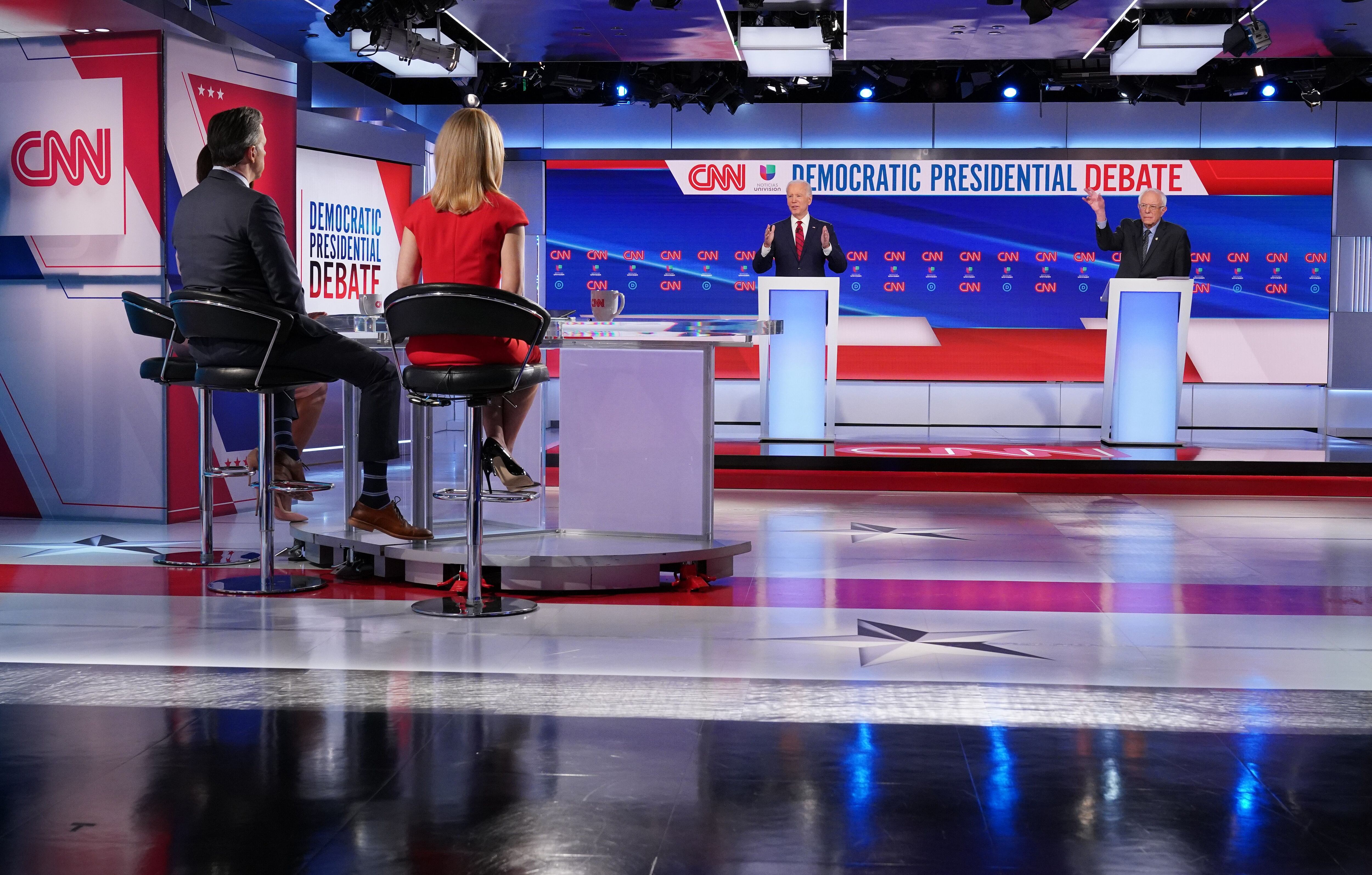
There's no 12th Democratic presidential debate on the horizon now that the nominating process is in a holding pattern due to the coronavirus pandemic.
The Senate will reconvene later Wednesday to vote on the package. But that does not mean the bill is guaranteed to land on President Donald Trump’s desk. The House of Representatives has to pass it, and that may not be an easy feat.
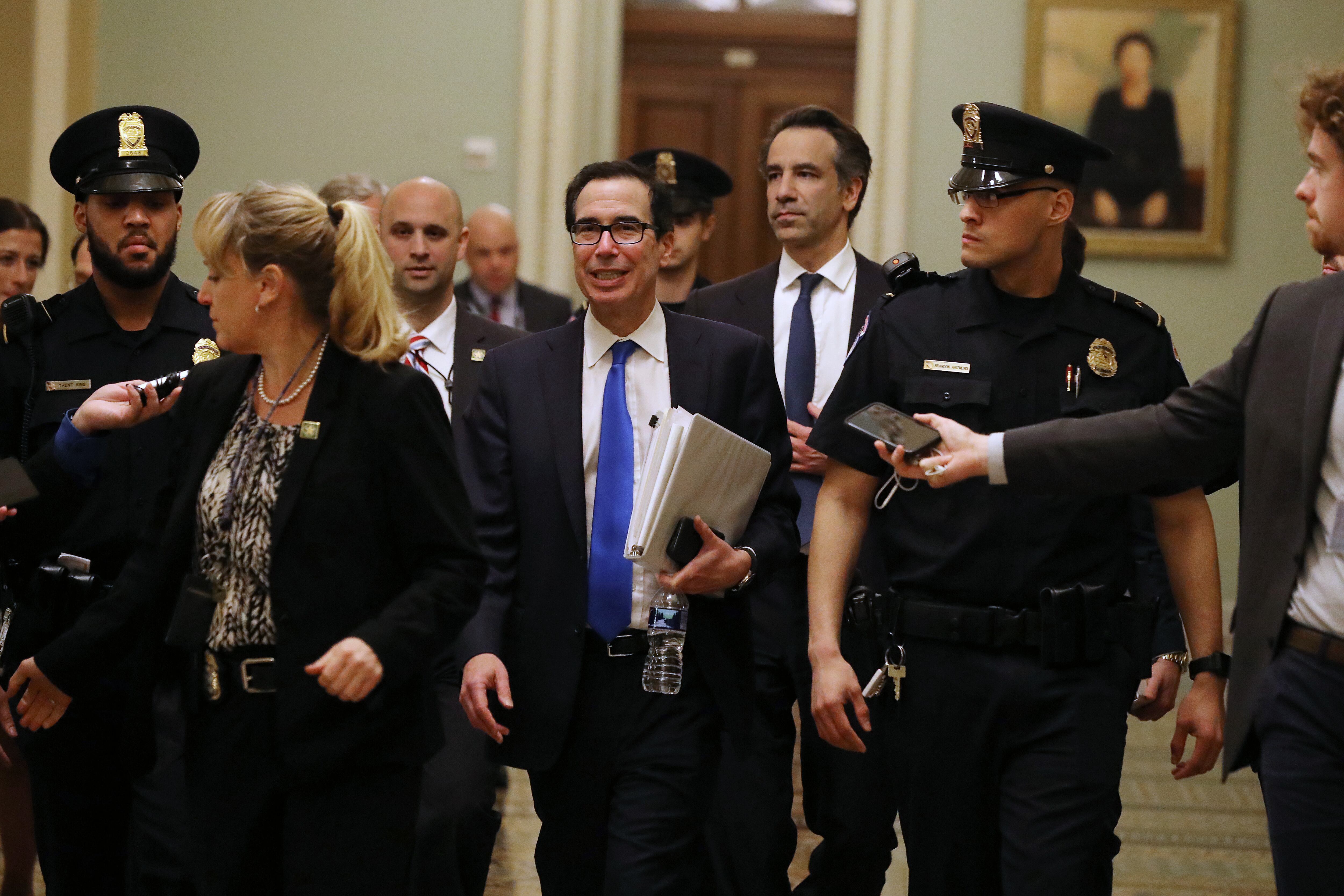
The White House and Senate leaders of both major political parties announced agreement early Wednesday on an unprecedented $2 trillion emergency bill to rush sweeping aid to businesses, workers and a health care system slammed by the coronavirus pandemic.
Stocks are moving tentatively higher in early trading on Wall Street Wednesday after Congress and the White House reached a deal to inject nearly $2 trillion of aid into an economy ravaged by the coronavirus.
The death toll in Spain from the coronavirus shot up by more than 700 on Wednesday, surpassing China and is now second only to Italy as the pandemic spread rapidly in Europe, with even Britain’s Prince Charles testing positive for the virus.
Each piece of legislation is long: 247 pages for the Senate bill and a whopping 1,404 pages for the House bill. While we cannot distill every provision, here’s a look at some of the major differences between the two pieces of legislation.
Stocks are jumping in midday trading on Wall Street Tuesday amid expectations that Congress is nearing a deal on a big coronavirus relief bill. That would follow more aggressive steps from the Federal Reserve announced a day earlier to support lending and bond markets.