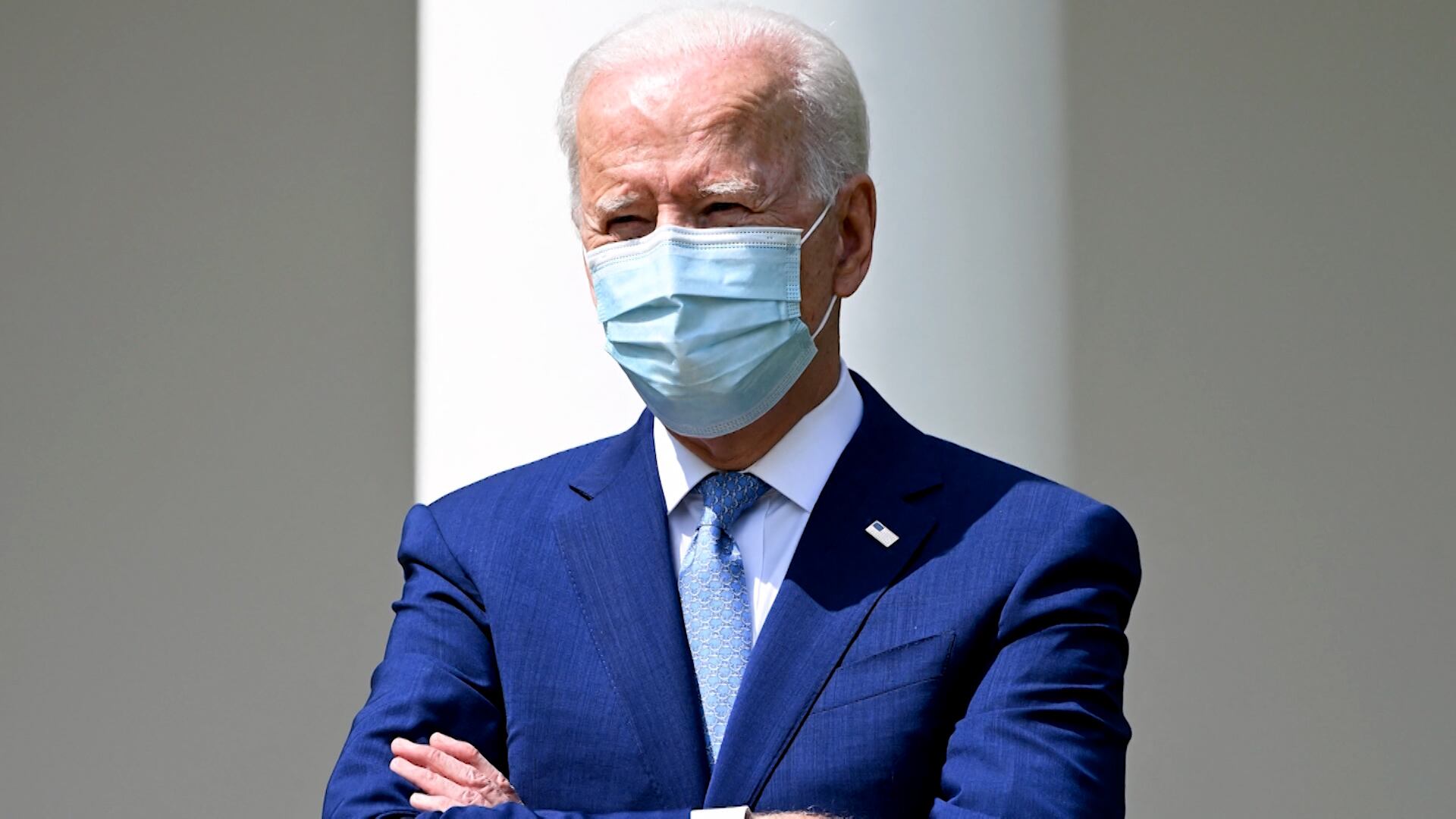
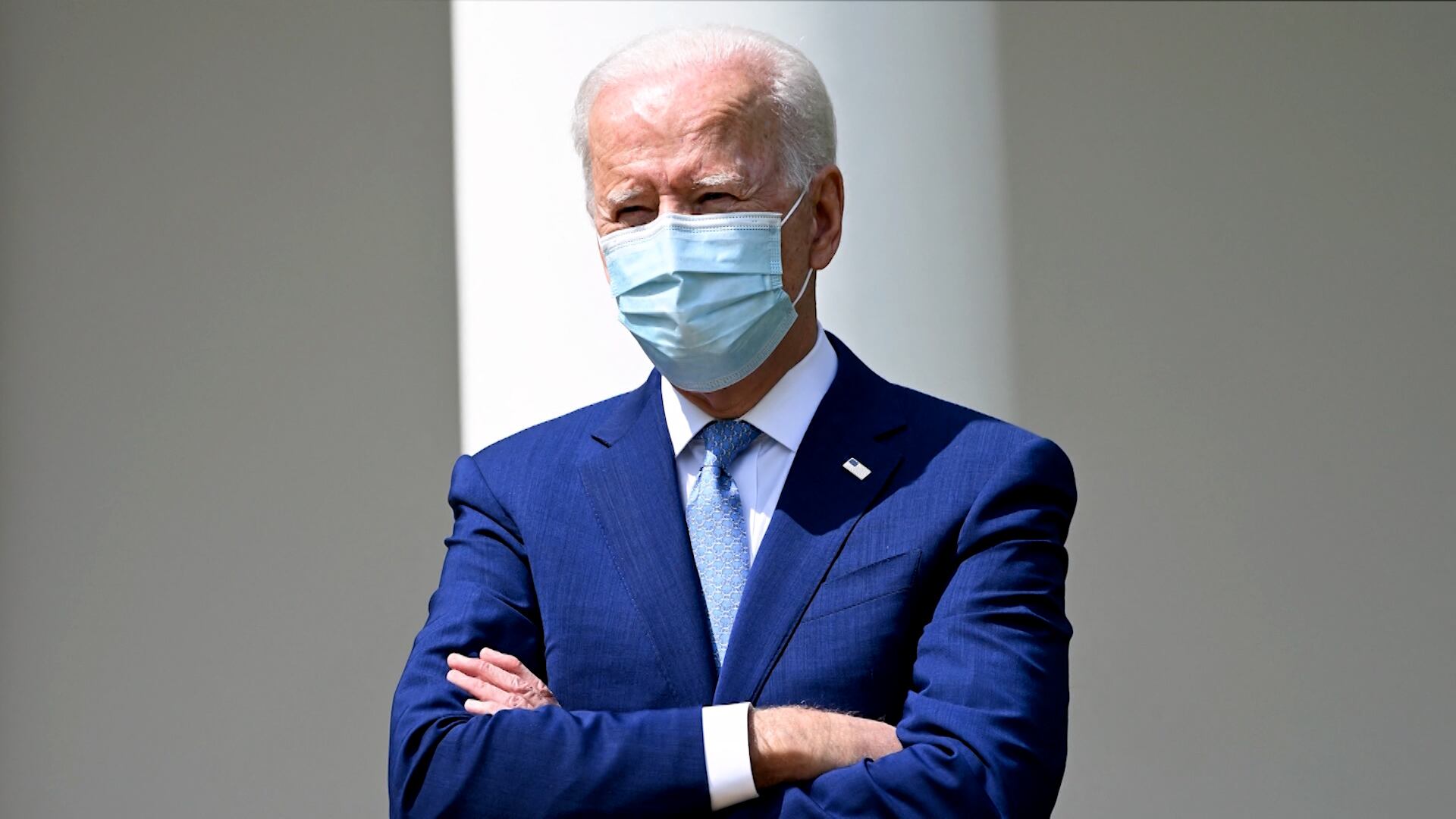
In Ireland this week, well-wishers have lined the streets to catch a mere glimpse of President Joe Biden. Photos of his smiling face are plastered on shop windows, and one admirer held a sign reading, “2024 — Make Joe President Again.”
No wonder Biden keeps joking about sticking around.
Back home, Biden's approval rating is near the lowest point of his presidency. And even some fellow Democrats have suggested he shouldn't run for reelection. On trips within the U.S. to discuss his economic and social policies, Biden often gets a smattering of admirers waving as he drives by, and friendly crowds applaud his speeches. But the reception doesn't compare with the overwhelming adoration he's getting here in the old sod.
On Friday, his final day here, the president flew west to County Mayo, where his great-great-grandfather Patrick Blewitt lived until he left for the United States in 1850. Biden, a Catholic who speaks often of his faith, stopped at Knock Shrine, a pilgrimage site where it's said the saints Mary, Joseph and John the Evangelist appeared along a stone wall in the 1800s. Biden walked over in the rain and touched the remaining part of the wall.
He was also expected to visit a hospice center in Mayo. The locals have been abuzz for weeks with preparation for Biden's visit, giving buildings a new coat of paint and hanging American flags from shopfronts.
It’s a dynamic that most of Biden’s predecessors also have faced: The world abroad tends to love American presidents. Back home, not always. Not so much.
“With the greatest of respect, Mr. President, I must say, you sure can draw a crowd,” Ceann Comhairle Seán Ó Fearghaíl, speaker of the lower chamber of Ireland's parliament, said as he introduced Biden's joint address to lawmakers on Thursday. “Perhaps afterwards you might give me some hints on how we could ensure good attendance around here.”
A U.S. president's overseas trips often offer a backdrop and substance that are difficult to replicate on home turf. Biden's Ireland trip has been heady with nostalgia and fellowship — grand sweeping hills and cozy towns fitting for just such a mood.
Presidential visits come with the pageantry of Air Force One landings, long motorcades and “the beast,” Biden’s limo, which other world leaders, like Mexican President Andrés Manuel López Obrador, delight in riding.
“He can feel the love in a way that’s hard to do at home,” presidential historian Douglas Brinkley said. “There’s something about an American president being in your country that makes a nation’s press and public go gaga.”
“With the exception of the pope, the American president is usually the most coveted global figure,” Brinkley said.
During Biden's visit to Warsaw, Poland, in February, thousands of people gathered at the foot of the Royal Castle to hear the president deliver a speech on the eve of the one-year anniversary of Russia’s invasion of Ukraine.
With the castle lit in the colors of the Ukrainian flag behind him, Biden vowed that “Democracies of the world will stand guard over freedom today, tomorrow and forever” to a rapt audience. As Biden exited the stage, he paused one more time to take in the scene, and a man in the audience bellowed out: “You’re our hero!”
When Biden spoke to the Canadian parliament in March, the chamber broke into applause 34 times. In a country in which English and French are spoken, Biden produced a thunderous round of clapping by simply opening his speech with “Bonjour, Canada.”
Even in Ireland, though, the acclaim was not universal. The small left-wing party People Before Profit vowed to boycott Biden’s speech to parliament because of opposition to U.S. foreign policy in the Middle East and elsewhere.
People Before Profit lawmaker Paul Murphy said the president’s trip was being “treated as a visit by an interesting Irish-American celebrity, as opposed to a visit of the most powerful person in the world who needs to be asked hard questions about the kinds of policies that he is pursuing.”
But Biden's critics overseas tend to be far less personal with their jibes than what he gets in the U.S.
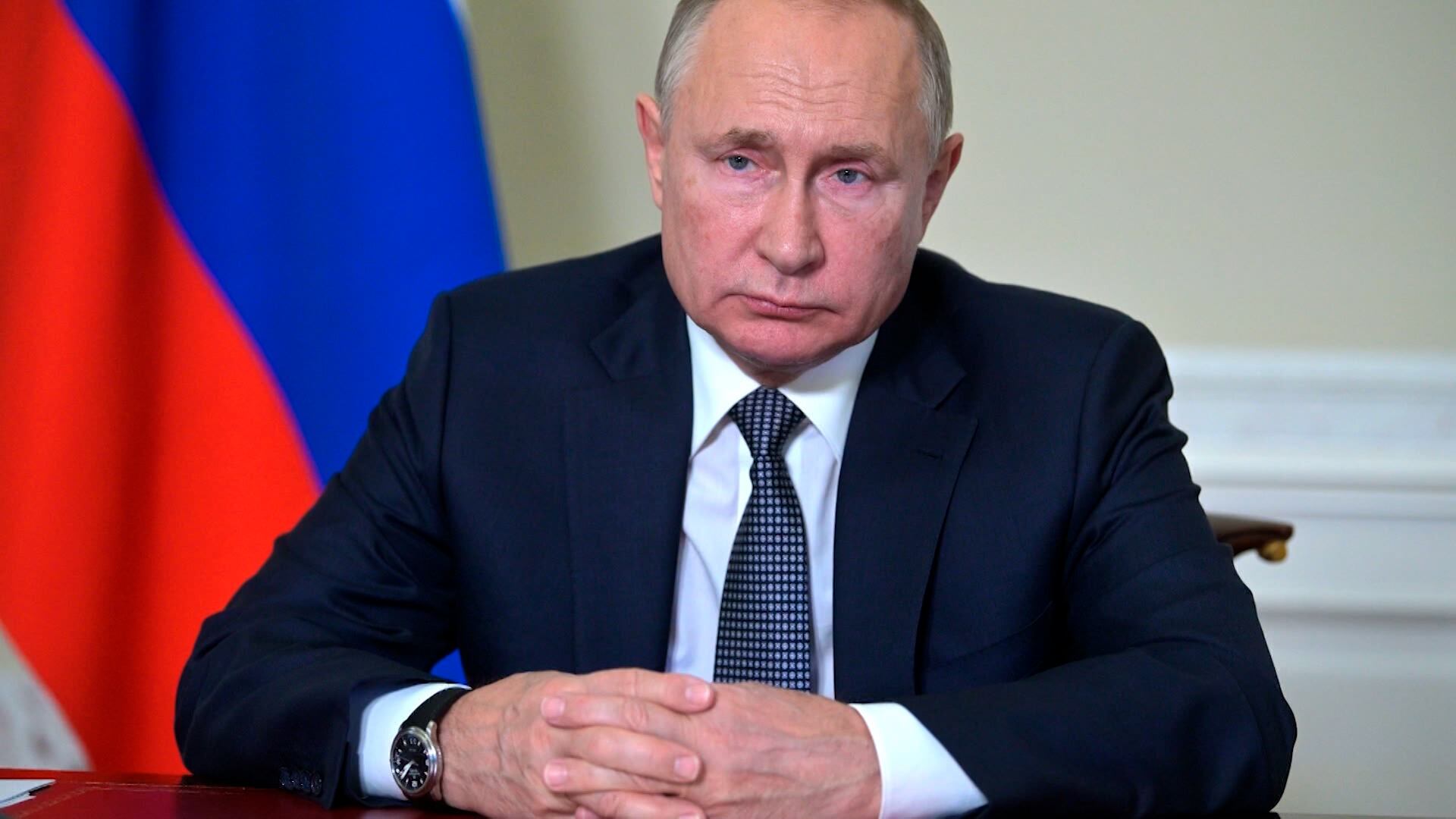
One demonstrator Thursday held up a paper sign that said “Arrest War Criminal Biden” as the president’s motorcade headed for the Irish president’s house. During his Warsaw trip, a group stood in a square across the street from his hotel and chanted for hours, asking him to supply fighter jets to Ukraine. In 2021, when Biden met with Russian President Vladimir Putin in Switzerland, protesters urged the U.S. president to press the case of jailed Russian leader Alexei Navalny.
In the U.S., a few demonstrators routinely line up along the presidential motorcade route with flags emblazoned with “Let’s Go Brandon” — a coded insult for something far more vulgar that's been embraced by some on the right. He's also often confronted with signs claiming "Trump won,” a reference to former President Donald Trump's repeated lie that the 2020 election was stolen.
Biden is far from the only U.S. president to find appreciation abroad that seems more elusive at home.
Then-President Bill Clinton found refuge overseas from the investigations pressing in on him at home. In his last year in office, President George W. Bush was about as well liked at home as Richard Nixon right before he resigned in scandal, according to the Pew Research Center. Bush's reputation also plunged around the world as the Iraq War devolved into a quagmire.
But Bush remained more popular in Africa, where he boosted foreign aid and battled the AIDS epidemic. He visited five countries on a trip to the continent in 2008, touting his accomplishments at a time of domestic backlash.
His successor, President Barack Obama, saw his fortunes diverge in his first term. The grinding fallout from the Great Recession dragged down his approval ratings in the U.S., but views elsewhere in the world remained untarnished.
The Irish response to Biden has been overwhelmingly positive for Cousin Joe, as many have called him. In the town of Dundalk, in County Louth, thousands of people waited nearly eight hours to see him. As he made his way through streets filled with admirers, some strained to get even a touch from him.
Biden took selfies. He smiled at children. And he took a whirlwind tour of ancestral sites, pausing at Carlingford Castle, which could well have been the last Irish landmark that Owen Finnegan, his maternal great-great-grandfather, saw before sailing for New York in 1849. As he gazed at the sea, thousands cheered to him from the streets below, mixing with the sound of bagpipes that wafted from the green hills.
“I don’t know why the hell my ancestors left here," Biden said. "It’s beautiful.”
___
Megerian reported from Washington. Associated Press writers Aamer Madhani, Josh Boak and Zeke Miller in Washington, Jill Lawless in London and David Keyton in Dublin contributed to this report.