By Bobby Caina Calvan, Julie Watson and Andrew Selsky
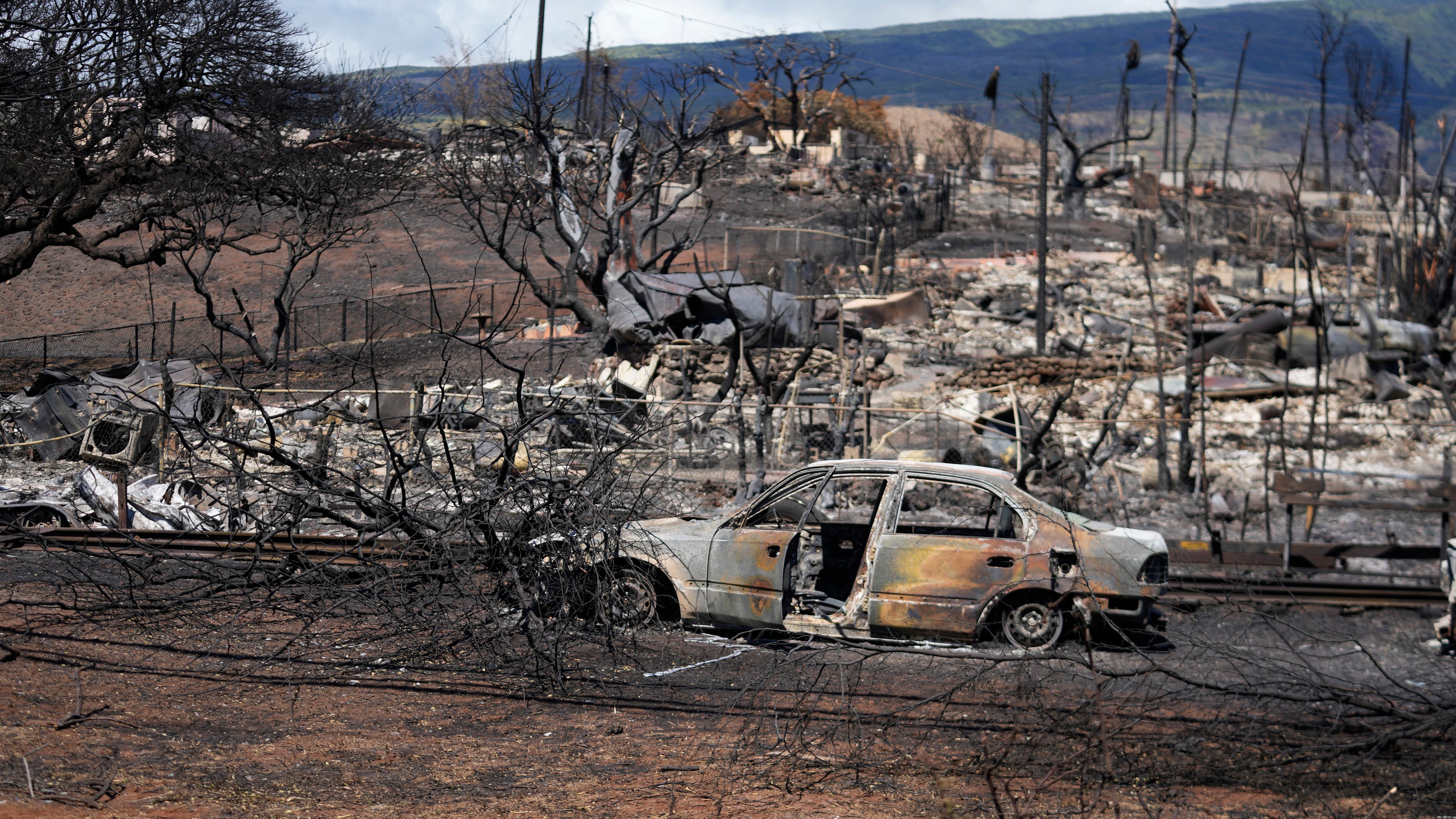
Freddy Tomas was working in his yard in Lahaina when the fire advanced with stunning speed right up to his fence. He rushed to save valuables from a safe inside his house but realized he didn't have time and fled, his face blackened with soot.
Days after fleeing in his pickup truck, amid smoke so thick he could only follow the red taillights of the vehicle in front of him and pray they were going the right way, the retired hotel worker from the Philippines returned to his destroyed home with his son to look for the safe. Tomas, 65, said it had contained passports, naturalization papers, other important documents and $35,000.
After sifting through the ashes, father and son found the safe, but it had popped open in the fire, whipped by hurricane-force winds, and its contents were incinerated.
For immigrants like Tomas, Lahaina was an oasis, with nearly double the foreign-born population of the U.S. mainland. Now, those workers are trying to piece their lives back together after the Aug. 8 fire leveled the town.
Maui County and the Maui Police Department on Sunday confirmed the identifies of another five victims of the wildfires that devastated the area, the county website said. The confirmed death toll remained at 114 as investigators continued to search the area.
Hawaii Gov. Josh Green said Sunday on the CBS News show “Face the Nation" that “an army of search and rescue teams” with 41 dogs have covered 85% of the impacted area.
Maui County Mayor Richard Bissen said in a social media post Sunday that 27 victims have been identified and 11 families were notified of the losses. The FBI and the Maui County Medical Examiner and Coroner office are working together to identify the recovered remains.
“There are currently 850 names on the list of missing persons,” Bissen said, adding that the number represented a positive change from the original list containing more than 2,000 names.
“Over 1,285 individuals have been located safe. We are both saddened and relieved about these numbers as we continue the recovery process. The number of identified will rise, and the number of missing may decrease,” Bissen said, explaining there is an expectation of daily fluctuations and that he plans to provide an update each day.
Jobs had been plentiful in the town that boasted a row of restaurants and shops along Lahaina's Front Street, bordering the azure waters of the Pacific. Lured as well by its beautiful vistas and laid-back lifestyle, foreign workers had flocked to Lahaina from all over the world.
And they contributed significantly to the population and economy.
The presence of immigrant workers in Lahaina boosted the proportion of its foreign-born residents to 32%, which is almost double the 13.5% for the United States as a whole, the U.S. Census Bureau estimated in July 2022.
Still the labor shortage related to the COVID-19 pandemic took a toll in Hawaii, just as it did on the mainland. In February, almost three years after the start of the pandemic, employers were trying to fill 14,000 jobs in Hawaii — roughly double the number of unfilled job openings pre-pandemic, Hawaii News Now reported, citing state economists. Restaurants in Lahaina were literally hiring people off the street.
Many foreign-born workers lost everything in the inferno. Some residents perished.
The Mexican Consulate in San Francisco said two men were confirmed dead and was helping to arrange the return of their remains to their families in Mexico. A Costa Rican man was also among the 100-plus dead and many more remain missing.
The consulate said some 3,000 Mexican nationals are believed to be living on Maui, many working in pineapple fields, in hotels and restaurants, and other establishments with ties to tourism.
Mexico's Consul General in San Francisco, Remedios Gomez Arnau, dispatched three staff members to Maui to help Mexican citizens deal with the tragedy. The Mexican government has been in contact with at least 250 of its citizens in Maui, she said, and reissued passports and birth certificates lost in the fire.
“Many of them lost everything because their homes burned down, and they lost their documents,” she said in an interview Friday.
With businesses burned down, legions of those who survived are now jobless. Many are also without a place to live after the blaze also tore through housing of many people who worked at the town's hotels and resorts. And others are without a clear path forward.
Immigration attorney Kevin Block noted that some immigrants have permanent residency or temporary protected status, and some are in the United States illegally.
“A lot of those folks are nervous about applying for any kind of help,” he said. “When (the Federal Emergency Management Agency) rolls into town or when there’s government agencies around or even medical help, they’re very scared to get it because they’re scared of getting deported.”
A document provided by FEMA says anyone affected by a major disaster may be eligible for disaster assistance, including noncitizens whose deportation status is being withheld for at least one year, as well as noncitizens granted asylum. That assistance can include crisis counseling, legal assistance, medical care, food and shelter, and other relief services.
However, callers to the FEMA assistance hotline are told in recorded messages that they should provide a social security number and are warned that lying in an application for aid is a federal offense.
For immigrants who were brought to Maui as children, it is the only home they know.
“They are working as first responders, providing food, delivering supplies,” Block said. “They are right there with everybody else checking to see who needs help. It’s become more apparent than ever how vital they are to the community.”
Chuy Madrigal fled the blaze with nine members of his extended family, which originally is from Mexico.
They lost the home that his mom worked 30 years to save up enough money to buy and the food truck they started operating just three months ago, said Madrigal, who is a recipient of the Deferred Action for Childhood Arrivals program, or DACA, for immigrants who were brought to the U.S. as children but don’t have legal status.
Madrigal said he and others from the immigrant community have been knocking on doors to gather supplies for those in need and offering to translate. They have tried to comfort those, like him, who lost everything.
"There has been a lot of fear,” he said. “But once you talk to people and tell them, ‘When we got here, we started from zero, this is zero again, we just got to get back on it and continue’ — a lot of people have said, ‘You’re right.’”
The family is planning to rebuild their lives again on Maui.
Selsky reported from Salem, Oregon. Watson reported from San Diego. Jennifer Sinco Kelleher in Honolulu contributed to this report.