By Kevin McGill, Chevel Johnson, and Melinda Deslatte
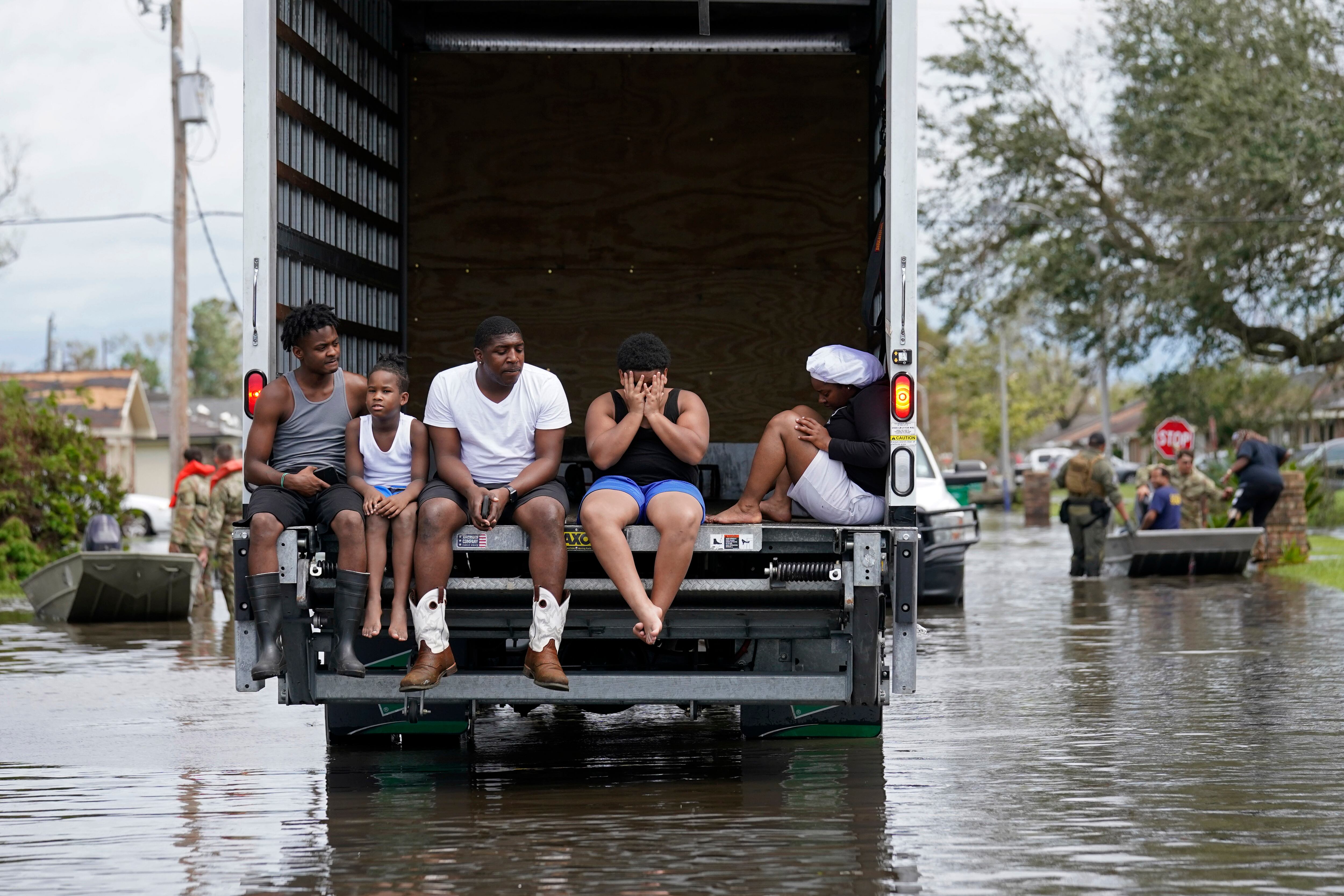
Hundreds of thousands of Louisianans sweltered in the aftermath of Hurricane Ida on Tuesday with no electricity, no tap water, precious little gasoline and no clear idea of when things might improve.
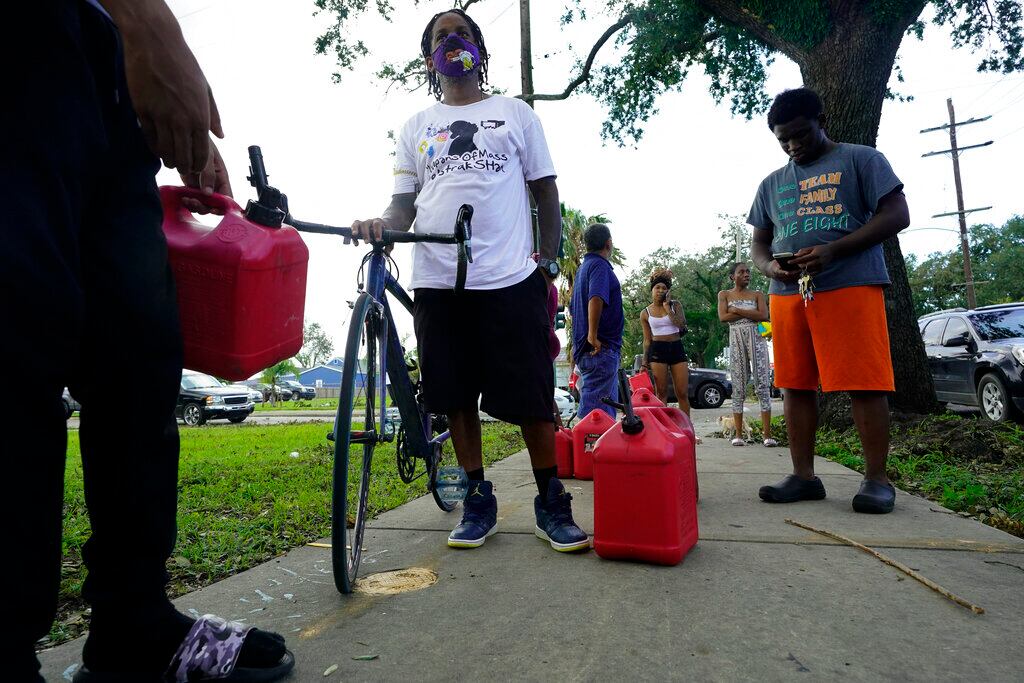
Long lines that wrapped around the block formed at the few gas stations that had fuel and generator power to pump it. People cleared rotting food out of refrigerators. Neighbors shared generators and borrowed buckets of swimming pool water to bathe or to flush toilets.
“We have a lot of work ahead of us and no one is under the illusion that this is going to be a short process,” Gov. John Bel Edwards said as the cleanup and rebuilding began across the soggy region in the oppressive late-summer heat.
New Orleans officials announced seven places around the city people could get a meal and sit in air conditioning.
Edwards said that state officials likewise were working to set up places to distribute food, water and ice, but that it wouldn't start Tuesday. The governor's office also said discussions were underway about establishing cooling stations and places where people on oxygen could plug in their machines, but it had no details on when those might be up and running.
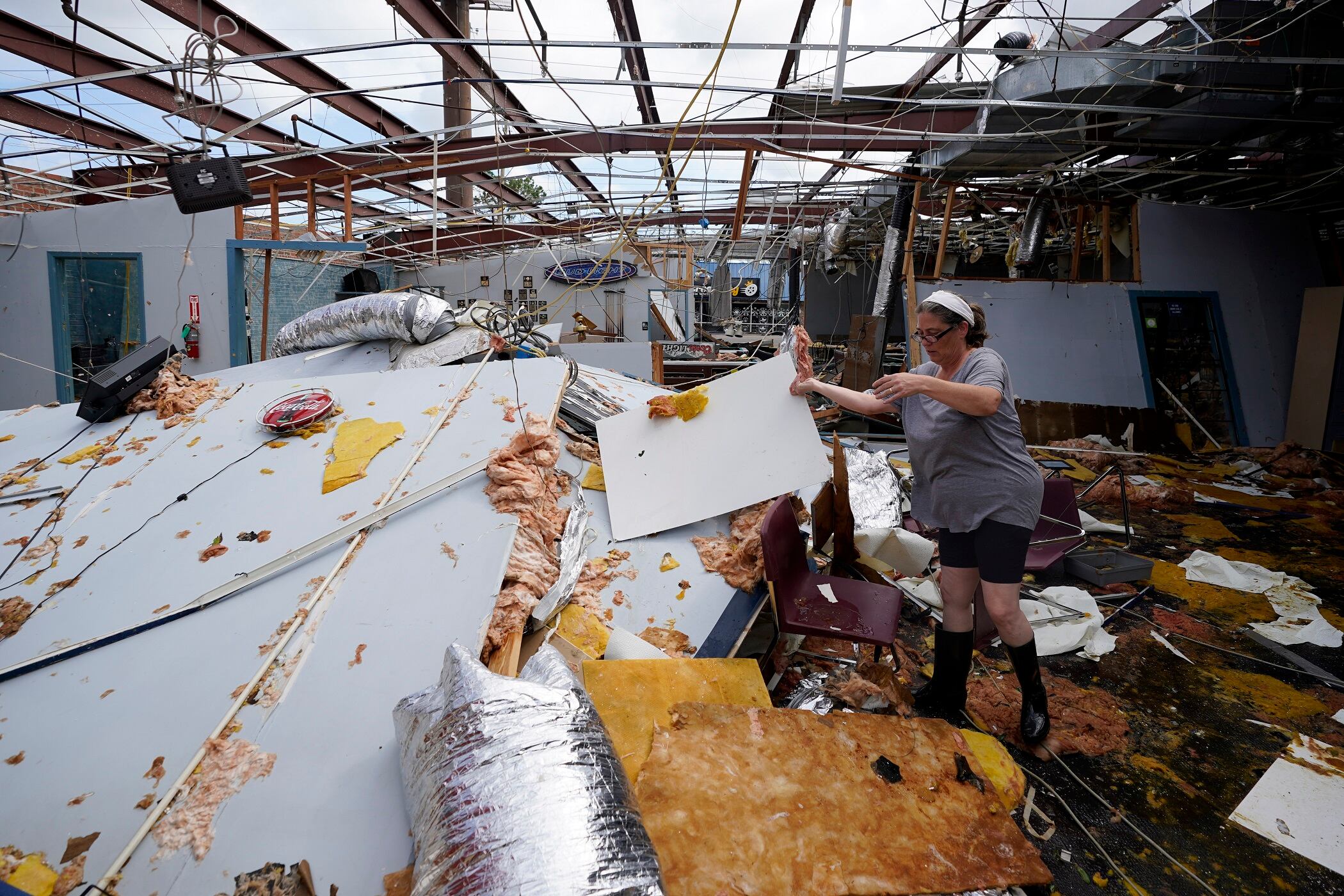
More than 1 million homes and businesses in Louisiana and Mississippi — including all of New Orleans — were left without power when Ida slammed the electric grid on Sunday with its 150 mph (240 kph) winds, toppling a major transmission tower and knocking out thousands of miles of lines and hundreds of substations.
An estimated 25,000-plus utility workers labored to restore electricity, but officials said it could take weeks.
With water treatment plants overwhelmed by floodwaters or crippled by power outages, some places are also facing shortages of drinking water. About 441,000 people in 17 parishes had no water, and an additional 319,000 were under boil-water advisories, federal officials said.
The number of deaths climbed to at least four in Louisiana and Mississippi, including two people killed Monday night when seven vehicles plunged into a 20-foot-deep (6-meter-deep) hole near Lucedale, Mississippi, where a highway had collapsed after torrential rains. Edwards said he expects the death toll to rise.
In Slidell, crews searched for a 71-year-old man who was attacked by an alligator that tore off his arm as he walked through Ida's floodwaters. His wife pulled him to the steps of the home and paddled away to get help, but when she returned, he was gone, authorities said.
Wildlife officials warned of bears, snakes, alligators and feral hogs looking for food in the storm's aftermath.
Edwards traveled with FEMA Administrator Deanne Criswell to see the damage firsthand. She said FEMA teams arriving Tuesday would go house to house in hard-hit neighborhoods to register people for aid, particularly in areas with widespread cellphone outages.
In New Orleans, drivers lined up for roughly a quarter-mile, waiting to get into a Costco that was one of the few spots in the city with gasoline. At other gas stations, motorists occasionally pulled up to the pumps, saw the handles covered in plastic bags and drove off.
Renell Debose spent a week suffering in the New Orleans Superdome after 2005′s Hurricane Katrina, which killed 1,500 people and left the city nearly uninhabitable. She said she is willing to give it a few days without electricity, but no more than that.
“I love my city. I’m built for this. But I can’t make it without any air conditioning,” she said.
Shelly Huff, who like Debose was waiting for gas at Costco, said: “It’s been rough. Not having power is probably the worst thing. But I have great neighbors, one who evacuated left us a generator. We’ve been sharing food and supplies, so it hasn’t been too bad.”
“I could probably last a week without electricity, but any longer and I’m going have to get out of town,” she said.
Michael Pinkrah used his dwindling fuel to find food. He cradled his 3-week-old son in the back seat of an SUV and his 2-year-old daughter played in the front seat as his wife stood in a long line in the sweltering heat to get into one of the few grocery stores open in the city.
Pinkrah said he and his wife thought about evacuating but couldn't find a hotel room. They found out about the open store through social media. But even that link was tenuous.
“We can’t charge our electronic devices to keep in contact with people. And without that, all of the communication just fails,” he said.
Elsewhere in New Orleans, Hank Fanberg had a plan for cooking food: “I have a gas grill and charcoal grill.”
In hard-hit Houma, the dismal reality of life without air conditioning, refrigeration or other more basic needs began to sink in.
“Our desperate need right now is tarps, gasoline for generators, food, water," pastor Chad Ducote said. He said a church group from Mississippi arrived with food and supplies, and neighbors came to his pool to scoop up buckets of water.
“The people down here are just doing what they can. They don’t have anything," he said.
Adding to the misery was the steamy weather. A heat advisory was issued for New Orleans and the rest of the region, with forecasters saying the combination of high temperatures and humidity could make it feel like 105 degrees Fahrenheit (41 degrees Celsius) on Tuesday and 106 on Wednesday.
Also stuck in New Orleans were tourists who didn't get out before the storm. The airport canceled all incoming and outgoing commercial flights for a third day, saying the lack of power and water meant no air conditioning or restrooms.
Cynthia Andrews couldn't go back to her New Orleans home if she wanted to. She was in a wheelchair, tethered by a power cord to the generator system running the elevators and hallway lights at the Le Meridien hotel.
When the power went out Sunday, the machine that helps Andrews breathe after a lung collapse in 2018 stopped working. The hotel let her stay in the lobby, giving her a cot after she spent nearly a whole night in her wheelchair.
“It was so scary, but as long as this thing keeps running, I’ll be OK,” she said.
___
Deslatte reported from Thibodaux. Louisiana. Associated Press writers Janet McConnaughey, Rebecca Santana and Stacey Plaisance in New Orleans; Jay Reeves in Houma, Louisiana; Alina Hartounian in Scottsdale, Arizona; Sudhin Thanawala in Atlanta; Jeff Martin in Marietta, Georgia; and Jeffrey Collins in Columbia, South Carolina, contributed to this report.
Updated on August 31, 2021, at 3:33 p.m. ET with additional details.