IBM's Robot Debater Takes on Humans...and May Change Some Minds
*By: Britt Terrell*
IBM Research conducted the first live debate between a human and a machine this week, showing off the company's latest development in artificial intelligence.
Project Debater squared off against two experts in rhetoric Monday night, responding to and delivering its own arguments. The technology, which ingests information from newspaper articles and other sources to put together well-structured speech and deliver a response, was even able to convince some audience members to change their minds.
"This is a great tool for helping educate the public," said Arvind Krishna, SVP & Director of IBM Research. "They could ask it a question, and 'Debater' can then look through and say, 'Look, based on everything I've read, here is an informed opinion on what everybody's thinking and saying.'"
When it comes to using the machine to help humans formulate opinions, though, especially in an age when fake news has run rampant on certain sites, Debater's powers could raises some concerns. But Krishna pointed out that humans are subject to the same pitfalls.
"What the Debater will do is it won't stick only to the fake news, it will give other \[opinions\], so you really get a complete and comprehensive \[response\]."
Debater is not the first example of high-functioning A.I. to come out of IBM. The company's Watson technology showed off against Jeopardy! champions in 2011, and its 'Deep Blue' program famously bested chess champion Garry Kasparov back in 1997.
But there is still work to be done on the Debater software. And while Krishna dismissed criticisms that its voice was too robotic ー Google, after all, drew jabs for its [all-too-human-sounding Duplex](https://cheddar.com/videos/was-googles-duplex-demo-real) ー he acknowledged some room for improvement.
"How do you throw humor in, when do you throw humor in?" he asked. "Like when it makes a joke like, 'If I had blood, my blood would boil, but I don't really have blood.'"
For the full interview, [click here](https://cheddar.com/videos/ibms-newest-a-i-project).
Members of Congress have voted to advance a bill meant to address antitrust concerns related to tech giants including Amazon, Apple, Google, and Meta. The 'American Innovation and Choice Online Act' is largely seen as one of the best chances for the government to reign in Big Tech's dominance
Seth Schachner, Managing Director StratAmericas; Digital Business Executive joined Cheddar's Opening Bell to discuss.
The Federal Reserve released its highly-anticipated research weighing the pros and cons of a digital dollar in the U.S. The report comes as economic rivals like china have already piloted their own central bank digital currencies. Edward Moya, Senior Market Analyst, The Americas, Oanda, joined Cheddar's Opening Bell to discuss.
Verizon and AT&T officially launched their 5G wireless services Wednesday across the U.S. Despite pushback from U.S. airlines and the FAA over safety concerns, the telecom giants rolled out the next generation of wireless cellular technology, with speeds up to 20 times faster than 4G LTE. John Biggs, Editor, Tech Crunch joined Cheddar's Opening Bell to discuss.
Earnings season kicks into high gear this week as big players are on tap to report their Q4 numbers, including Microsoft, Apple, and Tesla. Investors will be watching for key indicators on how the companies are dealing with inflation, Omicron and interest rates. Christine Short, VP of Research, Wall Street Horizon joined Cheddar's Opening Bell to discuss.
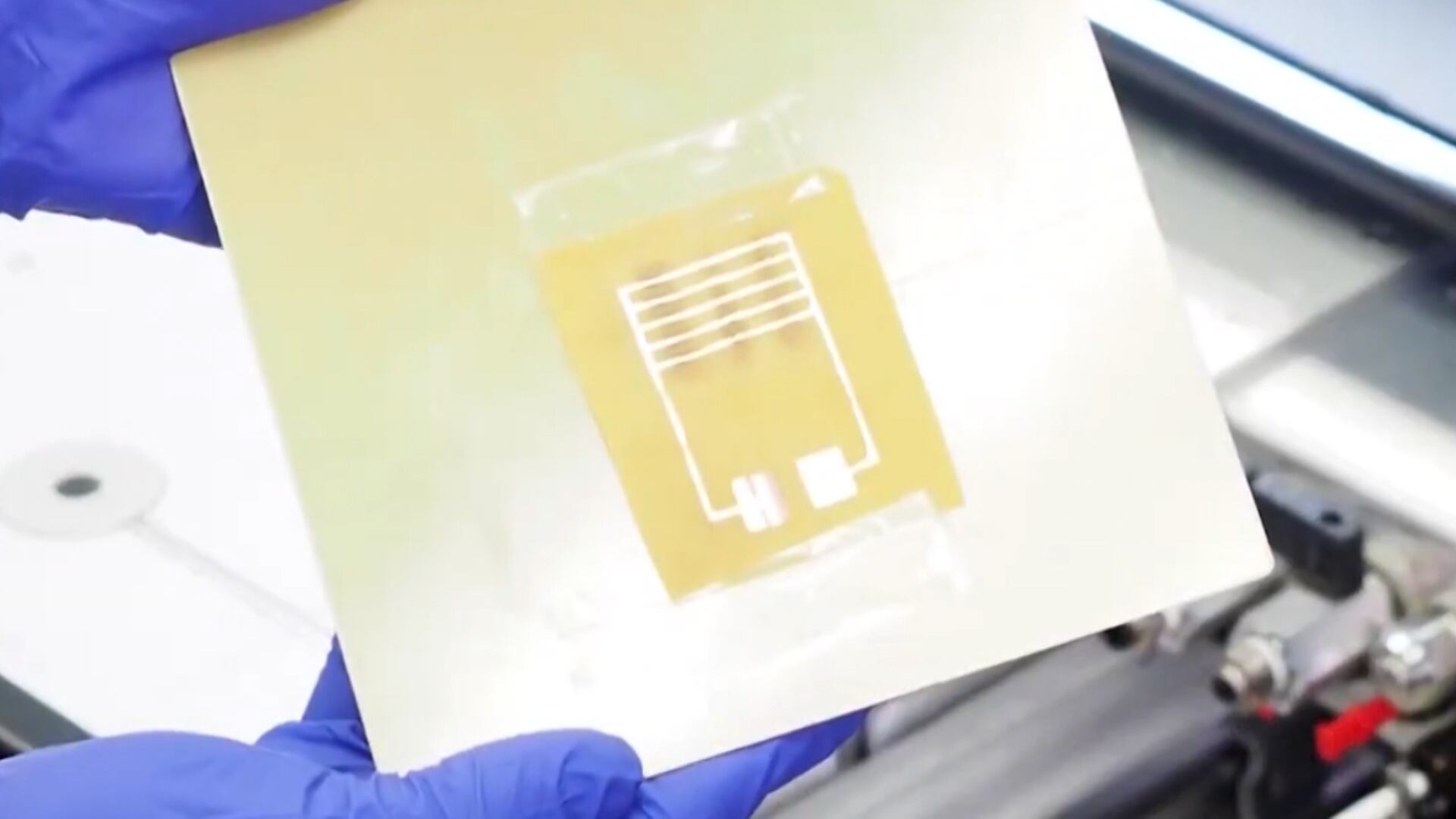
Stan Farnsworth, chief marketing officer at PulseForge, joined Cheddar to talk about his company's debut at CES 2022 and how it plans to innovate the sustainable tech manufacturing space. PulseForge is bringing a new approach to industrial thermal processing, which contributes to 30 percent of global greenhouse gas emissions, according to Farnsworth. "By using 85 percent less energy in the processing of materials through a variety of manufacturing processes, we can make a direct impact in reducing carbon output and reducing carbon footprint associated with manufacturing," he said.