Toyota followed in Uber’s footsteps Tuesday, pausing tests of its driverless car system “Chauffeur”.
The decision came even after authorities said Uber was “likely not at fault” for one of its autonomous vehicles striking and killing a pedestrian in Tempe, Ariz., on Sunday. Still, it’s a move one advocacy group exec likely agrees with.
“Is getting them out faster the best idea, or is getting them out right the best idea?” Center for Auto Safety executive director Jason Levine told Cheddar before the Toyota news broke.
Police investigating the Uber incident claim the car, in self-driving mode with a human behind the wheel, was travelling at 38 mph and made no attempt to brake when a woman walked onto the street.
But the pedestrian “came from the shadows right into the roadway,” according to Tempe’s Police Chief, making the accident difficult to avoid in any case.
It was the first known fatality caused by a self-driving car, prompting Uber to halt its own pilot programs and raising questions about the future of the nascent technology, with many calling for a slowdown in development.
“There should be some step between the computer lab, the completely controlled test track, and releasing them into the communities,” said Levine.
The pace of development in this space is moving at a speed that makes it hard to build regulations and safety procedures, he added.
“There, right now, are no regulations before putting these things on the road...there’s no pre-investigation or examination of whether the technology meets the same standards as a non-self-driving vehicle.”
Autonomous cars have been seen as the futuristic antidote to the tens of thousands of deaths caused by traffic accident deaths every year in the U.S. So far the technology’s track record suggests the error levels are far lower than in traditional autos.
The National Transportation Safety Board is currently investigating the Uber incident.
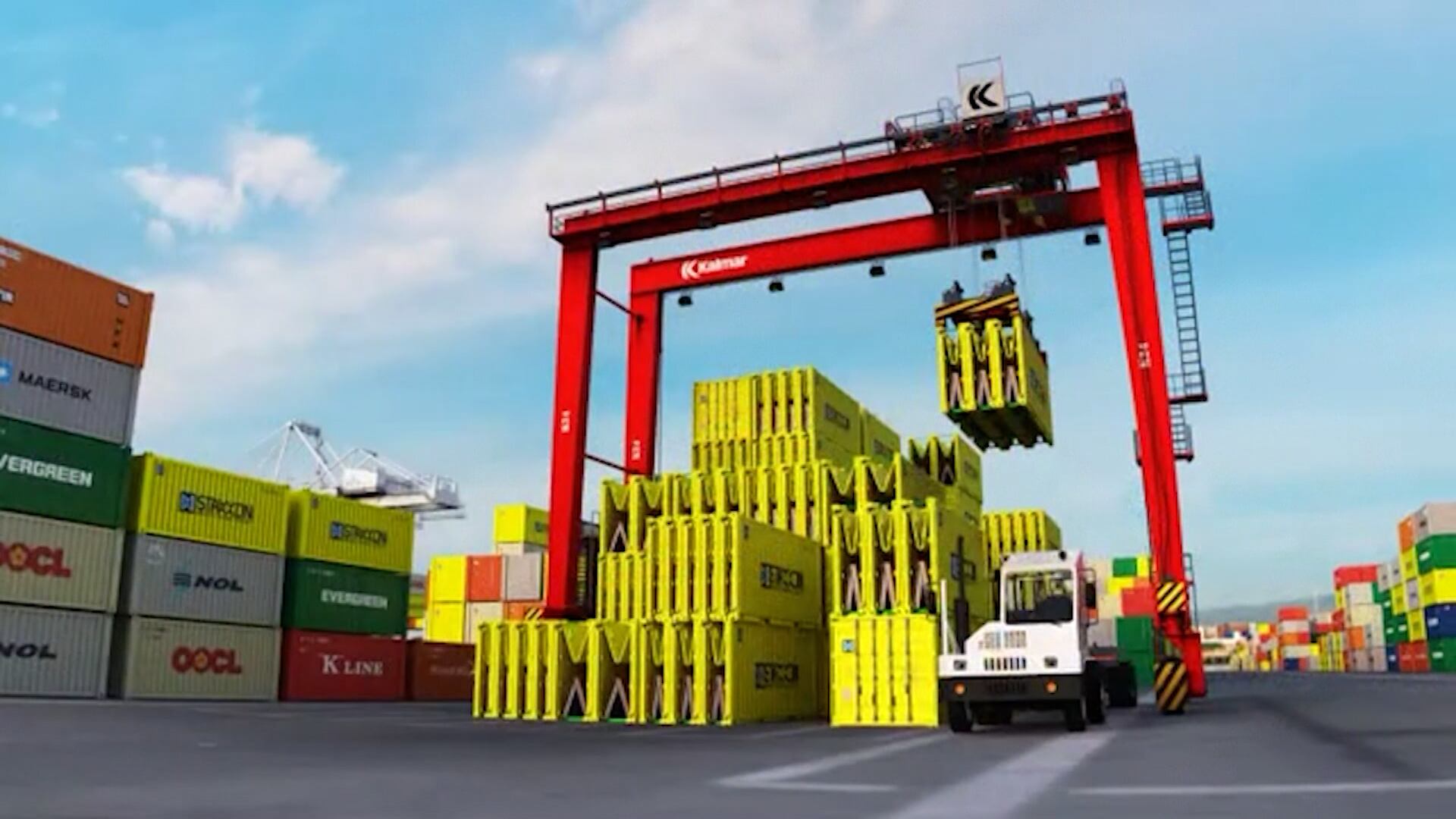
You've probably seen a traditional shipping container, but did you know that thousands of them sit empty at ports around the world and make supply chain issues worse? Staxxon says it has a solution: a foldable shipping crate that can be stacked with several others in order to save space, time, money, and even carbon emissions. George Kochanowski, CEO and CTO of Staxxon, joins Closing Bell to discuss its foldable containers, how the containers work with current shipping technology, and how they might save retailers money and space.
Stacey Rudser, president of the Association for Women in Aviation Maintenance, joins Cheddar News to talk about the lack of diversity in the aviation maintenance sector and what needs to change.
Intel CEO Patrick Gelsinger recently warned Congress that the U.S. 'must act now' to boost chip manufacturing domestically before it's too late. The chipmaking giant is working to ramp up its own domestic chip production with plans for a mega-site in Ohio as the global chip shortage only intensifies, hitting everything from smartphones to cars. Daniel Newman, a founding partner and principal analyst at Futurum Research, joined Cheddar's Opening Bell to discuss Intel's plans, Gelsinger's push for Congress to pass the CHIPS Act, and the potential political ramifications of boosting semiconductor manufacturing in parts of the United States.
Kyte, a company that delivers rental cars to customers on-demand, closed an asset-backed credit financing of up to $200 million from Goldman Sachs and the Ares Global Management Alternative Credit Team to accelerate the company's fleet growth and margin expansion. Kyte and its financing providers will create a more robust trip economy that services a more demanding customer with a shared vision of an electrified, autonomous future. Ludwig Schoenack, co-founder and co-CEO of Kyte, joins Cheddar News' Closing Bell to discuss.