By Farnoush Amiri
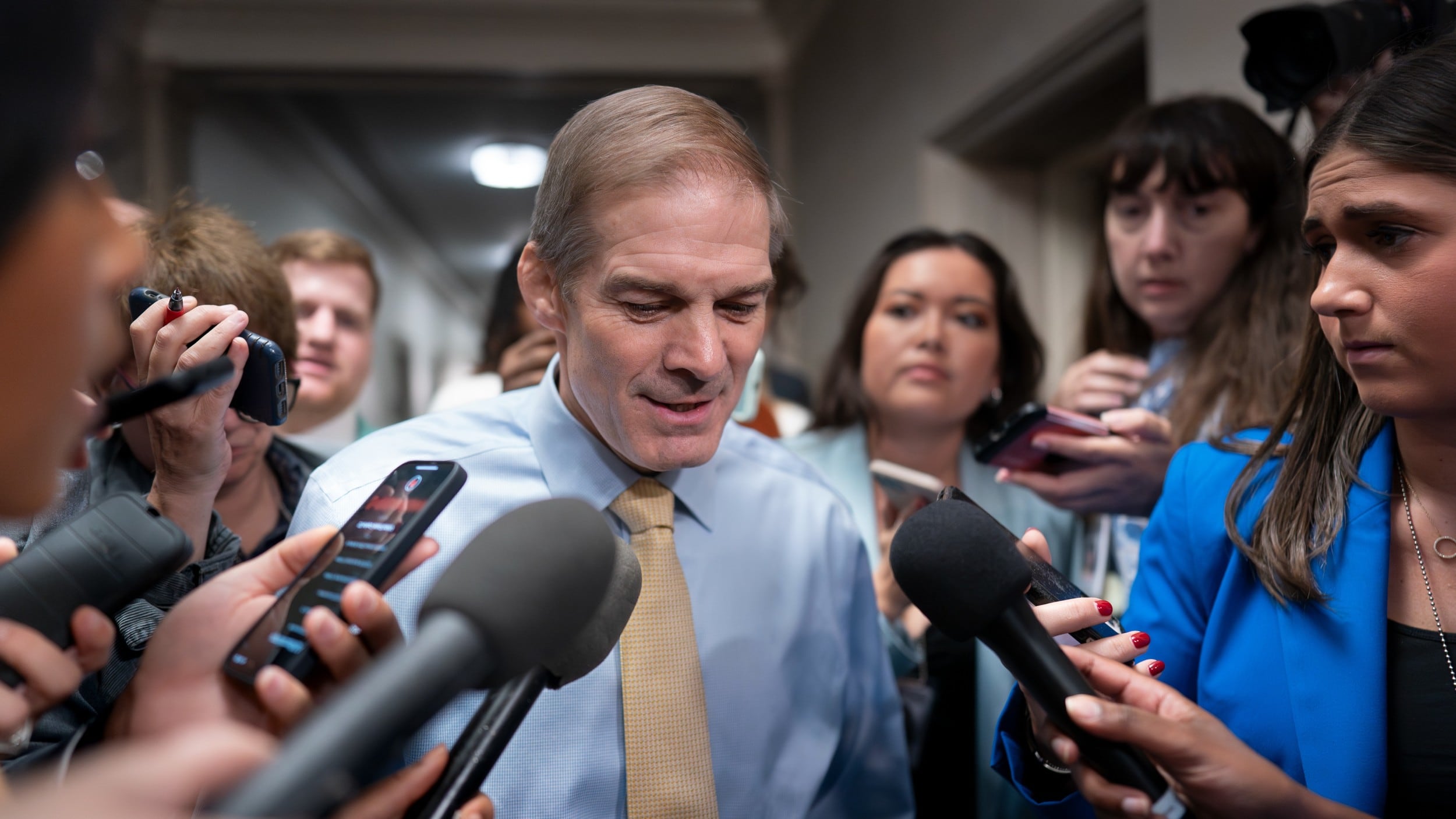
Rep. Jim Jordan faced strong opposition to his House speakership bid Tuesday as more than a dozen Republicans voted against him on a first ballot.
It's second time this Congress that the House has faced multiple rounds of voting for speaker, following the protracted struggle in January, when Kevin McCarthy won the gavel on the 15th attempt.
Twenty GOP lawmakers voted for a candidate other than Jordan, as many protested the removal of McCarthy as speaker earlier this month and the process that has unfolded to replace him.
Conservatives have been mounting an intense pressure campaign to persuade the final holdouts to support Jordan, but some of his opponents appear even more determined to stop him from becoming speaker.
Jordan will need to flip at least 16 Republicans to become speaker, as Democrats are certain to continue backing their own nominee, Leader Hakeem Jeffries of New York. Republicans currently control the House 221-212.
The House is expected to come back for a second round of voting late Tuesday.
Here's what to know ahead of more voting for speaker:
WHEN IS THE SPEAKER ELECTION? AND HOW DOES IT WORK?
The House gaveled into session Tuesday at noon to hold what would be the first of several votes to elect a speaker. It's a speaker's election unlike any other following the removal of McCarthy, R-Calif., who was suddenly and unexpectedly ousted from the post after just nine months on the job.
The speaker is normally elected every two years, in January, when the House organizes for a new session. A new election can only be held if the speaker dies, resigns or is removed from office.
Once the House was in a quorum — meaning a minimum number of members were present to proceed — each party nominated its candidate for speaker. Republicans nominated Jordan. Democrats once again nominated Jeffries and are expected to continue to vote for him in unison.
House members remained present during the speakership vote. It’s one of the few times — including for the State of the Union Address — that lawmakers are all seated in the chamber.
HOW MANY VOTES DOES IT TAKE TO ELECT A SPEAKER?
It takes a majority of the votes from House members who are present and voting to elect a speaker. There were 432 Democrats and Republicans in attendance during Tuesday's vote, with one GOP lawmaker absent. Two House seats are currently vacant. That means Jordan or any other Republican candidate needs 217 votes to win.
Once the second roll call for speaker begins, members of the House will once again call out their choices. The House will vote as many times as necessary until someone wins. Jordan made clear that he was not giving up after the first ballot.
“The House needs a speaker as soon as possible. Expect another round of votes today," Russell Dye, a spokesperson for Jordan, said in a statement. “It’s time for Republicans to come together.”
It's uncertain how many rounds it might take for Jordan to clinch the gavel, but supporters have expressed confidence that the consecutive public floor votes will force holdouts to flip their way. McCarthy narrowly won the speakership in January on the 15th round of balloting, after five excruciating days.
WHO IS SUPPORTING AND OPPOSING JORDAN?
Jordan, a darling of the party’s hardline right-wing base, still faces opposition from some members of the conference who doubt his ability to lead.
“Being speaker of the House is not being the chairman,” Rep. Mario Diaz Balart, one of the holdouts, said Friday. “Because you deal with foreign policy, you deal with the heads of state, you deal with domestic policy and you deal with security issues.”
He added, “I think there are a lot of questions about whether he can unify and lead the conference, and whether he can even lead his own people, his closest people.”
Some Republicans are upset with how the speaker's race has played out.
Rep. Steve Scalise, the majority leader, first won his colleagues' nomination for speaker on Wednesday. Jordan, who came in second, threw his support behind Scalise, stating that he would support his nomination when it came to the floor and urging the rest of the conference to do the same. But more than a dozen Republicans refused to back Scalise, leading him to withdraw a day later.
Those same members who refused to back Scalise are now Jordan's strongest base of support. They spent the weekend publicly and privately lobbying each of his critics to drop their opposition and become a “team player." They say the party’s grass-roots base pressure could prove decisive in the vote.
Other Republicans opposing Jordan's speaker bid come from swing districts and are facing tough reelection races next year.