By Farnoush Amiri

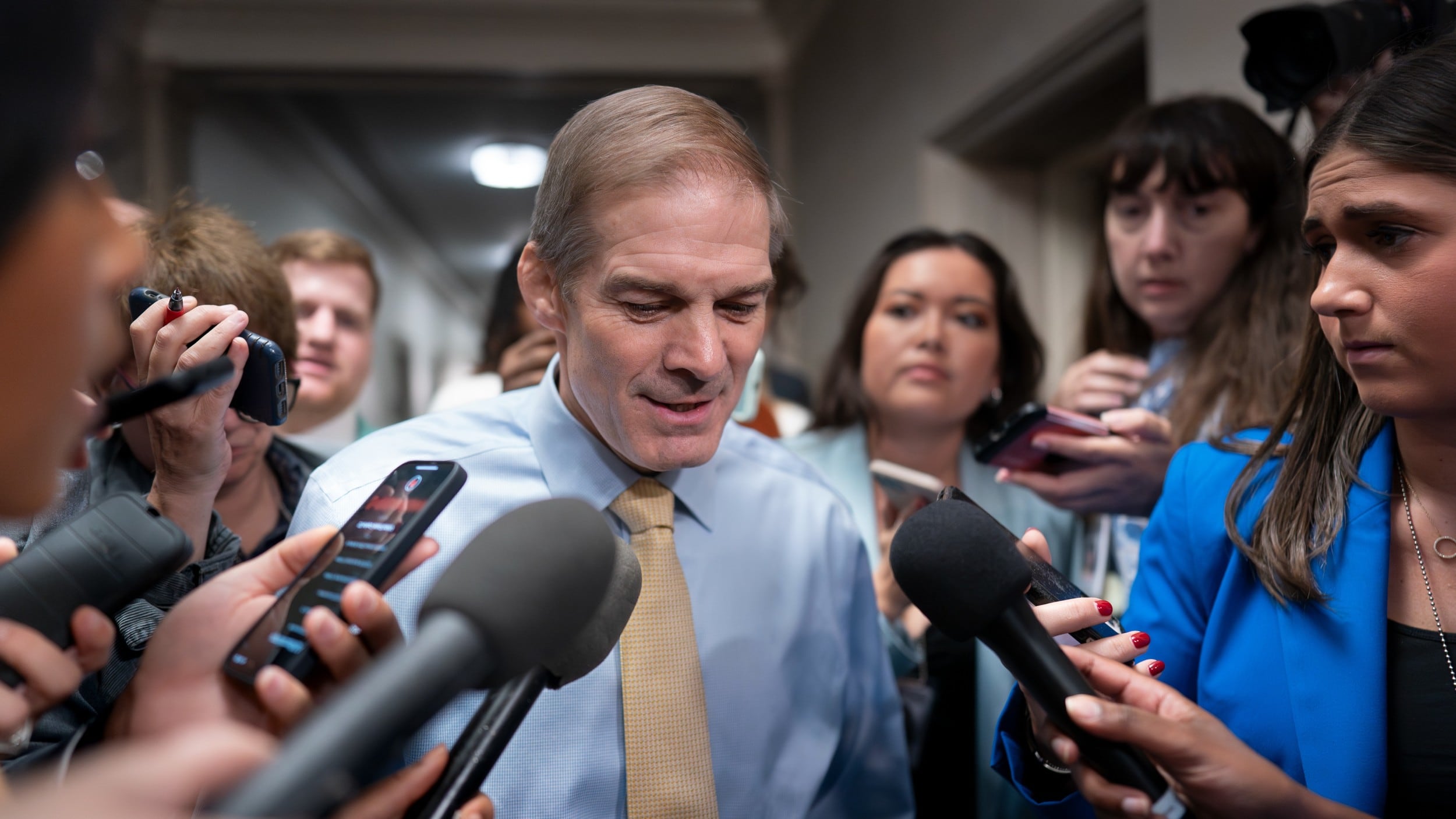
Rep. Jim Jordan faced strong opposition to his House speakership bid Tuesday as more than a dozen Republicans voted against him on a first ballot.

It's second time this Congress that the House has faced multiple rounds of voting for speaker, following the protracted struggle in January, when Kevin McCarthy won the gavel on the 15th attempt.

Twenty GOP lawmakers voted for a candidate other than Jordan, as many protested the removal of McCarthy as speaker earlier this month and the process that has unfolded to replace him.

Conservatives have been mounting an intense pressure campaign to persuade the final holdouts to support Jordan, but some of his opponents appear even more determined to stop him from becoming speaker.

Jordan will need to flip at least 16 Republicans to become speaker, as Democrats are certain to continue backing their own nominee, Leader Hakeem Jeffries of New York. Republicans currently control the House 221-212.

The House is expected to come back for a second round of voting late Tuesday.

Here's what to know ahead of more voting for speaker:

WHEN IS THE SPEAKER ELECTION? AND HOW DOES IT WORK?

The House gaveled into session Tuesday at noon to hold what would be the first of several votes to elect a speaker. It's a speaker's election unlike any other following the removal of McCarthy, R-Calif., who was suddenly and unexpectedly ousted from the post after just nine months on the job.

The speaker is normally elected every two years, in January, when the House organizes for a new session. A new election can only be held if the speaker dies, resigns or is removed from office.

Once the House was in a quorum — meaning a minimum number of members were present to proceed — each party nominated its candidate for speaker. Republicans nominated Jordan. Democrats once again nominated Jeffries and are expected to continue to vote for him in unison.

House members remained present during the speakership vote. It’s one of the few times — including for the State of the Union Address — that lawmakers are all seated in the chamber.

HOW MANY VOTES DOES IT TAKE TO ELECT A SPEAKER?

It takes a majority of the votes from House members who are present and voting to elect a speaker. There were 432 Democrats and Republicans in attendance during Tuesday's vote, with one GOP lawmaker absent. Two House seats are currently vacant. That means Jordan or any other Republican candidate needs 217 votes to win.

Once the second roll call for speaker begins, members of the House will once again call out their choices. The House will vote as many times as necessary until someone wins. Jordan made clear that he was not giving up after the first ballot.

“The House needs a speaker as soon as possible. Expect another round of votes today," Russell Dye, a spokesperson for Jordan, said in a statement. “It’s time for Republicans to come together.”

It's uncertain how many rounds it might take for Jordan to clinch the gavel, but supporters have expressed confidence that the consecutive public floor votes will force holdouts to flip their way. McCarthy narrowly won the speakership in January on the 15th round of balloting, after five excruciating days.

WHO IS SUPPORTING AND OPPOSING JORDAN?

Jordan, a darling of the party’s hardline right-wing base, still faces opposition from some members of the conference who doubt his ability to lead.

“Being speaker of the House is not being the chairman,” Rep. Mario Diaz Balart, one of the holdouts, said Friday. “Because you deal with foreign policy, you deal with the heads of state, you deal with domestic policy and you deal with security issues.”

He added, “I think there are a lot of questions about whether he can unify and lead the conference, and whether he can even lead his own people, his closest people.”

Some Republicans are upset with how the speaker's race has played out.

Rep. Steve Scalise, the majority leader, first won his colleagues' nomination for speaker on Wednesday. Jordan, who came in second, threw his support behind Scalise, stating that he would support his nomination when it came to the floor and urging the rest of the conference to do the same. But more than a dozen Republicans refused to back Scalise, leading him to withdraw a day later.

Those same members who refused to back Scalise are now Jordan's strongest base of support. They spent the weekend publicly and privately lobbying each of his critics to drop their opposition and become a “team player." They say the party’s grass-roots base pressure could prove decisive in the vote.

Other Republicans opposing Jordan's speaker bid come from swing districts and are facing tough reelection races next year.

Share:
More In Politics
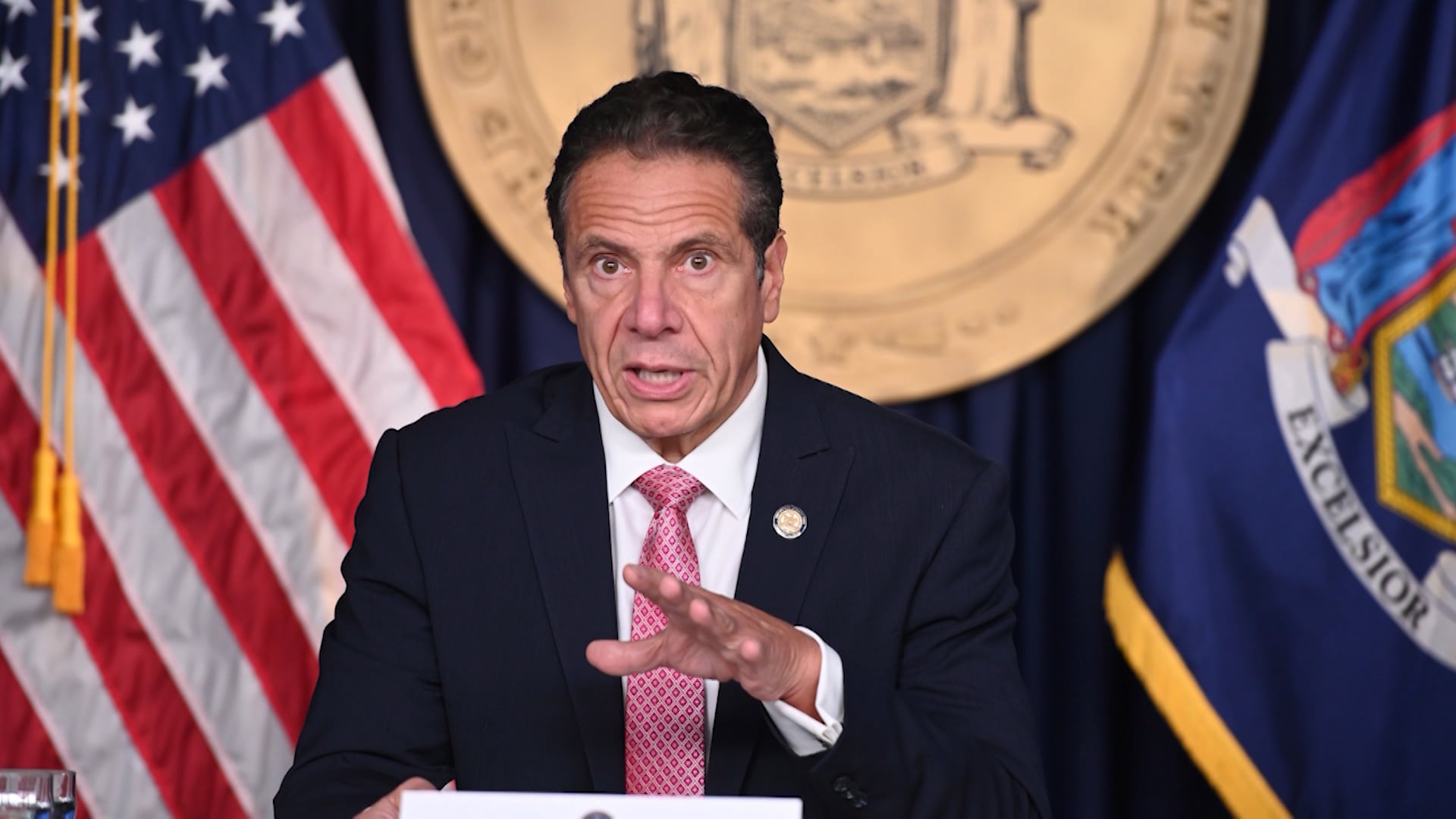
WSJ: Andrew Cuomo Planning His Political Comeback
Andrew Cuomo is reportedly planning his comeback. According to the Wall Street Journal, the former New York governor and his aides are considering how to make his first public appearance since he abruptly resigned last August amid sexual harassment allegations. Jake Lahut, politics reporter for Insider, joined Cheddar's Opening Bell to discuss Cuomo's potential return to politics.
UK Prime Minister Boris Johnson's Top Aides Quit Over Scandal
The pressure is on for UK Prime Minister Boris Johnson - after his closest aides handed in their resignations this week. It comes after a report found that 16 parties had taken place at Downing Street while Covid lockdown protocols were in place in the region. Ari Aramesh, Attorney & National Security/Foreign Policy Analyst joined Cheddar's Opening Bell to discuss.
President Biden Orders 3,000 Troops To Eastern Europe Amid Russia-Ukraine Tensions
President Biden has ordered about 3,000 U.S. troops to Eastern Europe as Russia refuses to back off its pressure on Ukraine. The deployments to Poland, Germany, and Romania are a show of support to NATO allies concerned about a potential Russian invasion of Ukraine. This is in addition to the 8,500 troops put on high alert. David Tafuri, former Obama campaign foreign policy advisor and former State Department official, joined Cheddar to discuss what this move means for U.S.-Russia relations.
Peng Shuai Reappearance With IOC in China Raises More Questions
After tennis player Peng Shuai made an explicit sexual assault allegation toward a former Chinese government official, she disappeared from the public eye. Her recent reappearance with the IOC alongside a Chinese Olympic committee official raised eyebrows and renewed concerns for her safety. Asian affairs expert Gordon Chang, author of "The Coming Collapse of China," joined Wake Up With Cheddar to discuss Peng Shuai's retraction and the various human rights controversies swirling at the Beijing games. "It's clear that the IOC was working with Beijing to make sure that she did not express herself freely," Chang said. "So really this is the IOC being complicit in these mechanisms of control over Peng."
The 2022 Beijing Olympics Kick Off
The opening ceremony of the 2022 winter Olympics has kicked off at the Beijing national stadium. 150,000 spectators are in attendance for the games inside the 'closed loop' system separating Olympic personnel from the public. Cheddar News spoke with Brian Cazenueve, Sports Illustrated contributor, to share the highlights you may have missed and much more.
Biden Administration Working To Address TikTok's Security Risk
The Biden Administration is set to revise federal rules to address potential security risks from foreign-owned apps, mainly Tiktok. This comes after the White House opted not to pursue a forced shutdown of the Chinese-owned video sharing platform. Under these new rules, federal oversight would be expanded to explicitly include apps that could be used by foreign adversaries to steal or otherwise obtain data. Senior Fellow at the Foundation for Defense of Democracies, Craig Singleton, joined Cheddar to discuss more.
Will The Texas Grid Fail Again? ERCOT Says They Are 'Ready For This Storm'
Although this week's weather is predicted to be less severe than the 2021 storm, Texans are preparing for the worst - stocking up on supplies and emptying shelves in grocery stores, once again. Some Texans still have not recovered from last year's tragedy, and are heading into the next few weeks with anxiety for what's to come. Leslie Beyer, CEO of the Houston-based energy workforce & technology council, joins Cheddar News to discuss if the Texas grid will fail again.
The Black Student Debt Crisis and the Racial Wealth Gap Divide
Student loan debt continues to be a major concern for tens of millions of Americans who collectively owe about $1.7 trillion. Black college students often take on larger amounts of student debt in order to pay for a higher education. In turn, they are more likely to struggle post-graduation with repaying their debt, creating a racial wealth gap divide. Andre Perry, senior fellow at Brookings Institution joined All Hands to help break down the black student debt crisis.
President Biden on Shutting Down Iron Pipeline to Prevent Gun Violence in NYC Visit
After two NYPD officers were killed with an illegal gun, President Biden made a trip to New York City to speak on the issue of gun violence fed by the "iron pipeline" of illegal firearms that make their way from the South to the Big Apple. Kris Brown, the president of the gun violence prevention organization Brady United, joined Cheddar to discuss what this visit from the president could mean for the future of gun laws in America. "He's asked Congress to pass things like expanding the Brady background check system, but with the filibuster a barrier to so much action right now in the Congress, he's looking at solutions that involve funding at the federal level and really involve enforcement."
Load More