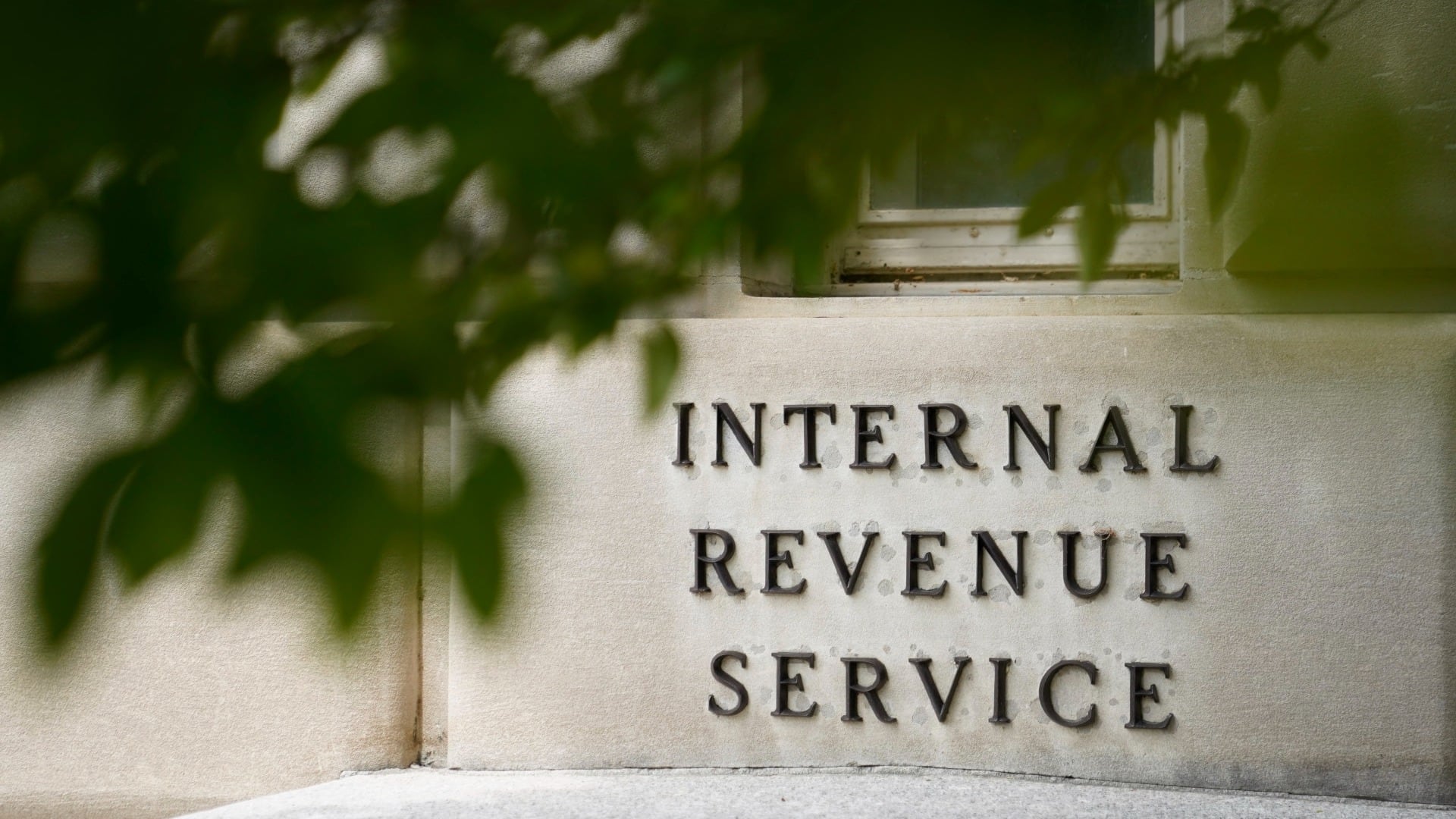
A sign is displayed outside the Internal Revenue Service building May 4, 2021, in Washington. (AP Photo/Patrick Semansky, File)
A bill that would try to abolish the Internal Revenue Service (IRS) and eliminate federal income tax was reintroduced on Tuesday by Georgia Republican Rep. Buddy Carter.
A vote on the bill, labeled the Fair Tax Act, was part of a deal that was negotiated between the House Freedom Caucus and Speaker Kevin McCarthy during his quest for the speakership.
The Act “will eliminate the need for the IRS by simplifying our tax code with provisions that work for the American people,” Carter said on Twitter.
The current federal income tax scheme would be replaced with a single nationwide consumption tax. The Office of Management and Budget criticized the bill and said it would only benefit certain taxpayers.
“With their first economic legislation of the new Congress, House Republicans are making clear that their top economic priority is to allow the rich and multi-billion dollar corporations to skip out on their taxes, while making life harder for ordinary, middle-class families that pay the taxes they owe,” the Office of Management and Budget said in a statement.
The vote comes after House Republicans passed a bill Monday evening that would prevent plans to fund 87,000 new IRS agents, originally included in the Inflation Reduction Act that Democrats passed last year.
A date has not been set for the vote on the Fair Tax Act. However, both bills are unlikely to pass in the Democratic-controlled Senate.
The lawyer for former NYPD commissioner Bernard Kerik turned over thousands of pages and documents to a special counsel as part of an investigation into Kerik's alleged involvement to overturn the results of the 2020 election.
Israel’s parliament on Monday approved the first major law in Prime Minister Benjamin Netanyahu’s contentious plan to overhaul the country’s justice system, triggering a new burst of mass protests and drawing accusations that he was pushing the country toward authoritarian rule.
North Korea fired two short-range ballistic missiles into its eastern sea, South Korea’s military said Tuesday, adding to a recent streak in weapons testing that is apparently in protest of the U.S. sending major naval assets to South Korea in a show of force.
Now the federal Mine Safety and Health Administration has proposed a rule that would cut the current limit for silica exposure by half — a major victory for safety advocates. But there is skepticism and concern about the government following through after years of broken promises and delays.
A state trooper's account of officers denying migrants water in 100-degree Fahrenheit (37.7 Celsius) temperatures and razor wire leaving asylum-seekers bloodied has prompted renewed criticism.