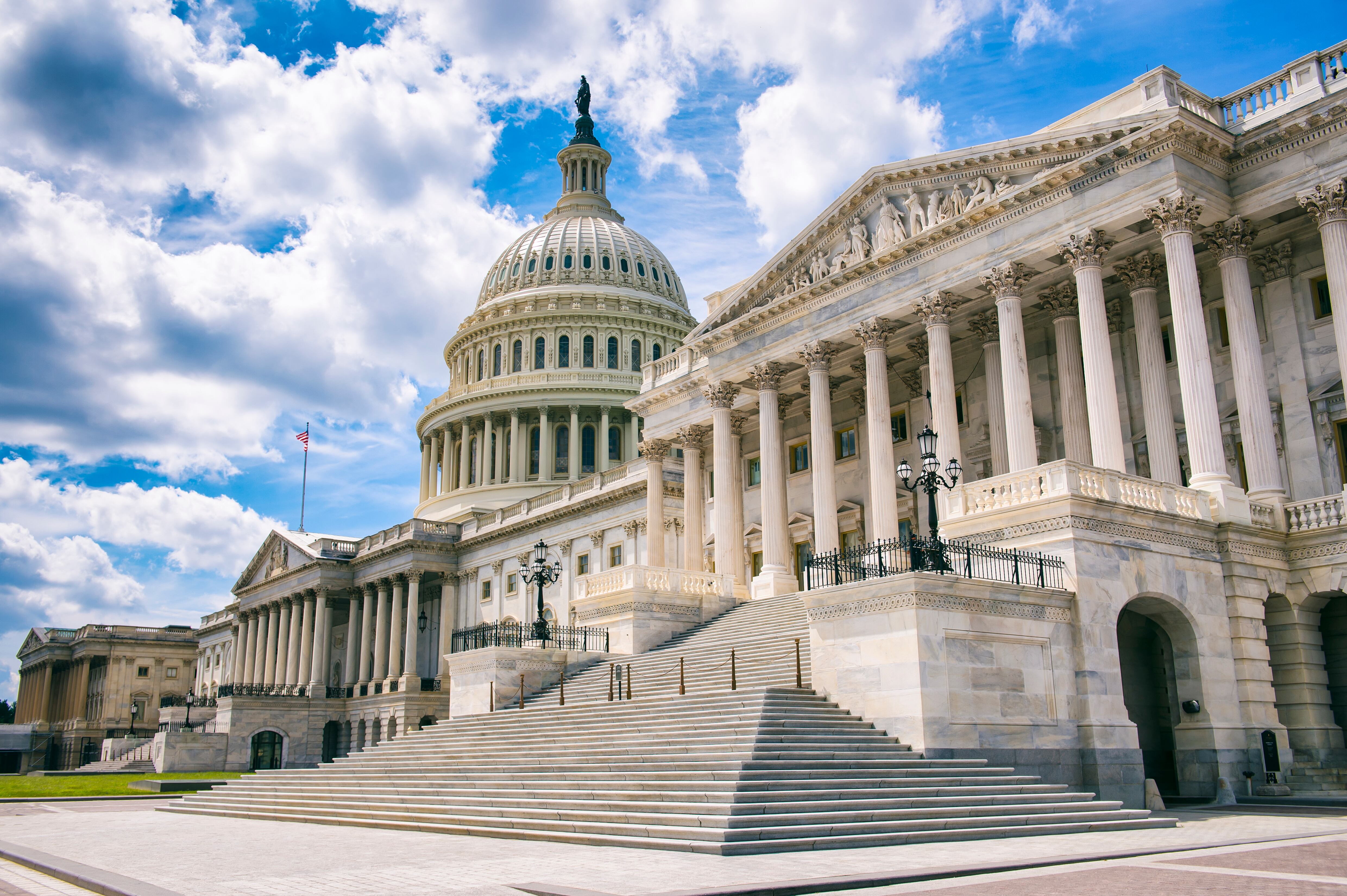
On a historic day in America, political players on Capitol Hill are moving slowly and divisively after approving rules for impeachment debate. The body is now beginning six hours of partisan debate time before this historic impeachment vote.
Lawmakers just finished debating the rules that will be used to consider the impeachment charges against President Donald Trump after Democrats defeated two objections raised by Republicans. The House adopted debate rules, voting twice after Republicans raised a motion to reconsider. The vote on the rules for the debate passed 228 to 197, signaling that few lawmakers plan to defect parties, and now representatives will move to those six hours of debate about the articles, themselves. Finally, the House will vote on the articles of impeachment, in what is expected to rest almost entirely along party lines. The president is facing impeachment on two articles — abuse of power and obstruction of Congress. If the vote passes, Trump will become the third American president charged with high crimes and misdemeanors.
Rep. Diana DeGette (D-Colo. 1st District) was tapped by House Speaker Nancy Pelosi to preside over the debate as speaker pro tempore.
Soon after House Chaplain Patrick Conroy opened with a prayer to “help them and help us put away any judgments that belong to you and live together in harmony,” lawmakers got straight to it, with no harmony in sight. Democrats defeated two motions raised almost immediately after the session was gaveled in. The House voted 226 to 188 to block the first motion, put forth by Rep. Andy Biggs (R-Ariz. 5th District), to adjourn before debating even began, and voted 226 to 191 to block the second motion, put forth by GOP minority leader Kevin McCarthy (R-Calif. 23rd District), condemning the inquiry as illegitimate.
The schedule circulated on Tuesday night could make the entire day hard to follow and may tire out casual observers. However, the proceedings could have been drawn out even further, if Republican objections were approved during last night’s session of the House Rules Committee. Republicans had raised objections that the debate is only six hours instead of 12 hours.
After the conclusion of today’s debate, lawmakers will finally vote. Many have already publicly pledged to vote along party lines.
Representatives largely used morning debate time, which began soon after 10 a.m. ET, for partisan diatribes. Republicans like Debbie Lesko (R-Ariz. 8th District) called the inquiry “rigged,” and Democrats like Majority Whip Jim Clyburn (D-S.C. 6th District) referred to Thomas Paine’s pamphlets and said the president “seems to believe he is a king or above the law.” Many members were present at the start of the day when Republicans raised their objections but seemed to exit the chamber once debate began.
Pelosi remained in the Congressional chamber, sitting in the back row. Meanwhile, the president remains active on Twitter. He has tweeted and retweeted attacks against the Democrats, including a tweet in which the president wrote: “can you believe that I will be impeached today by the Radical Left, Do Nothing Democrats, AND I DID NOTHING WRONG!”
The Biden administration is making changes to federal student loan programs, bringing more than 3.6 million people closer to debt forgiveness under the new rules, providing 40,000 with immediate debt cancellation, and allowing several thousand more with older loans to get some relief. Rob Franek, Editor-In-Chief of the Princeton Review, joined Cheddar News to break down how these changes might impact the lives of student loan borrowers and addresses some of the pushback against doing even more. "This is not a bankruptcy bailout of industries that are supporting the American economy," he said. These are for students right now who would otherwise be hobbled financially if they didn't experience some sort of forgiveness overall."
After a secrecy-shrouded visit to Ukraine's capital, U.S. Secretary of State Antony Blinken says Russia is failing in its war aims and “Ukraine is succeeding.”
Emmanuel Macron staves off the far right challenger Marine Le Pen in France, conservative lawmakers find themselves embroiled in varying controversies, and pickleball is hotter than ever in the U.S.
Catching you up on what you need to know on April 25, 2022, with Secretary of State Blinken and Defense Secretary Austin visiting Ukraine, Emmanuel Macron is reelected as president of France, Twitter is talking to Elon Musk about his purchase bid, and more.
An increasing number of countries are recognizing "Rights of Nature", a legal movement that says ecosystems and species have basic rights to exist and flourish. Grant Wilson, executive director at Earth Law Center joins Cheddar News to explain what the movement is aiming to achieve.
The saga surrounding Elon Musk's bid to buy Twitter has made its way to Washington, DC. A group of 18 House Republicans are calling on the social media platform's board to preserve all records and documents related to the company's response to the offer from the Tesla CEO. Caleb Silver, editor in chief of Investopedia, joined Closing Bell to discuss. "This is a long term play, but it's just a shot across the bow by congressional Republicans, who probably will end up taking the House, that they're going to be tough on Big Tech and they're going use Musk's bid for twitter to take it private, so that he can get the platform to be open source and remove its censorship."
Florida Gov. Ron DeSantis has signed a bill dissolving Walt Disney World’s private government after the entertainment giant criticized a measure that critics have dubbed the “Don’t Say Gay” law.
Autumn Peltier, an indigenous water activist, joined Cheddar News to talk about the lack of access to clean water among indigenous communities in Canada. “I say the government to hold themselves accountable for the promises that they make because Canada and indigenous people have a long history of broken promises and they still continue to this day to keep breaking promises with the nation's people," she said. "Less talk and more action is very much expected from me."
Robert Bonnie, farm production and conservation undersecretary for the USDA, spoke to Cheddar about climate-smart strategies to help farmers reduce carbon emissions from agriculture. "We share the costs of installing those practices on their lands in ways that will protect the climate and maintain agricultural productivity, and we're also partnering with farmers to draw in private investment in greenhouse gas emissions reductions provided by agriculture and forestry," he said. The hope is to get farmers and ranchers to produce climate-smart commodities to lessen the impact of climate change.