By Christopher Rugaber
At the height of the post-pandemic economic recovery, Andy Parazette's taco shop enjoyed such a crush of business that customers sometimes had to wait an hour for a burrito.
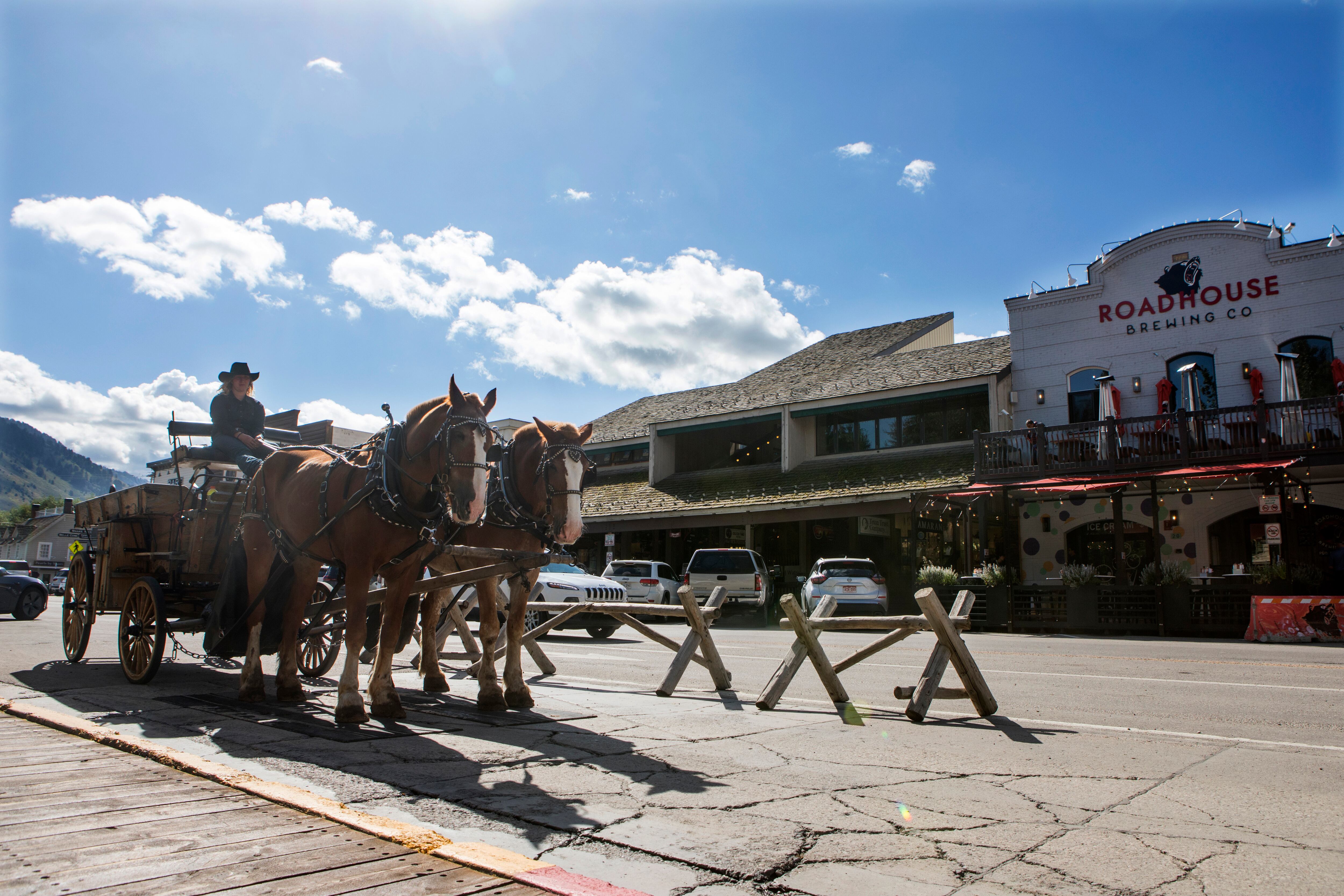
Though Parazette welcomed the sales, the influx was unsustainable. Jackson Hole, Wyoming, was absorbing a flood of visitors as Americans crowded into nearby Yellowstone and Grand Teton national parks — outdoor sites seen as safe vacation spots. The uber-wealthy who owned area properties arrived, too, to ride out the pandemic.
“The COVID thing was unmanageable,” Parazette said of the summers of 2020 and 2021. “I'd never seen it like that before." Frustrated customers “were like, ‘I just wanted a burrito.'”
This year, business is still good — just not as robust as it had been. Parazette's costs for beef and chicken have eased after spiking the past two years. It's not quite as hard to find workers. When he advertises a job opening, people actually apply for it.
“We've had our reprieve,” said Parazette, 54, who has owned Pica’s Taqueria with his wife, Danielle, for 22 years. “It's not necessarily a bad thing.”
As the Federal Reserve prepares to hold its annual economic conference in Jackson Hole on Friday and Saturday, its policymakers are trying to guide the U.S. economy toward something akin to what's happening in Jackson Hole. They have jacked up their key interest rate to a 22-year high to try to slow growth and bring inflation down to their 2% target. Consumer inflation, which peaked last year at 9.1%, is now 3.2%.
Even as they cool the economy, the Fed's policymakers hope to avoid tipping it into a recession — a notoriously difficult achievement that economists call a “soft landing.”
In Jackson, signs that the economy is stabilizing have begun to emerge. Supply chains have normalized for some retailers, reducing pricing pressures. Hotel occupancy rates have come off the boil of the pandemic years; room rates have eased in response. Real estate agents are advertising some reduced home prices, though by national standards they remain astronomical.
Jackson, to be sure, is not a bellwether community. It lies in Grand Teton County, the richest and most unequal county in the nation. Average-sized homes sell for millions. The area includes a branch of First Republic Bank, which caters to mostly wealthy clients and was one of three major banks that collapsed last spring. When Target opened a new store recently, it plunged into the competition for workers by dangling $25 an hour.
Yet the area also draws visitors of relatively modest means, who arrive in RVs to hike, fish and revel in the area’s stunning natural beauty. Its population of permanent residents has jumped in recent decades, providing a bit of economic stability. They include many immigrants who labor in restaurants, hotels and resorts.
The Fed's conference will occur against a backdrop of growing optimism for the U.S. economy. Nationally, unemployment is near a half-century low. Despite sharply higher borrowing costs caused by the Fed's rate hikes, consumers have continued to increase their spending.
At the same time, there are encouraging signs that the economy might not grow so fast as to alarm the Fed's inflation fighters. Mortgage rates have spiked above 7%, to their highest levels in two decades, dragging down home sales in the process. Some retailers, including Macy's and Dick's Sporting Goods, have had to resort to deep discounts to clear out excess inventories because many customers are becoming more cost-conscious.
Raphael Bostic, president of the Federal Reserve Bank of Atlanta, says he's still optimistic that the central bank can thread the needle and achieve a soft landing.
“A recession has never been in my outlook," Bostic said in an interview Wednesday. At the same time, he said, he has heard from some business leaders who are concerned about the jump in borrowing costs.
“Things are slowing down in an orderly fashion," he said. “People are being more sensitive in how they are spending their money.”
Travel has been a boost to the economy since last year. But there are signs nationally that it is cooling. STR, a travel analytics firm, has lowered its forecast for hotel occupancy rates, projecting that those rates will barely increase this year from 2022.
Some domestic travel has been siphoned away by a burst in overseas tourism. But STR's president, Amanda Hite, said even some luxury travelers have pulled back on leisure spending. Lower-priced hotels have also seen fewer customers compared with previous years.
“Planes are full, and hotels and restaurants are busy,” said Ian Shepherdson, chief economist at Pantheon Macroeconomics. “But we care about economic growth, not the level of activity. And growth appears to be slowing,” in airline traffic and restaurant visits, as well as hotels.
In Jackson, data prepared for the local Chamber of Commerce shows a slowdown in hotel occupancy: It dropped to 75% this June, from 81% in the pre-pandemic year of 2019.
The decline in business has prompted many hotel owners in the area to cut prices, mirroring national trends that have helped reduce inflation. Nationally, hotel prices dropped on a monthly basis in June and July.
Keith Sproule, who owns the Brentwood Inn in Jackson Hole, said he's marked down the cost of some of his suites by as much as one-third to ensure that they're booked.
“We're all filling our room nights through price reductions,” he said.
Sales remain healthy at Skinny Skis, an outdoor retailer in downtown Jackson, said co-owner Taylor Hall. Its customers are not inflation-sensitive, given their high incomes, he acknowledged.
But production at shoe makers in Vietnam and China appears to have fully rebounded from COVID. This has helped lower costs, which Hall said his shop is passing on to customers in the form of lower prices.
At the same time, Russia's invasion of Ukraine has made the cross-country and Alpine skis the store sells more expensive, because many had been made in Ukraine. Production has moved to other Eastern European countries, while some Ukrainian factories have resumed output after shutting down last year. But the disruptions are still inflating prices.
The Fed’s rate hikes have led some business leaders in the region to postpone projects. Because of rising mortgage rates, Mike Halpin, a Jackson-based land developer, has delayed his plans to build about 400 homes on 100 acres in Ririe, Idaho, about an hour and a half away.
He thought the site would appeal to workers in Jackson. Some employers might even provide transportation from there. Workers in Idaho Falls and Rexburg, Idaho, where populations are also growing, could also become buyers.
But as mortgage rates marched higher last fall, Halpin got cold feet. He put the project’s planning on hold in December.
Halpin thinks the project could still succeed at current borrowing costs. He just worries that rates might go even higher. He is waiting for some clear sign that the Fed is done with its hikes.
And if Fed Chair Jerome Powell eventually does make it clear that rate increases are over?
“It would trigger me to start the six-month planning process,” Halpin said. “I need to get the ball rolling by this fall.”


