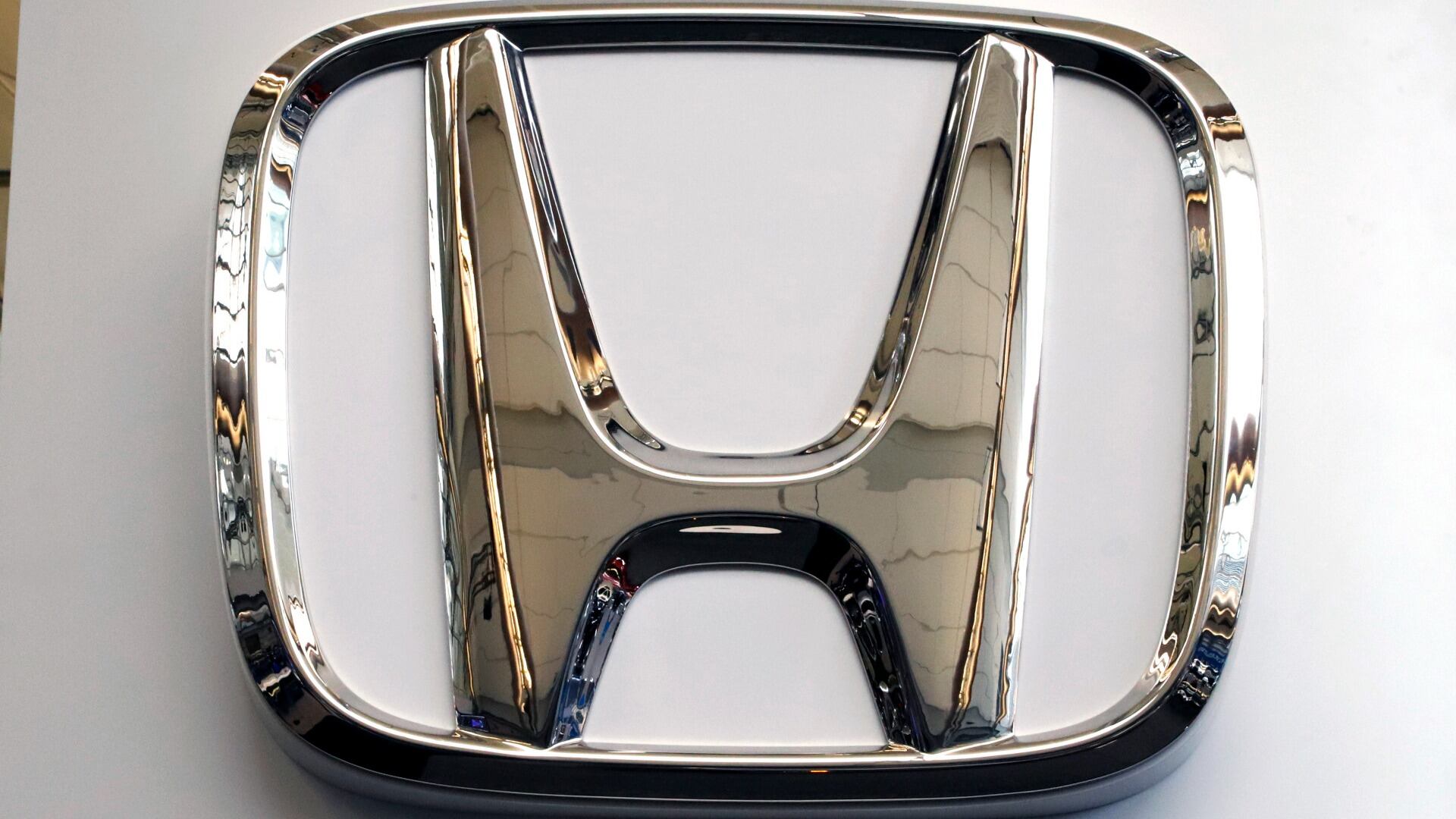
This Feb. 14, 2019 file photo shows a Honda logo at the 2019 Pittsburgh International Auto Show in Pittsburgh. Honda is recalling a half-million vehicles in the U.S. and Canada, Wednesday, March 15, 2023, because the front seat belts may not latch properly. The recall covers some of the the automaker’s top-selling models including the 2017 through 2020 CR-V, the 2018 and 2019 Accord, the 2018 through 2020 Odyssey and the 2019 Insight. Also included is the Acura RDX from the 2019 and 2020 model years. (AP Photo/Gene J. Puskar, File)
Honda is recalling a half-million vehicles in the U.S. and Canada because the front seat belts may not latch properly.
The recall covers some of the the automaker's top-selling models including the 2017 through 2020 CR-V, the 2018 and 2019 Accord, the 2018 through 2020 Odyssey and the 2019 Insight. Also included is the Acura RDX from the 2019 and 2020 model years.
Honda says in documents posted Wednesday by U.S. safety regulators that the surface coating on the channel for the buckle can deteriorate over time. The release button can shrink against the channel at lower temperatures, increasing friction and stopping the buckle from latching.
If the buckle doesn't latch, a driver or passenger may not be restrained in a crash, increasing the risk of injury.
Honda says it has no reports of injuries caused by the problem.
Dealers will replace the front seat belt buckle release buttons or the buckle assemblies if needed. Owners will be notified by letter starting April 17.
Gen Z workers are increasingly worried AI could replace their jobs. However, experts say companies are using AI more to assist workers than replace them.
Matt Schultz of CleanSpark discusses Bitcoin mining and AI infrastructure converge, energy demand dynamics, and the company’s position in the evolving market.
Bhavin Shah of ServiceNow discusses how the new Autonomous Workforce AI automates tasks, integrates with Teams and Slack, and boosts workplace efficiency.
Angi is partnering with OpenAI to bring its home services marketplace directly into ChatGPT, allowing users to go from questions to booking local pros.
Tech stocks are rallying on strong earnings and massive AI investment. Investors are watching Nvidia & hyperscaler spending for clues on how long it will last.