On Thursday, for the first time in more than six months, neither Hollywood's actors nor its writers will be on strike.
The long-awaited clearing in the industry's stormiest season in decades comes as a deal was reached late Wednesday to end what was, at nearly four months, the longest strike ever for film and television actors.
The three-year contract must be approved by the board of the Screen Actors Guild-American Federation of Television and Radio Artists and its members in the coming days. But union leadership declared that the strike will end at 12:01 a.m. on Thursday, putting all of the parts of production back into action for the first time since spring.
Duncan Crabtree-Ireland, SAG-AFTRA's executive director and chief negotiator, said the gains made in the deal justified the struggle.
“It’s an agreement that our members can be proud of. I’m certainly very proud of it," Crabtree-Ireland told The Associated Press in an interview. "We said we would only accept a fair, equitable and respectful deal, and that’s precisely what this deal is. So I think our members, as we are able to release more of the details of it, will look at them and say, now this is something that was worth being on strike for.”
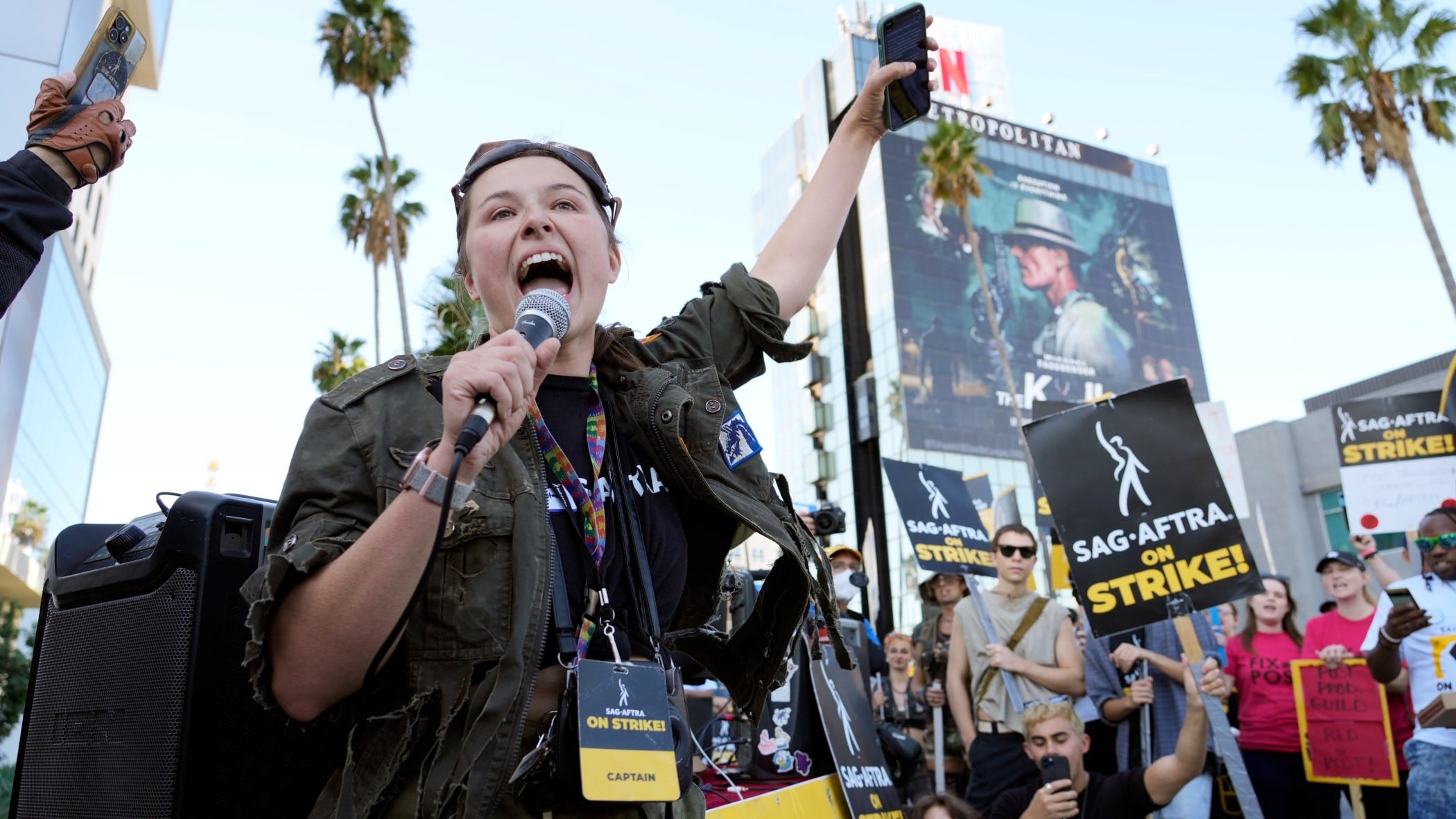
More than 60,000 SAG-AFTRA members went on strike July 14, joining screenwriters who had walked off the job more than two months earlier. It was the first time the two unions had been on strike together since 1960. The studios and writers reached a deal that brought their strike to an end on Sept. 26.
The union valued the deal at over a billion dollars. Crabtree-Ireland said the deal includes boosts to minimum payments to actors, a greater share of streaming revenue going to performers, a bolstering of benefit plans and protections against the unfettered use of artificial intelligence in recreating performances. Details of the terms will not be released until after a meeting on Friday where board members review the contract.
The AI protections were a sticking point in the negotiations that had moved methodically, with both long breaks for both sides to huddle, since they restarted on Oct. 24.
“It is something that has evolved even while we’ve been in this negotiation process,” Crabtree-Ireland said. “The capabilities of generative AI tools have expanded dramatically. So we have really been focused on making sure that the guardrails that we negotiated for were future-proof or at least future-resistant.”
The other side in the negotiations, Alliance of Motion Picture and Television Producers said in a statement that the “agreement represents a new paradigm. It gives SAG-AFTRA the biggest contract-on-contract gains in the history of the union.” The AMPTP said it "looks forward to the industry resuming the work of telling great stories.”
Executives from top entertainment companies including Disney, Netflix, Warner Bros. Discovery and Universal had a direct hand in negotiations.
The Writers Guild of America applauded Wednesday's deal. “We’re thrilled to see SAG-AFTRA members win a contract that creates new protections for performers and gives them a greater share of the immense value they create,” the union said in a statement. "When workers are united, they win!”
Although the writers strike had immediate, visible effects for viewers, including the months-long suspension of late-night talk shows and “ Saturday Night Live,” the impact of the actors’ absence was not as immediately apparent. But its ripple effects — delayed release dates and waits for new show seasons — could be felt for months or even years.
Actors should quickly return to movie sets where productions were paused, including “Deadpool 3,” “Gladiator 2” and “Wicked.” Other movies and shows will restart shooting once returning writers finish scripts.
And beyond scripted productions, the end of the strike allows actors to return to red carpets, talk shows and podcasts, as Hollywood’s awards season approaches.
“The SAG strike is over!! I can finally say it: watch my documentary Saturday night at 8 on HBO/MAX!” actor-director Albert Brooks said on social media moments after the strike ended. “Couldn’t say a word until now!!”
The only major awards show directly effected by the strike was the Emmys, which was moved from September to January. Now, the usual fall Oscar campaigns will mobilize.
But any feeling of industry normalcy could prove temporary. The circumstances that brought on the strikes — the shift from traditional theatrical and broadcast media to streaming, and emerging tech like AI — have not been slowed. And the gains made by the strikes may embolden other Hollywood unions, or these same guilds in negotiations that will come up again in three years.
Union leaders treated the strike like a watershed moment from the start, coming as it did amid wider labor fights in other industries.
“I think it’s a conversation now about the culture of big business, and how it treats everybody up and down the ladder in the name of profit,” SAG-AFTRA President and “The Nanny” star Fran Drescher told AP in August.
The agreement also means a return to sets for thousands of film crew members who were left with nothing to work on during the strikes. SAG-AFTRA sought to offset their hardship by allowing sometimes controversial interim agreements for some smaller productions to proceed, and by making their strike relief fund available to all workers in the industry.
“The idea that I get to discover if I still remember how to act is very exciting,” said actor Ely Henry, who has spent the past months leading pickets outside Paramount Pictures as a strike captain. “I’m just grateful for the fact that so many people are going to get back to work.”
Associated Press Writer Leslie Ambriz contributed.