*By Jacqueline Corba*
Colorado Governor John Hickenlooper defended his decision to veto three marijuana bills despite widespread momentum for legalization in a state that already has some of the most liberal cannabis laws in the country.
"I think its prudent for the entire industry to move steadily, but slowly and make sure this is a success," Hickenlooper said in an interview Tuesday with Cheddar's CannaBiz.
The governor said he blocked a bill to legalize tasting rooms in his state out of concern that it could lead to more people driving while high. He also vetoed a bill adding autism to the list of eligible conditions for medical pot and one that would allow publicly traded companies to invest in Colorado pot businesses.
His vetoes angered some state lawmakers and marijuana activists who see Colorado's cannabis laws as a way to move the issue of national legalization forward.
["This is just a travesty,"] (https://www.denverpost.com/2018/06/07/marijuana-industry-blasts-hickenlooper/) said state Rep. Edie Hooton, a Democrat from Boulder who was a prime sponsor of the autism bill.
But Hickenlooper stood by his cautious approach.
"We haven't done studies of what high THC marijuana does to young people, and any other pharmaceuticalー any other drug people have studied and looked at its effect," said Hickenlooper. "We felt we needed to have a little more testing."
This week, mayors from six cities where marijuana is legal formed a coalition calling for national reform of marijuana laws.
In a [tweet] (https://twitter.com/MayorHancock/status/1006195461852545025), Denver's Mayor Michael Hancock wrote, "Mayors are the ones implementing legal marijuana. We know what works and what doesn't."
Hickenlooper seemed to agree. "I think this great social experiment is happening on the local level," he said. "If states are the laboratories of democracy, then in a powerful way that experiment takes place in all kinds of cities, and towns, and counties."
For full interview, [click here](https://cheddar.com/videos/governor-hickenlooper-defends-decision-to-veto-marijuana-bills).
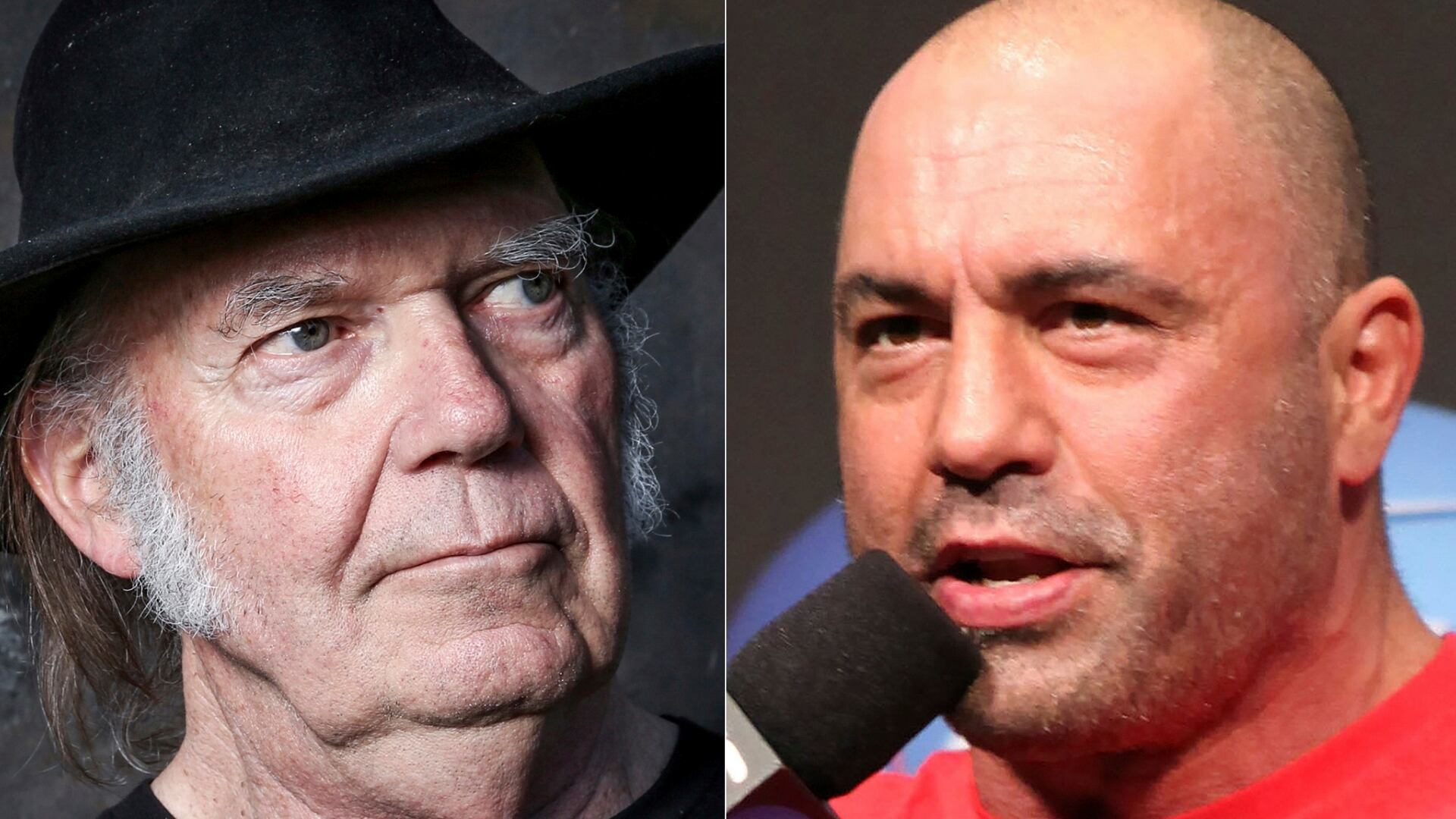
Neil Young has come up with an ultimatum for Spotify: his music or Joe Rogan’s podcast. This comes over concerns that the podcast is spreading COVID-19 vaccine misinformation to its listeners. "The Joe Rogan Experience," which is exclusive to Spotify, is currently the number one streamed podcast on the platform.
Commercial and residential buildings account for 13% of carbon emissions in the U.S., according to the EPA, and one company says it has a solution. Runwise says it has updated the boiler and heating systems of thousands of buildings, and that its technology not only lowers carbon output but also saves landlords money. Lee Hoffman, Co-Founder and COO of Runwise, joined Cheddar Climate to discuss.
Jo Ruxton, Founder of Ocean Generation, joins Cheddar Climate, where she explains the threat that plastic pollution poses to marine life, but elaborates on why we shouldn't be looking to ban plastic entirely. Ruxton also discusses her biggest takeaways while producing the film ‘A Plastic Ocean.'
President Joe Biden's Build Back Better deal seems all but finished after months of Democratic infighting and the Senate's deadlock over certain provisions. But Biden mentioned during a press conference marking his first year in office that 'chunks' of the bill could be passed. Is that enough motivation to force Democrats to rally around certain parts of the bill - especially those that focus on climate and green energy? Andrew Freedman, Energy and Climate Reporter at Axios, joins Cheddar Climate to discuss whether Senate Democrats will be able to rally around climate provisions, if the idea of passing Build Back Better in 'chunks' is doable, and more.
Anyone who remembers the 70s and 80s will probably remember acid rain. Industrial emissions acidified precipitation around the globe, which killed forests and crops, rendered lakes inhospitable, corroded buildings, and exacerbated human health problems.
But anyone who follows environmental news will be surprised to learn this: we solved it! Countries came together to limit acid rain-causing emissions, eliminating the problem altogether.
…kind of. Acidic precipitation may not be a thing of the past after all.
Natalie Ginsberg, Global Impact Officer, MAPS, joins Cheddar Reveals to discuss MAPS organization and its current initiatives and their work to get FDA approval for MDMA to treat PTSD.
Kelsey Ramsden, Co-Founder, President & CEO, Mind Cure Health, joins Cheddar Reveals to break down what 'psychedelic therapy' could look like once it's legalized and how Mind Cure Health is using AI to help treat everything from addiction to depression.
On this episode of Cheddar Reveals, Natalie Ginsberg, Global Impact Officer, MAPS, discusses the MAPS organization and its current initiatives and their work to get FDA approval for MDMA to treat PTSD; Kelsey Ramsden, Co-Founder, President & CEO, Mind Cure Health, breaks down what 'psychedelic therapy' could look like once it's legalized and how Mind Cure Health is using AI to help treat everything from addiction to depression; Cheddar gets a look at Curiosity Stream's 'Pain, Pus and Poison.'