By Maria Cheng
Health experts on Wednesday slammed the U.S. decision to hog nearly the entire global supply of remdesivir, the only drug licensed so far to treat COVID-19, warning that type of selfish behavior sets a dangerous precedent for attempts to share scarce treatments amid the pandemic.
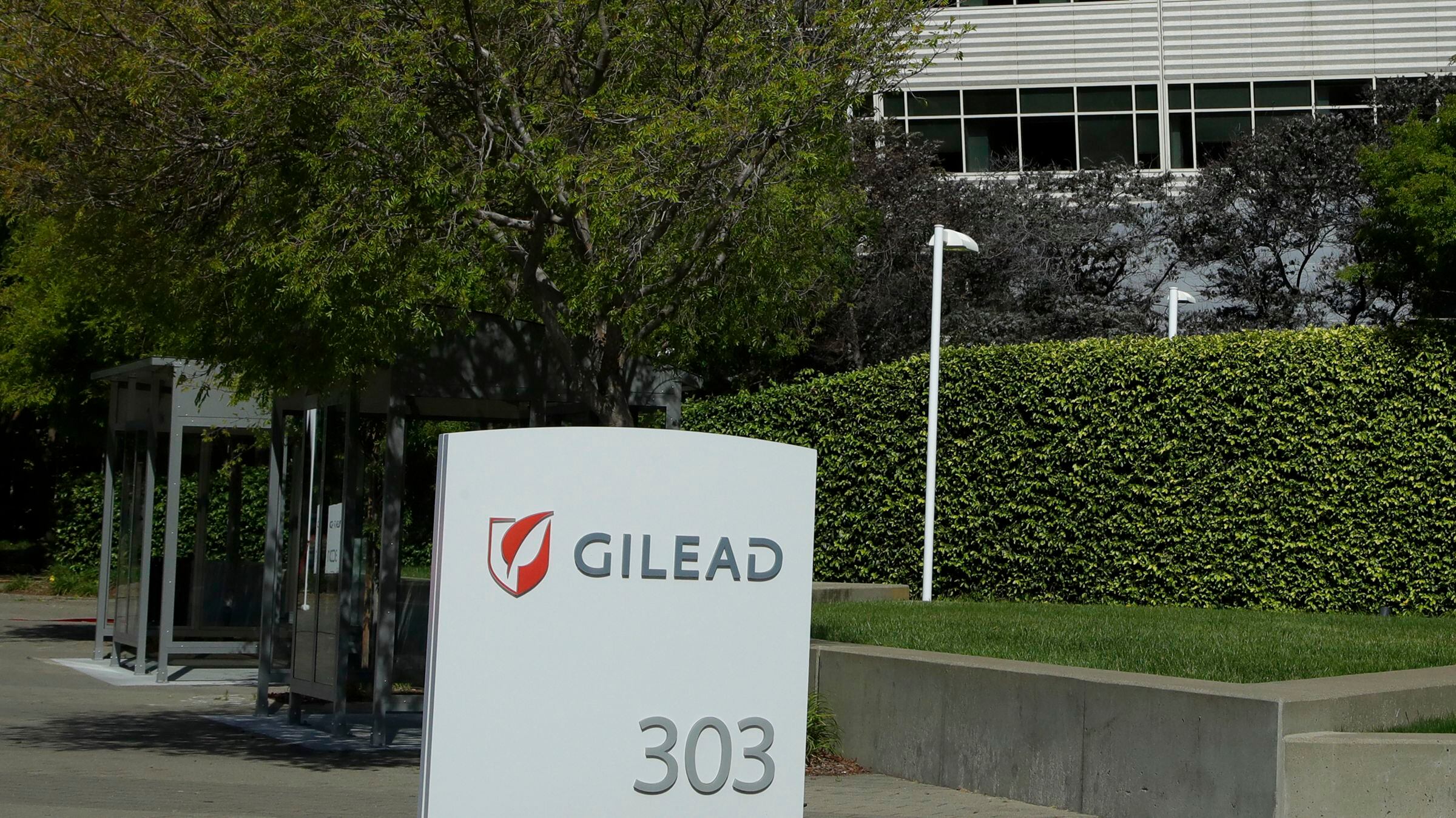
The U.S. government announced Tuesday that President Donald Trump had struck "an amazing deal" to buy the drug for Americans, made by Gilead Sciences. The Department of Health and Human Services said Trump has secured 500,000 treatments of the drug through September, representing 100 percent of Gilead's July production capacity and 90 percent of its capacity in August and September.
"The Trump administration is doing everything in our power to learn more about lifesaving therapeutics for COVID-19 and secure access to these options for the American people," HHS said in a statement.
Early trials testing remdesivir in patients hospitalized with COVID-19 found that those who received the drug recovered quicker than those who didn't. It is the only drug licensed by both the U.S. and the European Union as a treatment for those with severe illness from the coronavirus.
Ohid Yaqub, a senior lecturer at the University of Sussex. called the move "disappointing news."
"It so clearly signals an unwillingness to cooperate with other countries and the chilling effect this has on international agreements about intellectual property rights," Yaqub said in a statement.
Dr. Peter Horby, who is running a large clinical trial testing several treatments for COVID-19, told the BBC that "a stronger framework" was needed to ensure fair prices and access to key medicines for people and nations around the world. He said that as an American company, Gilead was likely under "certain political pressures locally."
British Prime Minister Boris Johnson's spokesman, James Slack, declined to criticize the United States for the move, but said the U.K. had a stockpile of remdesivir.
"The U.K. has been using remdesivir for some time, first in trials and now in the 'Early Access to Medicines Scheme,'" he said.
He added that Britain had a "sufficient stock" of remdesivir for patients who need it, but didn't specify how much that was.
Thomas Senderovitz, head of the Danish Medicines Agency, told Danish broadcaster DR that the move could endanger Europeans and others down the road.
"I have never seen anything like that. That a company chooses to sell their stock to only one country. It's very strange and quite inappropriate," he said. "Right now we have enough to make it through the summer if the intake of patients is as it is now. If a second wave comes, we may be challenged."
In earlier stages of the pandemic, the U.S. refused to export pre-ordered masks to other countries, including neighboring Canada, and reportedly paid off planes delivering ventilators that were originally destined for other countries.
To date, COVID-19 has sickened more than 10.5 million people worldwide, killing around 512,000, according to a tally by Johns Hopkins University. Experts say the true toll of the pandemic is much higher due to limited testing and other issues.
The U.S. has the worst outbreak in the world, with 2.6 million reported infected and 127,000 confirmed virus-related deaths, according to Johns Hopkins.
Top U.S. infectious diseases expert Dr. Anthony Fauci told senators on Tuesday that the U.S. outbreak is "going in the wrong direction" and he feared the country could see 100,000 new infections a day if things didn't improve. The U.S. is seeing about 40,000 new cases a day currently.
___
Jill Lawless in London, and Jan M. Olsen in Copenhagen, Denmark, contributed to this report.