Headspace Wants You to Get in Touch With Your Body
*By Alyssa Caverley*
You might not think that your smartphone, with all its flashing message alerts and beeping reminders, would be the tool to help you slow down and get in touch with your thoughts.
But that's what the guided meditation app Headspace aims to do by giving its 28 million users a way to improve their health and happiness at any time of day. It was one of the top lifestyle and wellness apps in the first quarter of 2018.
"It is genuinely a coming together of a consumer need and something being offered in a very different way," said the Headspace co-founder Andy Puddicombe in an interview with Cheddar's CEO Jon Steinberg. "You have meditation that's been around for a few thousand years, so this isn't new."
Puddicombe, who trained for 10 years as a Tibetan Buddhist monk in Northern India, said that Headspace was designed to help make meditation accessible to people's modern daily lives.
"So most people think of meditation ー 'O.K. I've got to sit down on the floor, cross legged, light some incense' ー we've tried to kind of take it away from that to make you feel sort of grounded and down to earth," Puddicombe said. "So I encourage people to sit down on a comfortable chair and just focus their attention in the distance."
He said the point was to show people who download the app that meditation is an individual experience and anyone can do it. And it's Puddicombe's voice ー the voice of Headspace ー that will help guide you through it and maybe even lull you to sleep.
"Meditation gives you what you need and if, at that time, you need sleep and you feel amazing when you wake up, that's a win," he said.
For full interview, [click here](https://cheddar.com/videos/headspace-founder-on-why-meditation-app-clears-up-the-brain-fog-for-users).
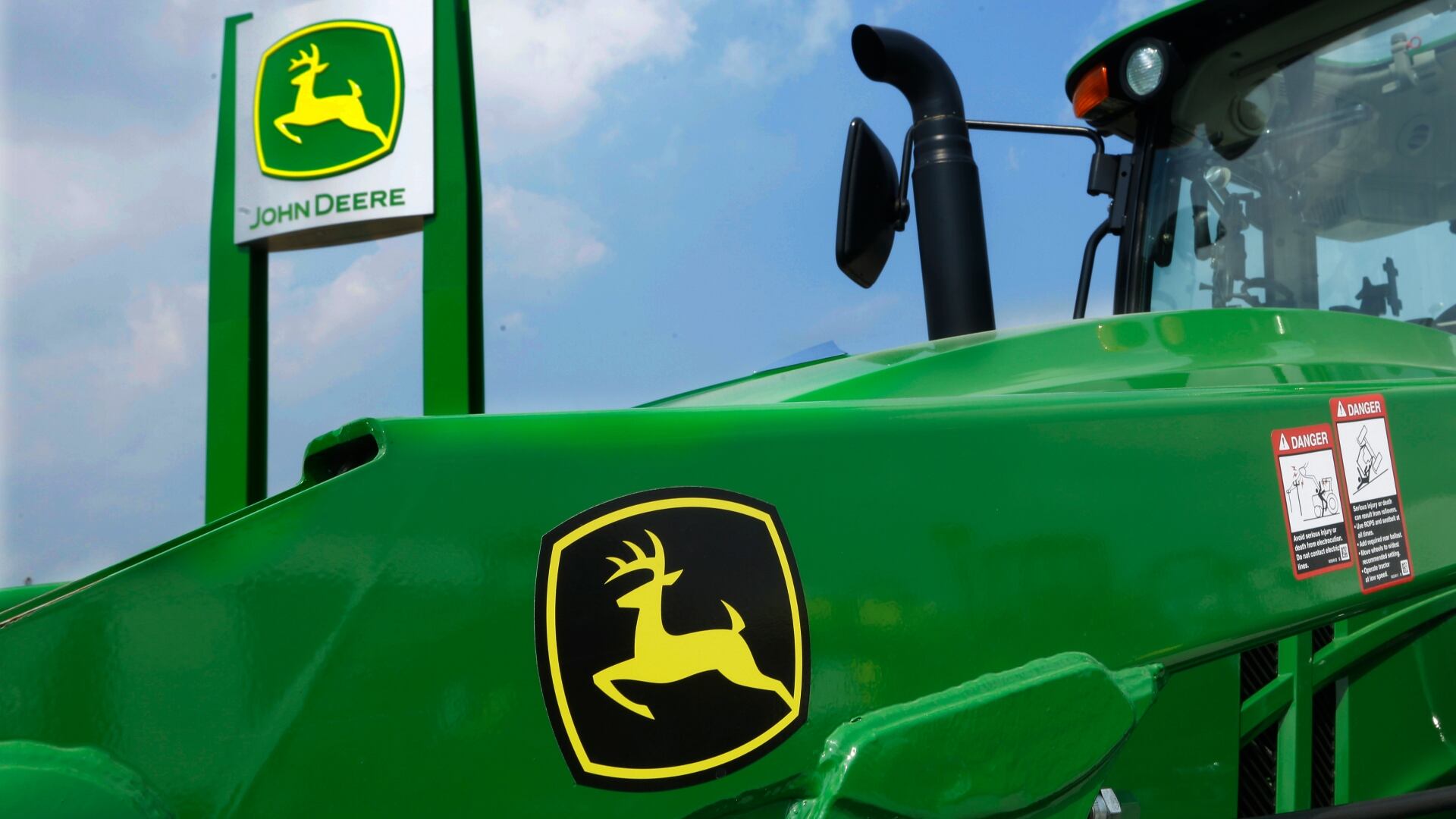
John Deere is getting on board the autonomous vehicle craze with its own self-driving tractors. The farming and forestry equipment manufacturer made the announcement at the 2022 CES convention in Las Vegas. Jahmy Hindman, chief technology officer at John Deere, spoke to Cheddar about the shift to self-driving to agriculture and how it will help farmers produce even more food as the world's population continues to grow. "It's all about trying to do more with less in farming," he said. "Labor's already a problem on the farm, and it's only getting to be more of a problem in the future. And we really view autonomy as a way to solve that problem."
It is 'game on' for sports bettors in the state of New York, as mobile betting kicks off on four major betting operating platforms this Saturday. The state, with over 20 million residents, will be the most populous state with legal online sports betting. Max Bichsel, VP of US Business for EmpireStakes.com joins Cheddar News to discuss.
Far too often, Americans are forced to navigate a tangled web of outdated government websites, offices way out of their reach, and hours of time 'on hold' to access the simple government services they depend on. A recent executive order, signed by President Biden, is intended to improve, streamline and modernize the 'customer' experience when accessing government services. Mina Hsiang, the administrator of the United States Digital Service, joins Cheddar News to discuss how the tech workforce is impacted by this executive order.
Cheddar has been following all things innovative, fascinating, and downright cool from CES 2022. Watch the full episode, hosted by Cheddar's Ken Buffa and Michelle Castillo.
Private equity firms in 2021 spent $401.71 billion in U.S. tech investments — doubling 2020's level of $196.34 billion. As tech becomes increasingly interwoven into our lives amid the pandemic, investors grow bullish on the sector, especially software-as-a-service companies. How will 2022 stack up to 2021, and is there potential for parts of the tech sector to sink this year? John Jannarone, Editor in Chief at IPO-Edge, joins Cheddar News' Closing Bell to discuss 2021's record year of deals, how potential interest rate hikes will impact tech investments in 2022, the fastest-growing IPOs, and more.